

October 22, 2026
Bonus Content: Tesla Is Becoming Its Own Lithium Mine
Dear Reader,
Every time oil climbs, most Americans lose.
We feel it at the pump first. Then higher energy and transportation costs can work their way into prices across the economy.
But I believe there is a way to turn part of that squeeze into potential income.
I’m Marc Lichtenfeld, Chief Income Strategist at The Oxford Club. I’ve been featured as an income expert by The Wall Street Journal, Bloomberg and Fox Business.
In November 2021, while the Federal Reserve was still calling inflation “transitory,” I warned it could exceed 8% within 18 months and favored energy. Inflation later reached 9%, and energy became the best-performing asset class of 2022.
See the unusual oil income setup I’m watching now
The obvious response to rising oil is to buy a giant producer. But producers must pay for rigs, crews, transportation, insurance and debt.
My approach is different. The business behind my recommendation participates in production revenue without shouldering those same operating bills.
At the source date, about 73% of its recent oil, gas and natural-gas-liquids revenue came from oil. Its latest quarterly distribution also worked out to a double-digit yield at the September 22 price.
Watch my oil income presentation for free – no email or credit card required
Good investing,
Marc Lichtenfeld
Chief Income Strategist, The Oxford Club
P.S. Oil prices are already moving, so waiting for the next painful fill-up could mean arriving late. See the potential oil-price counterpunch now.
Tesla Is Becoming Its Own Lithium Mine
Most investors think of Tesla as a car company that happens to make batteries. The more accurate framing, increasingly, is a vertically integrated materials business that sells cars. The distinction matters because the second version carries a fundamentally different competitive position.
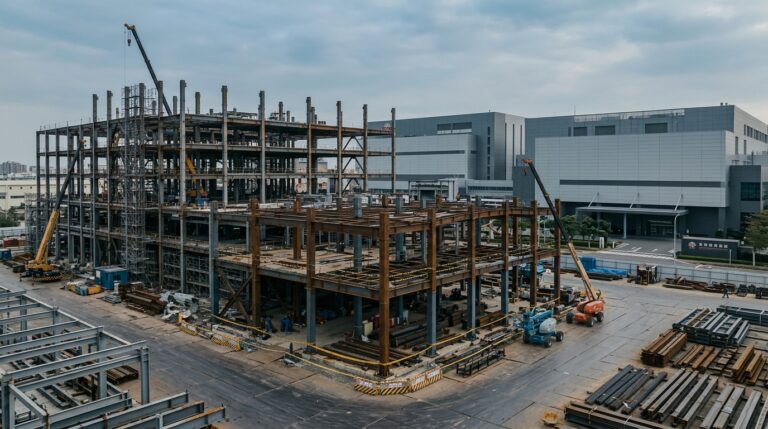
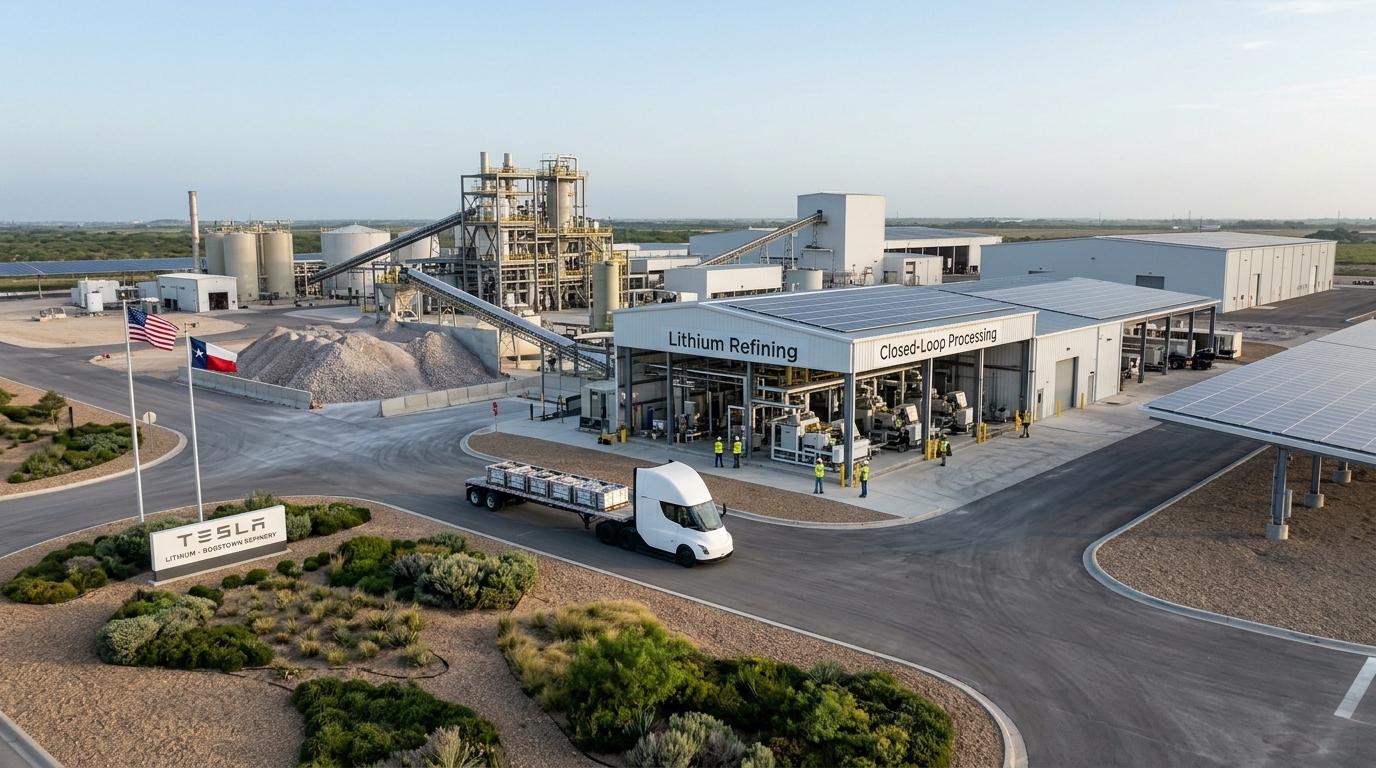
The clearest evidence arrived this past July at Tesla’s first-ever Lithium Day event in Robstown, Texas. Tesla and attendees described the company’s Gulf Coast lithium refinery near Robstown as complete and operational by mid-July 2026, with materials already shipping to Gigafactory Texas for cathode and 4680-related work.
That patent, filed globally under application number WO2026048253A1, is the piece most analysts have underweighted. Tesla has described its lithium refining approach as avoiding traditional sulfuric acid roasting, but the specific technical claims in this draft about this patent (including water vapor condensation, reuse systems, heat-recovery loops, and a direct replacement of sulfuric acid leaching) cannot be verified from publicly accessible primary documents as of October 21, 2026. The significance is not just the chemistry. It is the architecture: the strategic aim of tying refining and recycling outputs back into Tesla’s own battery supply chain.
According to Tesla’s 2025 disclosures about “closing the loop,” the company recycled thousands of metric tons of battery material in 2025 through in-house processing at its Gigafactories and a network of third-party recycling operators. Tesla also says its upgraded Nevada facility processed nearly 3,000 metric tons in 2025, and that its Texas facility is expected to process about 3,000 metric tons of manufacturing scrap per year by the end of 2026 using a dry shredding line to produce black mass for reintegration into the supply chain.
Recovery rates are where the hydrometallurgical process separates itself from older pyrometallurgical methods. Tesla says that across its U.S. recycling operations it is now recovering more than 90% of key battery materials. The draft’s claim of “up to 98%” recovery specifically for Tesla’s processes could not be verified in Tesla’s current public materials, so it has been softened here.
The strategic logic sits in a single number: cathodes are widely cited as the most expensive component within a lithium-ion cell, but the draft’s specific figure of “more than 35% of total cell cost” is not consistently supported across authoritative sources and varies materially by chemistry, metal prices, and time. The core point still holds: reclaiming nickel, cobalt, and lithium and routing them back into cathode production can attack the largest cost bucket from below rather than above.
The pressure to control battery materials is not unique to Tesla. General Motors is spending $900 million to develop next-generation cells that reduce dependence on Chinese-sourced materials, a parallel bet that shows how seriously legacy automakers are taking the same supply-chain vulnerability.
The global markets for lithium, nickel, and cobalt have historically been volatile, with supply disruptions, export restrictions, and shifts in mining region politics sending commodity prices swinging in ways that are difficult for manufacturers to absorb. A company that can source a meaningful share of its battery materials from its own recycling stream gains real insulation from those pressures. That insulation compounds as Tesla’s fleet ages. More end-of-life packs mean more feedstock, which means a growing share of cathode inputs that never touch the open market.
The risk worth watching is not technological. Reporting in 2026 described a local drainage district commissioning independent testing of wastewater in a ditch receiving permitted discharges linked to Tesla’s Robstown-area facility, after workers reported seeing black wastewater. State regulators separately said the facility was not violating its wastewater discharge permit, based on their investigation, but the independent tests raised concerns about contaminants that were not part of the state’s specific sampling in that compliance check. A facility processing increasing volumes of materials at once carries a meaningful permitting and environmental liability profile. Regulatory friction at Robstown could slow the recycling integration that makes the whole thesis work.
For long-term investors, the question is not whether battery recycling is admirable. It is whether the closed-loop model becomes a structural cost advantage that competitors cannot replicate without spending a decade and several billion dollars building the same integrated stack. The answer, right now, looks like yes.