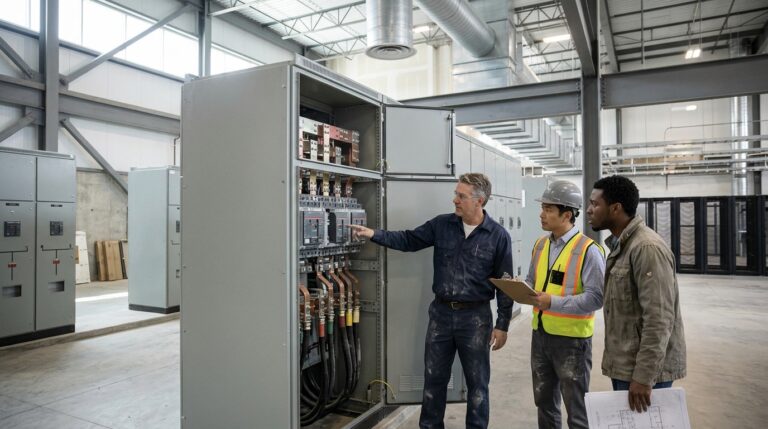


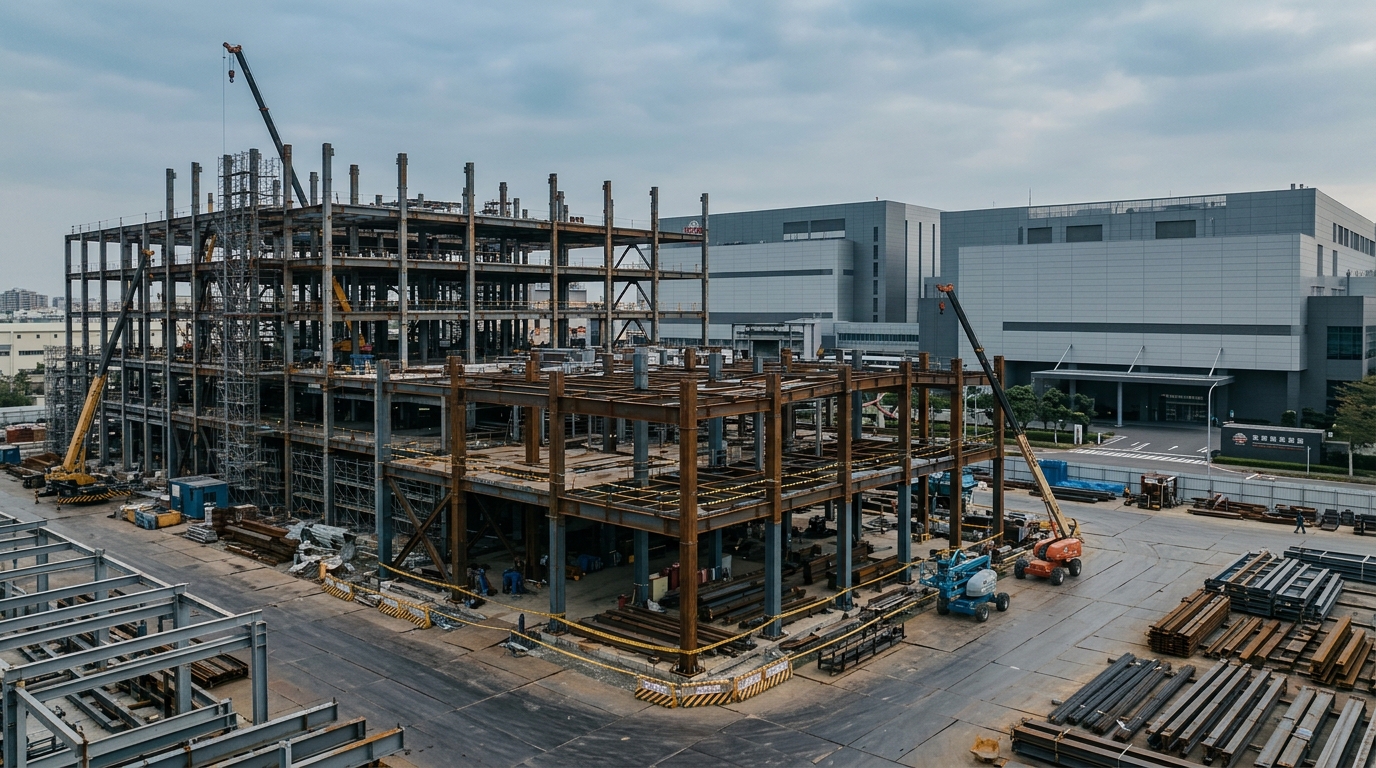
Four workers died after falling from a steel structure during a construction accident at TSMC’s Fab 22 site in Kaohsiung on Tuesday, prompting an investigation into a suspected bolt failure. Three workers died Tuesday evening despite emergency treatment. The fourth, a 37-year-old surnamed Huang, was taken to a hospital for emergency surgery and intensive care but died Wednesday morning, bringing the death toll to four.
The accident occurred at approximately 4:53 p.m. at the company’s construction site in the Southern Taiwan Science Park, where the four workers were employed by contractor Shang Hao Machinery and were performing steel-structure hoisting and installation work when they fell from the third floor along with steel components. Preliminary findings suggest that bolts on a connecting plate of the third-floor exterior steel structure may have broken, causing the workers and steel components to fall. Reports have said the workers were wearing safety harnesses, but the collapse of the structure prevented the safety lines from functioning properly.
TSMC and its construction contractor immediately suspended related construction work at the site and also suspended similar steel structure work at its construction sites across Taiwan pending the investigation. Work will only resume after Shang Hao Machinery submits an improvement plan that passes review. According to authorities, the construction site had undergone three labor inspections in 2025 and 18 in 2026, including a steel structure inspection on July 8, which resulted in two other contractors receiving fines totaling NT$210,000.
Why It Matters for Traders Today
The trading angle here is not the accident itself, which carries no direct impact on TSMC’s production capacity or near-term revenue. Fab 22 is a construction project, not an operating wafer fab. The risk is reputational, regulatory, and headline-driven, and all three can move chip names in the short session regardless of fundamentals.
TSMC reported a sixth straight quarter of record profit, with net profit up about 69% year over year while revenue rose 51%. TSM stock is up more than 41% year to date as of Wednesday. That run means the stock is priced for near-perfection. Any headline that attracts regulatory scrutiny or raises questions about TSMC’s construction oversight in Taiwan could give investors an excuse to trim positions that have already had a strong year.
TSMC is closely tied to the AI infrastructure build-out, as it manufactures advanced processors designed by chip giants such as Nvidia, AMD, and Broadcom. That linkage is the channel through which a TSMC headline bleeds into NVDA and AAPL. Neither company faces any operational disruption from the Kaohsiung incident, but both trade in sympathy with TSMC on risk-off mornings, particularly when the story touches Taiwan directly.
What to Watch
- TSM price reaction at the open. The stock was last indicated around $425 on Wednesday. Watch whether the Kaohsiung headlines generate selling pressure or whether the market treats this as a construction-only incident with no fab impact.
- Scope of the work stoppage. TSMC said steel structure work at the Kaohsiung site and at its new fab construction sites across Taiwan has been voluntarily suspended pending the investigation. If the scope widens to affect operating facilities or if regulators issue broader orders, that changes the calculus.
- Regulatory response. Taiwan’s Association for Victims of Occupational Injuries has called on TSMC to conduct safety inspections across all its construction sites and establish an independent third-party oversight mechanism, urging investors and government representatives to press TSMC to disclose accident analyses, contractor oversight measures, and safety improvements. If that pressure gains traction, expect ongoing newsflow through the week.
- The fundamental backdrop. Management expects fourth-quarter 2026 revenue of $52.3 billion to $54.3 billion, with gross margin of 65% to 67%. That guidance remains intact. Any dip driven purely by this headline is a level to note, not necessarily to chase short.
The core read: this is a headline risk, not a business risk, for now. Watch scope and regulatory response before drawing stronger conclusions.