


October 29, 2026
Bonus Content: Samsung’s HBM4 Is Now the Tollbooth on Every AI Chip
Hi,
Quick question: when did you last pay for pest control?
A termite inspection. A mosquito treatment for the yard. A can of bug spray under the sink.
Whatever it was, you’ll pay for it again. And that’s the part most people miss.
When the public turns on a product, people usually stop buying it. But some things can’t be quit.
Termites still eat houses.
Rodents still get into food plants.
Crops still need protecting.
And the mosquito still bites.
So as conventional pesticides face more scrutiny, from health research and lawsuits to regulators and corporate buyers rewriting their standards, the need doesn’t go away. The spending may simply move.
Our new investor letter follows where it could go, and introduces a small company that has spent years building botanical products for exactly that shift.
Where does that money go next? →
P.S. The letter also covers what most stories skip: the counterarguments. You may not agree with the conclusion. Read it and decide →
Samsung’s HBM4 Is Now the Tollbooth on Every AI Chip
The most important number in Samsung Electronics’ Q3 2026 results is not the headline figure everyone already knew. It is 60.
That is the percentage of Samsung’s total high-bandwidth memory revenue that came from HBM4, its newest-generation chip, in a single quarter. HBM4 sales more than tripled from the previous quarter, and HBM4 accounted for 60% of total HBM sales. The product barely existed commercially eight months ago. Samsung started commercial HBM4 shipments in February 2026, so this ramp happened over a matter of months.
This is the detail that changes how a long-term investor should read the whole result.
What the Full Results Tell Us
Revenue rose 14% from the prior quarter to ₩195.3 trillion, a quarterly record. Operating profit hit ₩107.4 trillion, against ₩12.2 trillion in the same quarter a year earlier. Operating margin improved to 55% from 52% in the previous quarter, showing how pricing power and product mix supported profitability.
Samsung’s semiconductor division contributed ₩106.5 trillion, or about 99% of company-wide operating profit. That concentration is extraordinary. The phones, televisions, and displays that most people associate with the Samsung brand generated almost nothing in relative terms. This was a memory company’s quarter, dressed in a consumer electronics company’s name.
Why HBM4 Is Not a Commodity
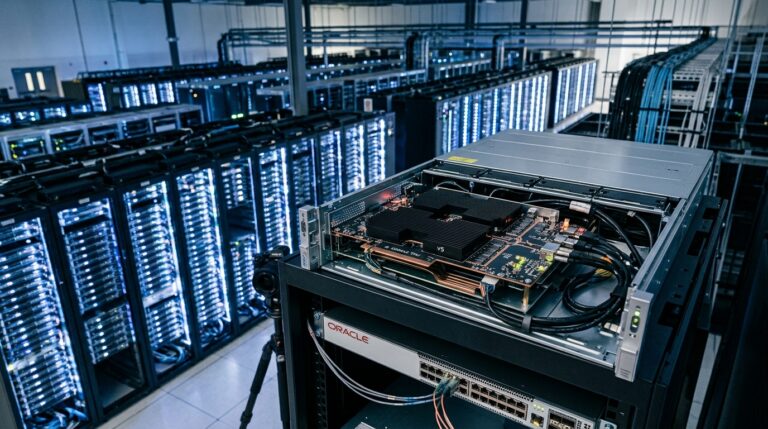
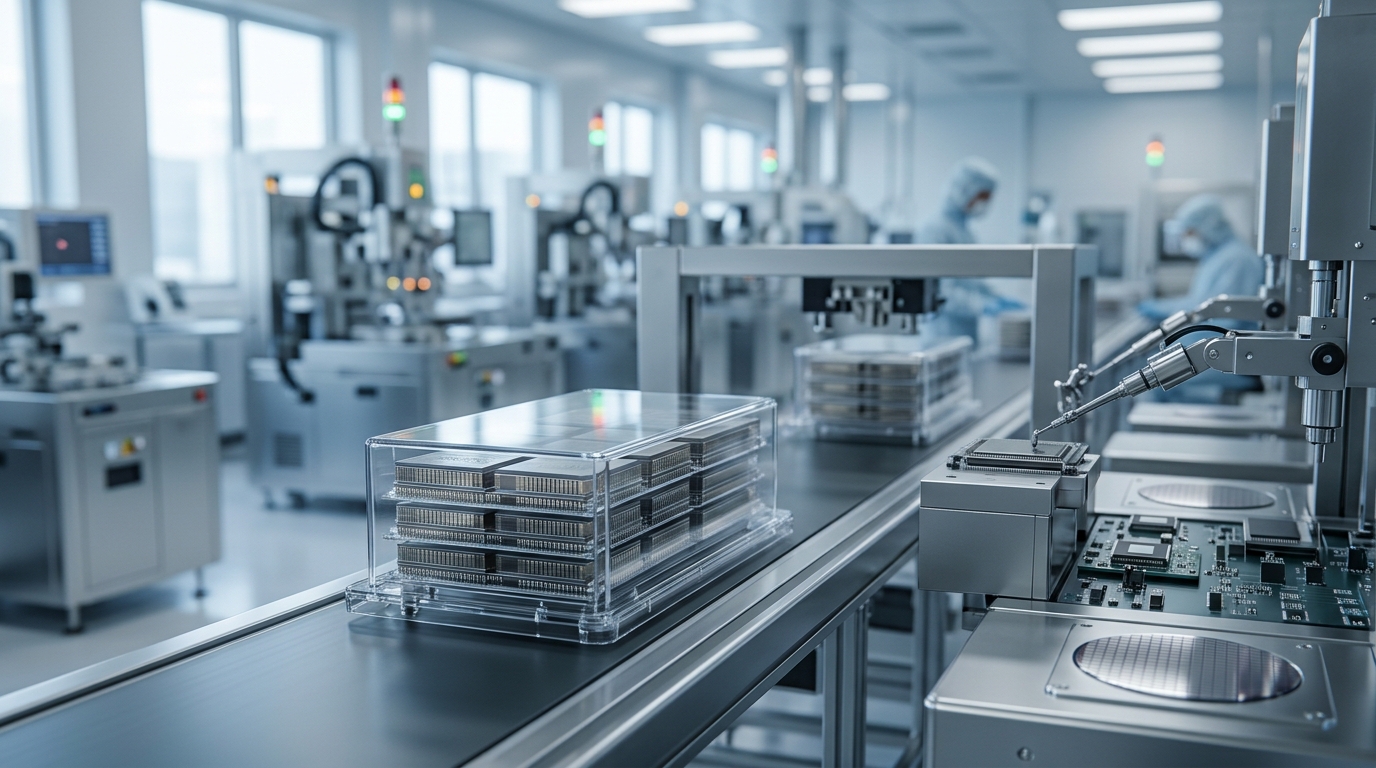
High-bandwidth memory is the specialized chip that sits directly on top of a GPU and feeds it data fast enough to run large AI models. Without sufficient HBM, a data center’s Nvidia accelerators throttle. The product has essentially one use case, and that use case is growing faster than anyone can build capacity to serve it.
Demand for Samsung’s latest memory came largely from Nvidia’s Vera Rubin AI accelerators, which Nvidia said were ramping into full production in May 2026. Rubin-based products were expected to be available from partners in the second half of 2026. Every Vera Rubin chip requires HBM. Samsung is now one of the primary suppliers. That is as close to a structural lock-in as the semiconductor industry offers.
KB Securities estimated that Samsung has already locked in roughly 80% of its 2027 memory output through long-term supply agreements, and that annual production of HBM4 is fully contracted for next year. Micron has made nearly the same claim: much of its next year’s HBM is already sold out, and roughly 75% of its 2027 output is already spoken for, with the broader memory shortage likely stretching into 2028.
The supply constraint is not Samsung’s alone to manage. SK Hynix moved to raise tens of billions on Nasdaq specifically to fund the HBM capacity it knows is already spoken for.
Capital Allocation That Matches the Ambition
Capital expenditure in the third quarter totaled ₩29 trillion, up ₩12.2 trillion from the previous quarter, with ₩27.2 trillion invested in the DS semiconductor division alone. Full-year 2026 capex guidance stands at ₩84.4 trillion, up ₩31.7 trillion from 2025. A company spending at that rate is not defending a position. It is trying to extend one.
On shareholder returns, the board approved a third-quarter cash dividend of ₩4,601 per share for both common and preferred shares, with the payment scheduled for November 27, 2026. Total shareholder returns for 2026 are guided at ₩90 trillion to ₩110 trillion, and the company has maintained dividend payments for 34 consecutive years.
What Could Break the Thesis
The risks are real. Samsung’s semiconductor operating profit reaching roughly 99% of the company total means any slowdown in AI infrastructure spending hits with nothing to cushion it. SK hynix held a 56.4% share of the HBM market by revenue in Q1 2026 and will not concede position without competing hard on yield and price. Micron is spending aggressively too. And if Nvidia’s next architecture changes the memory specification, switching costs cut both ways.
Pricing power in memory is not guaranteed to hold indefinitely. Apple and Tesla have already begun pressuring Samsung and SK hynix to cut memory prices, citing Chinese suppliers as credible alternatives.
The capex commitment also demands that AI spending stays elevated through 2027 and beyond. If hyperscaler budgets compress, Samsung is carrying a very large fixed cost base with very little revenue diversity.
The Mogul Read
What Samsung has demonstrated this quarter is that a supplier can capture the economics of a technology boom without being the most visible name in it. Nobody outside the industry talks about HBM. Every AI cluster in the world depends on it. The margin structure, the forward sold-out position, and the tripling of HBM4 share in a single quarter together describe a business that has moved from competing on price to competing on access. That is a different and more durable kind of advantage, and it is worth watching carefully.