

September 26, 2026
Bonus Content: Siemens Wants Tech-Company Profits From Industrial Hardware
Editor’s Note: The Financial Times says, “the unimaginable is becoming imaginable”… and the Wall Street Journal calls it a “New World Order.” Now, Dr. David Eifrig – a 40-year market veteran who traded through Black Monday and has recommended more than a dozen triple-digit winners – warns that you must make one of the most important financial decisions of your lifetime today. Please keep reading for more details…
Dear Reader,
Will your wealth survive the MAR-A-LAGO RESET?
Bloomberg calls it “a dire shift of fortunes for America.”
The Wall Street Journal calls it a ‘New World Order.’
And I’m writing to you because I want to help you protect the savings you’ve worked so hard for.
Starting with just one step you can take that could 10x your money if you act now.
I don’t say this lightly…
I’m a former Wall Street banker and have navigated through every market twist and turn for more than four decades.
And today, I need to make you aware of an unusual plan brewing at the highest levels of government.
If history is any precedent… your wealth could drop by 40%.
But if you truly understand what’s happening and make ONE money move right now… you could set yourself up for the most profitable years of your life.
I share everything you need to know in my urgent new market briefing.
Here’s to our health, wealth, and a great retirement,
Dr. David Eifrig, MD, MBA
Senior Partner, Stansberry Research
CEO, MarketWise
P.S. My firm has helped millions of followers navigate almost every kind of financial and geopolitical crisis of the past 25 years:
- The Dot-Com Crash
- 9/11
- The 2006 Housing Bubble
- The Great Financial Crisis
- The COVID-19 Crash
- Trade Wars… Currency Wars… The U.S.-Israel War With Iran
- Double-Digit Inflation
- Bear Markets and Bull Markets
- Gold Rallies and Crashes
- Crypto Rallies and Crashes
Today, once again, I’m sounding the alarm.
Because what’s being orchestrated behind closed doors in Washington D.C. right now makes me furious.
The very people we trust to run this country are making decisions that could destroy the financial lives of ordinary Americans.
So, if you’re sitting in cash, or have money in the market, I urge you to take a few minutes to understand what’s coming.
Siemens Wants Tech-Company Profits From Industrial Hardware
The hardest transformation in business is not the startup pivot. It is convincing a company with a century and a half of muscle memory around physical products that its future margin lives in software. That is precisely what Roland Busch is attempting at Siemens AG.
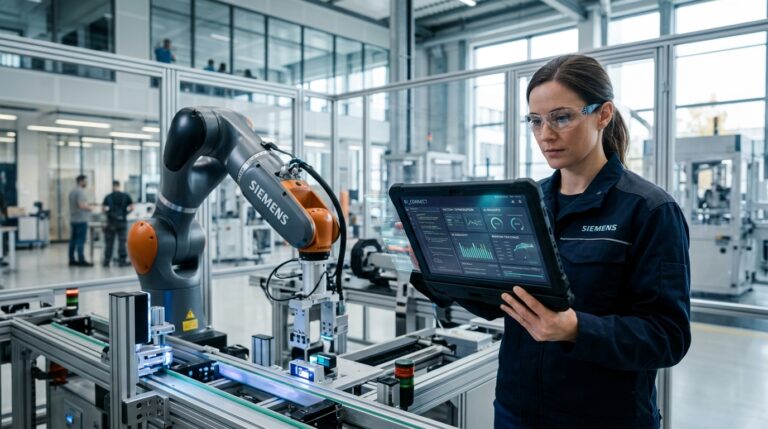
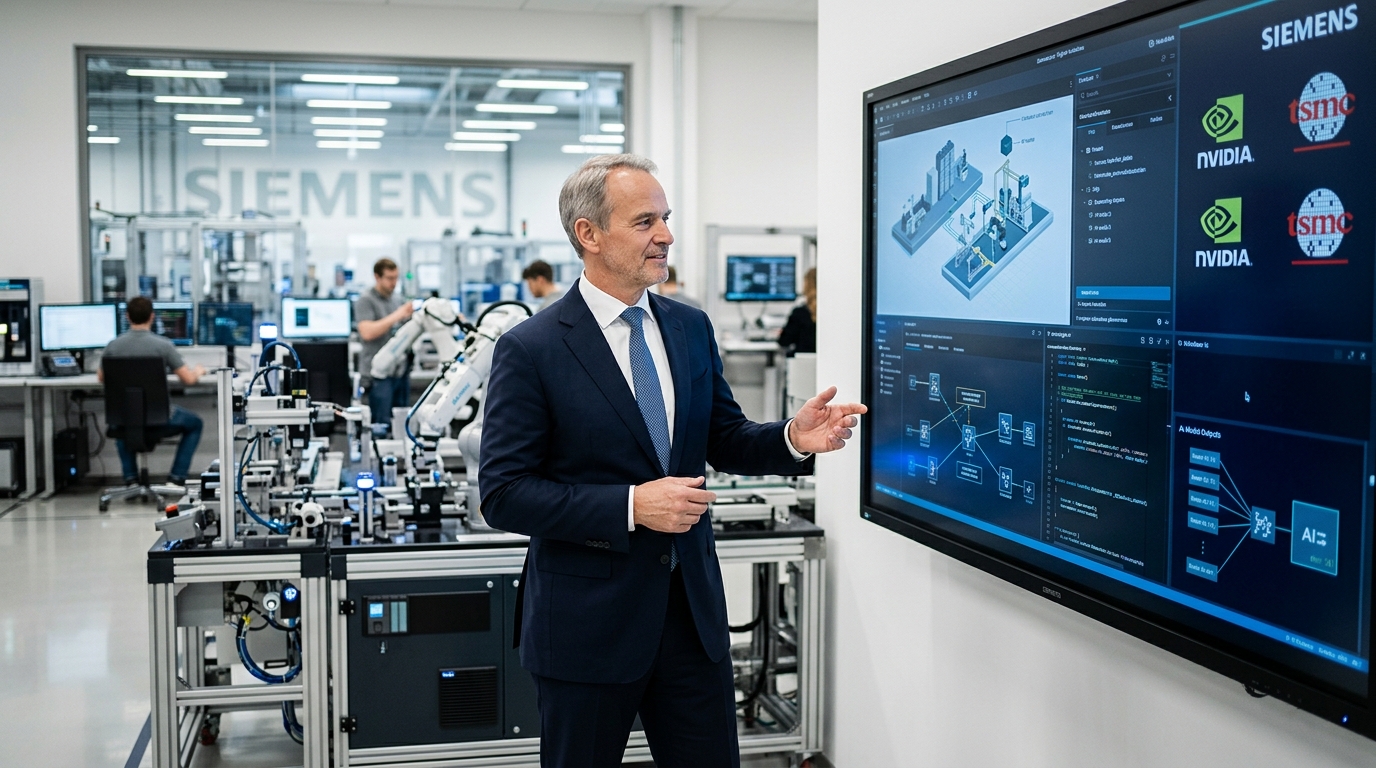
Busch is launching a reorganisation of the German industrial giant to mesh its digital and real-world products, with the explicit goal of lifting profitability closer to the elevated returns that technology companies earn. The move has been reported by multiple outlets in recent weeks, and Siemens itself has framed it inside its “ONE Tech Company” strategy. Starting October 1, 2026, four separate units within the primary Digital Industries division will merge into a single, cohesive automation business. Busch wants manufacturing clients to bundle their needs through a single touchpoint, covering everything from connecting a plant to the grid to supplying the controls running machines and the software used to design and operate them.
The financial case for the move is real. In the third quarter of fiscal 2026, Siemens’ Industrial Business profit surged 25% to a record €3.5 billion, with a profit margin of 17.3%. Digital Industries’ profit margin totaled 18.7% in that quarter. But software-native peers run margins two to three times that level. The gap is what Busch is trying to close.
The partnerships he has assembled are the infrastructure for that ambition. At CES 2026, Siemens and Nvidia expanded their collaboration to build an Industrial AI Operating System, aimed at reinventing the entire end-to-end industrial value chain from design and engineering through to manufacturing, production, operations, and supply chains. Nvidia is contributing AI infrastructure and software, while Siemens is committing industrial AI expertise alongside its hardware and software. The core ambition is to turn digital twins from passive models into active intelligence capable of autonomous decision-making.
Three days ago, on September 23, Siemens deepened a second critical relationship. Siemens announced continued collaboration with TSMC within the TSMC Open Innovation Platform ecosystem, expanding design enablement across semiconductor design workflows to help mutual customers improve productivity, accelerate design cycles, and manage increasing design complexity. The companies are advancing AI-powered semiconductor design through the Fuse EDA AI System and Fuse EDA AI Agent, enabling autonomous, long-running, self-verifying EDA workflows. Siemens has also said the Fuse EDA AI Agent is enhanced by Nvidia AI technologies that improve token efficiency for long-running engineering workloads. Nvidia, Siemens, and TSMC are now bound together across a single industrial AI stack, a fact worth sitting with.
The competitive logic is sound. Company leadership is betting that tightening the integration between physical controls and machine learning models will solidify its competitive moat against international automation rivals such as ABB, Schneider Electric, and Rockwell Automation. But it is too strong to say none of those rivals has assembled partnerships at this depth across both industrial AI and semiconductor design automation simultaneously.
What Could Go Wrong
Restructurings that merge business units tend to destroy the clarity they promise. Four automation units becoming one means internal power struggles, customer confusion during transition, and a management layer absorbing energy that should go toward product development. Busch has to execute this while simultaneously running a live AI platform build with two of the most demanding technology partners on earth.
Nvidia and Siemens have described the Industrial AI Operating System as a unifying technology stack rather than a literal single deployable operating system, which is a credible concern. The partnership is architecturally ambitious and commercially unproven at scale. Cadence and Synopsys remain formidable rivals in EDA. And Siemens carries a mobility division guiding for a profit margin of only 8% to 10% in fiscal 2026, which is a persistent drag on group returns regardless of how well the software pivot performs.
The Long-Term Verdict
The question for a long-term investor is not whether Siemens can replicate a pure software company. It cannot, and it should not try. The question is whether an industrial company that genuinely embeds AI across design, manufacturing, and operations can earn structurally better margins than one that sells hardware alone, and whether it can sustain those margins against competitors who will follow the same path.
The strategic shift aims to push profitability closer to the elevated returns typically enjoyed by technology companies by streamlining how major industrial clients access hardware, software, and AI capabilities through a unified framework. That framing is correct, and the Nvidia and TSMC partnerships provide more concrete technical scaffolding than most industrial AI announcements deserve. Sustaining this momentum will depend on whether the consolidated structure can deliver accelerated revenue growth and higher margins. Monday’s open will tell investors how the market reads the odds. The more important question plays out over the next five years.