


For the past year, the AI infrastructure story ran in one direction: bigger. OpenAI has committed to gigawatt-scale campuses. Anthropic signed a roughly $45 billion cloud deal with Nscale covering around 460 megawatts of capacity at a West Virginia data center. The competitive logic seemed straightforward: the lab with the most compute wins.
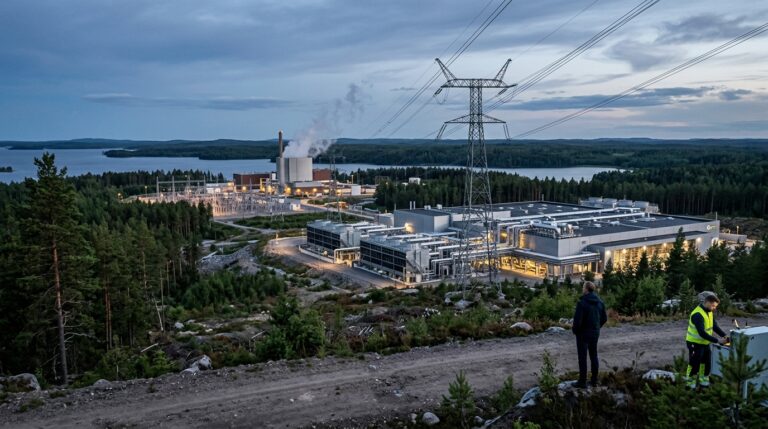
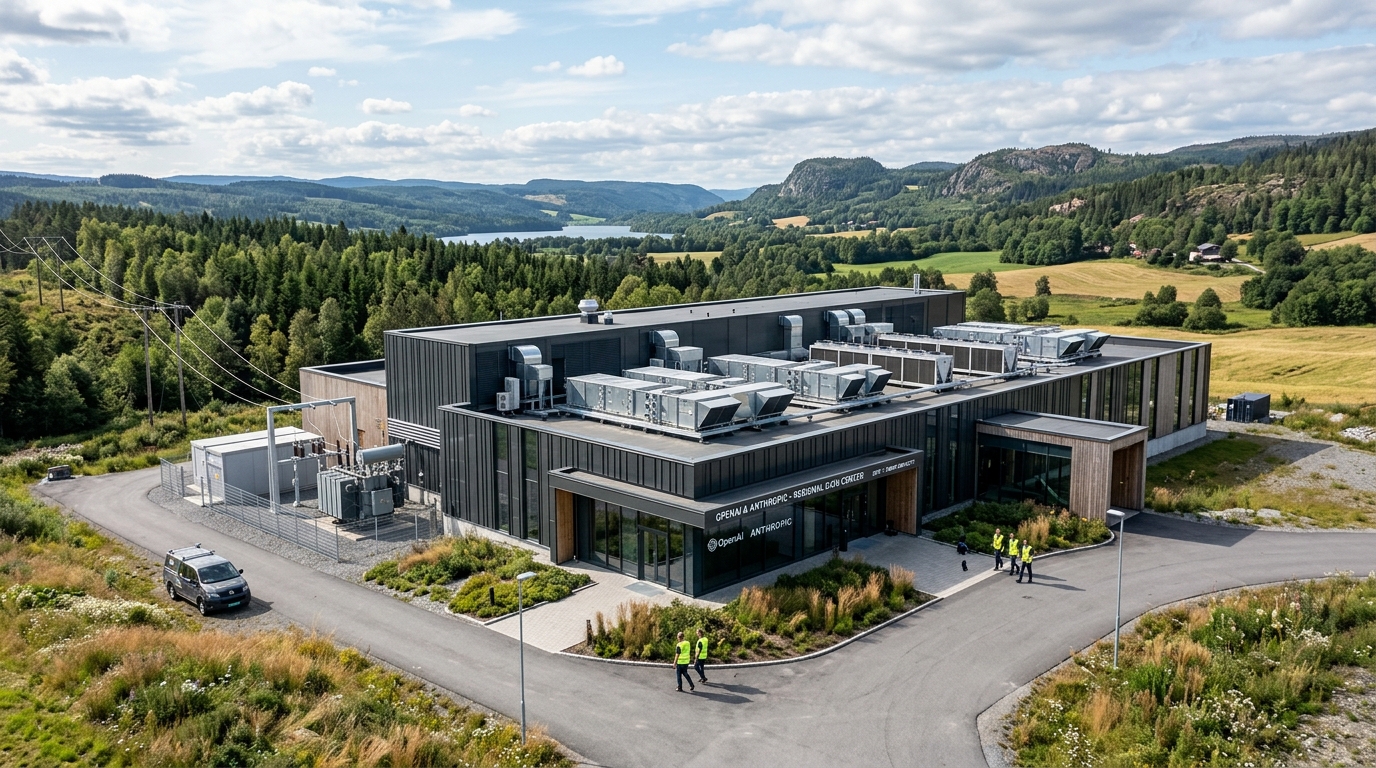
Now both companies are hunting something different. Recent reporting says Anthropic and OpenAI are sounding out 20-30 MW compute capacity agreements in the UK and Nordics, a step down from the multi-hundred-megawatt deals they have pursued over the past year. The rationale is speed: smaller allocations can bring usable compute online faster than multi-hundred-megawatt builds, especially for inference workloads split across sites.
This is not a retreat. It is a confession about what the binding constraint actually is.
JLL said average grid-connection wait times in primary data center markets exceed four years, while global shell and core construction costs are forecast to reach $11.3 million per MW in 2026. In London specifically, research for the Greater London Authority has put grid-connection queue waits at 7 to 13 years for London projects, compared with 3 to 7 years in competing European cities. A gigawatt campus announced today is compute that does not exist for most of this decade.
The Nordics offer a different arithmetic. Electricity is often cheaper there than in the UK, thanks to an already heavily decarbonized grid. Industry researchers also expect Nordic and other non-core European markets to grow faster than the traditional hubs of Frankfurt, London, Amsterdam, Paris and Dublin over the next several years. A 20-30 MW site with an existing grid connection in Norway or Sweden can be energized in a fraction of the time a greenfield UK campus requires.
“Securing a few megawatts at an existing powered site can be more practical than waiting for a much larger block in one location,” Jabez Tan, head of research at Structure Research, told CNBC. He said multiple small deployments can form substantial capacity when workloads can operate across separate sites.
The investment reshuffling that follows is worth thinking through carefully. Colocation operators with pre-energized, shovel-ready capacity in the UK and Nordics become strategically valuable in a way they were not when the only deals that mattered ran into the hundreds of megawatts. If Anthropic and OpenAI focus on smaller sites, demand hits the part of the data-center market that can deliver soonest: facilities with usable grid access, permits, and power contracts. That can tighten availability and strengthen pricing power for operators with near-term capacity in both regions. Equinix (EQIX) and Digital Realty (DLR) are widely cited among Europe’s leading data center operators by capacity and already hold connected, operational facilities across both markets. CoreWeave (CRWV), which has said it is leasing data center space in the UK rather than building in order to bring compute to market as quickly as possible, is pursuing the same speed-first logic from the supply side.
For GE Vernova (GEV), the structural read is equally compelling. In an SEC filing covering its first-quarter 2026 results, GE Vernova said its Electrification segment booked $2.4 billion in equipment orders to support data centers, more than all of 2025 combined. But the claim that “the order book is full until 2029, with orders going as far out as 2031” is too imprecise to state as a fact here. Modular, fast-deploy power solutions become more valuable, not less, as the industry fragments into smaller sites that still need reliable electricity infrastructure.
The risk to the thesis is real. The reported talks have not identified counterparties, pricing, delivery schedules or signed contracts. And a 20-30 MW site still needs a grid connection, and aggregating many small sites adds operational complexity that single campuses avoid. Neither lab is abandoning large-scale commitments.
But what the search for smaller sites reveals is a maturation in how frontier labs think about infrastructure. Capital is abundant. Power that is ready to use today is not. The operators who figured that out earliest are the ones with something to sell right now.