
For three years, Optimus was a demo. A walking proof of concept, impressive on stage, opaque on economics. That changed this week.
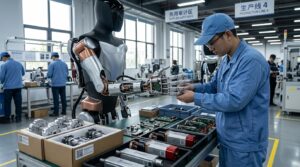
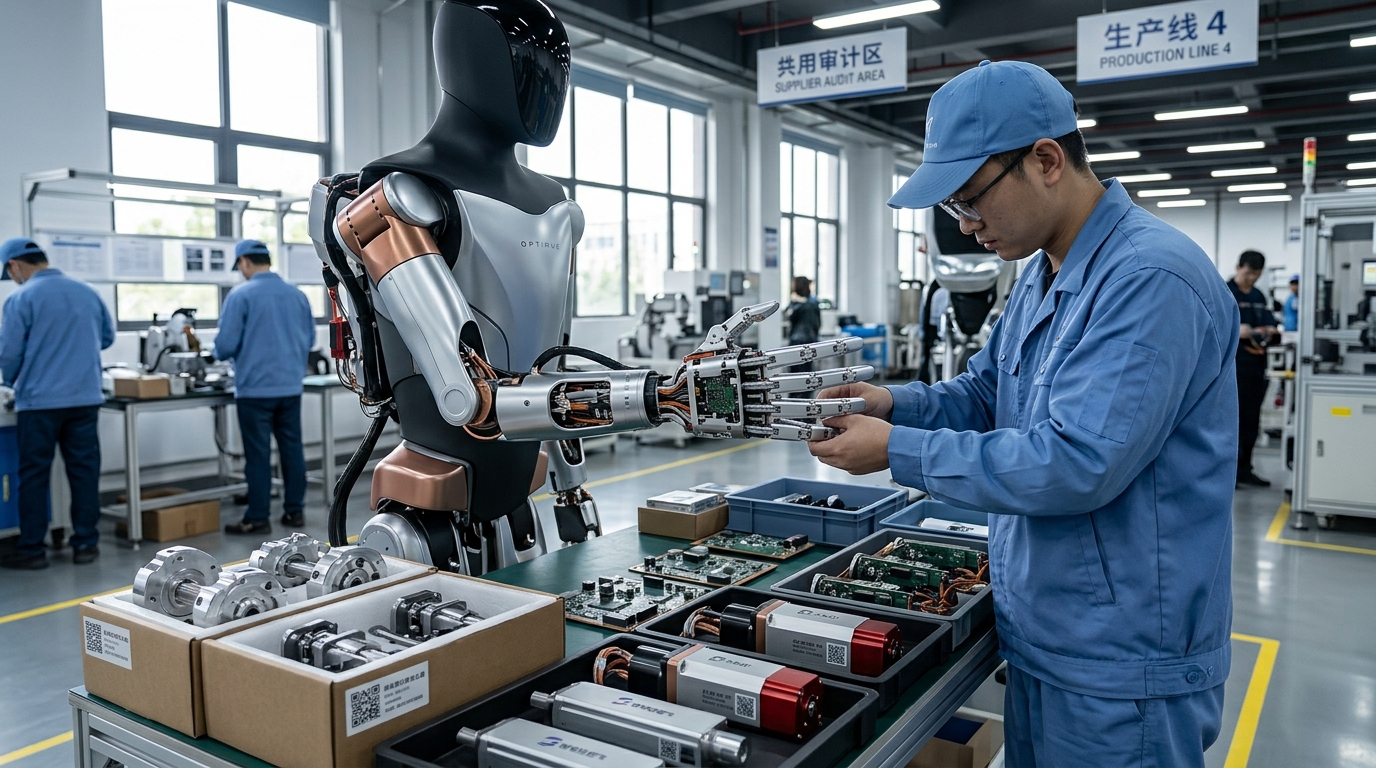
Tesla teams arrived in Zhejiang province on September 16 and began field audits the following day. Companies set to undergo supplier audits include heat-control component manufacturer Zhejiang Sanhua Intelligent Controls, auto parts supplier Ningbo Joyson Electronic, and chassis producer Tuopu Group, according to two corporate executives with business ties to the manufacturers. These are not concept-stage partners. Most of the firms being examined already provide automotive components for Tesla’s electric vehicles, and all are based in eastern China’s Zhejiang province.
The distinction matters. A supplier audit is a commercial act. Through these audits, the manufacturers’ quality standards, mass production stability, and technical compliance criteria are being verified. That is the language of a production contract, not a pilot program. Reports in Chinese business media also described Tesla’s team as checking mass-production exclusivity and consistency, with a plan to roll out about 50,000 Optimus units in 2026.
Markets read it that way immediately. The supplier stocks moved far more than Tesla itself, which is exactly the question long-term TSLA holders need to sit with.
The Bigger Picture on Humanoid Robots
The industry backdrop has shifted considerably in 2026. Goldman Sachs analysts raised their global humanoid robot delivery base case to 75,000 shipments in 2026, 890,000 in 2030, and 6.5 million in 2035, versus previous estimates of 51,000, 256,000, and 1.4 million, respectively. That kind of revision does not happen without hard commercial evidence accumulating from multiple directions. The Zhejiang audits are exactly that kind of evidence for Optimus specifically.
Tesla is reportedly targeting the second half of 2027 for commercial Optimus sales, though production is likely to begin much earlier, with one major bank analyst noting an “Optimus Academy” concept aimed at collecting real-world training data ahead of factory deployment. The gap between production start and public availability is intentional: under the current plan reported in Chinese media, Tesla aims to produce about 50,000 robots in 2026 for deployment across its gigafactories worldwide, meaning the product remains primarily for internal industrial use in the near term.
The Investment Question TSLA Holders Should Ask
Over the past year, TSLA has ranged from a 52-week low of $297.38 to a high of $498.83. At roughly $364 recently, the stock sits about 26% below that peak. The all-time high closing price of $489.88 was reached on December 16, 2025. The run to that level was built significantly on Optimus enthusiasm. The retreat from it came partly from Cybercab execution concerns and delivery tracking below consensus.
That context reframes the Zhejiang news. The audits confirm the robot thesis is advancing, but the thesis was already embedded in a share price that once approached $500. Investors buying here on the Optimus story are not getting in early; they are buying a milestone that was partially anticipated. The honest question is whether a confirmed supply chain, before meaningful external revenue, justifies a re-rating back toward those highs.
Where the Wealth Opportunity May Actually Sit
For investors who want Optimus exposure without carrying Tesla’s valuation and car-business risks, the supplier route deserves attention. Sanhua, Joyson, and Tuopu are all trading on Chinese exchanges and accessible through emerging-market or China-focused ETFs. The risk profile differs: these are smaller, more concentrated bets on a single program winning and scaling. But the upside leverage to confirmed Optimus volumes could be considerably higher than owning TSLA at its current size.
Broader exposure to the humanoid robotics theme remains available through industrial automation names including ROK and ABB, both of which benefit from any acceleration in factory robotics regardless of which humanoid platform leads. Diversifying across the value chain rather than concentrating in one manufacturer is the more durable wealth-building approach here.
Daily Wealth Takeaway
The most important investing milestone is not when a technology is invented. It is when a real supply chain begins forming around it. That moment tells you the product is moving from a research project toward a balance sheet. Tesla’s Zhejiang visits are that moment for Optimus. The harder follow-on discipline is asking how much of that milestone the market already knew was coming, and whether the remaining value lies in the stock that gets the headlines or the suppliers quietly preparing the parts.