



September 5, 2026
Ken Griffin spent years trading energy on paper. Now Citadel wants the barrels themselves, and the reason tells investors something urgent about American oil.
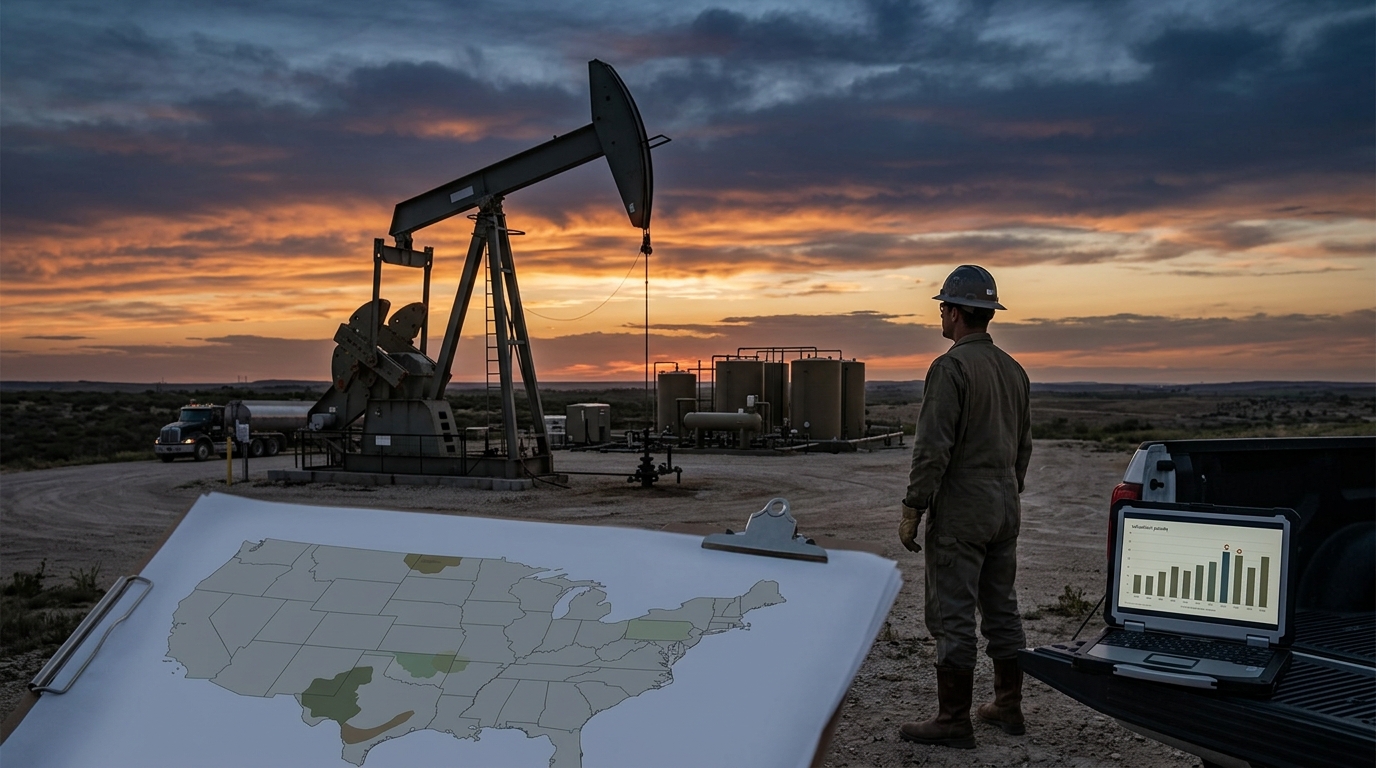
There is a particular quality of conviction that separates a trader who bets on oil from one who decides to own it outright. Reuters reported on September 4, 2026 that Citadel has held talks with multiple private equity firms to acquire US oil production assets, including a bid for WildFire Energy, the Eagle Ford operator that Magnolia Oil & Gas ultimately agreed to buy for about $4.06 billion. Citadel lost that auction. It is still shopping.
5 Little-Known Stocks Behind Today’s Defense Tech Shift
Behind the headlines, a major transformation is underway.
Modern warfare is being driven by AI, autonomous systems, and next generation technology. A handful of lesser known companies are helping power this shift.
This report uncovers five stocks quietly playing a critical role in the future of defense.
That persistence is the signal worth reading.
From Futures to Formations
Citadel’s commodities group earned about $4 billion in 2024, fueled in large part by natural gas trading. The firm already runs one of the largest physical natural gas businesses in North America. Citadel launched that merchant trading business in 2014 and built a portfolio of transportation and storage assets long before it considered drilling a single well. So the move into production is not a pivot driven by weak trading returns. It is a deliberate upgrade in the quality of information that a trading firm can extract from owning the molecule at its source.
Citadel bought Paloma Natural Gas from EnCap Investments in February 2025, renamed it Apex Natural Gas, and then acquired further assets from Comstock Resources and Azul Resources. Reuters has not reported that Citadel or Apex currently operates 14 drilling rigs in the Haynesville basin, so it is more accurate to say the firm has been expanding its Haynesville footprint and buying producing assets rather than claiming a specific rig count. The oil push follows the same architecture: acquire a platform with an existing management team, then build from it.
5 Little-Known Stocks Behind Today’s Defense Tech Shift
Behind the headlines, a major transformation is underway.
Modern warfare is being driven by AI, autonomous systems, and next generation technology. A handful of lesser known companies are helping power this shift.
This report uncovers five stocks quietly playing a critical role in the future of defense.
The Hormuz Discount Hidden in Every US Barrel
The most revealing context for this move is what Griffin said publicly in April 2026. He warned that the world faces a global recession if the Strait of Hormuz remains closed, stating: “Let’s assume it’s shut down for the next six to 12 months. The world’s going to end up in a recession.” At the time, Brent crude had surged more than 60% amid Iran’s closure of the Strait, which is a key route for roughly one-fifth of global oil consumption.
US oil and natural gas assets have drawn heightened buyer interest because they can deliver supply without passing through chokepoints such as the Strait of Hormuz. A firm that owns Eagle Ford production collects that geopolitical premium directly, not through a derivative that decays or requires rolling. Owning US production gives a commodities firm direct exposure to the barrels that become more valuable when overseas supply gets disrupted.
WildFire alone would have added about 53,000 barrels of oil equivalent per day of production, about 70% of it oil, plus roughly 810,000 net acres in Texas. That is not a small position. For a firm with Citadel’s trading infrastructure behind it, those barrels carry informational value well beyond their cash flow.
Inside the Nuclear Revival Reshaping Energy Markets
Governments worldwide are investing billions to revive a proven energy source. Supply chains are tightening, demand is rising, and select companies stand to benefit. The Nuclear’s Second Act report explains what’s happening next.
A New Class of Buyer
Citadel is not alone in this direction. Other major commodity traders have been expanding into oil and gas production and generating good returns. Vitol in July 2026 agreed to sell its VTX Energy Partners US shale venture. Separately, Reuters reported in August 2026 that Gunvor was in talks to buy Haynesville shale assets for more than $1 billion. Private-equity-backed shale producers have traditionally been sold to larger drillers seeking acreage and scale. Citadel’s interest adds another class of buyer: firms that already make money trading the price of oil and increasingly want ownership of the oil itself.
For investors in names like MGY and CRK, or the broader XOP, the implication runs in one direction. When one of the most information-rich trading operations on the planet concludes that owning the physical asset beats trading the paper claim on it, the structural premium on US onshore production deserves a second look. Griffin’s firm did not build Apex Natural Gas and pursue WildFire because shale is cheap. It did so because, in a world where Hormuz risk reprices overnight, American barrels are becoming something closer to a strategic asset than a commodity. Public shareholders who treat Eagle Ford acreage as a cyclical play may be underweighting exactly that.