



Dear Reader,
A financial crisis usually doesn’t begin with one company defaulting or one fund taking a hit.
The real danger begins when investors get nervous and start asking for their money back… forcing funds to sell assets, lenders to pull back and credit to dry up.
And very soon, what looked like an isolated problem suddenly spreads across the financial system like wildfire. By the time most investors realize what’s happening, it’s already too late.
Weiss Ratings saw versions of that in 1998, in 2008, and again during the market panic of 2020.
But here’s the most critical part …
55 years of watching financial crises unfold tell us we could be seeing the perfect conditions for another chain sreaction.
And the fallout could reach banks, insurers, annuities, investment funds and retirement portfolios.
That’s why we’ve recorded a special briefing explaining what we’re seeing now … and why we believe investors should take action before the pressure gets worse.
In this presentation, we also reveal five specific steps you can take now to help protect your wealth before this new subprime crisis spreads.
Click here to see our warning before the rush for the exits begins
Good luck.
Sincerely,
Eliza Lasky
Weiss Advocate
Cerebras Has $25 Billion in Orders. Thursday Tests Delivery.
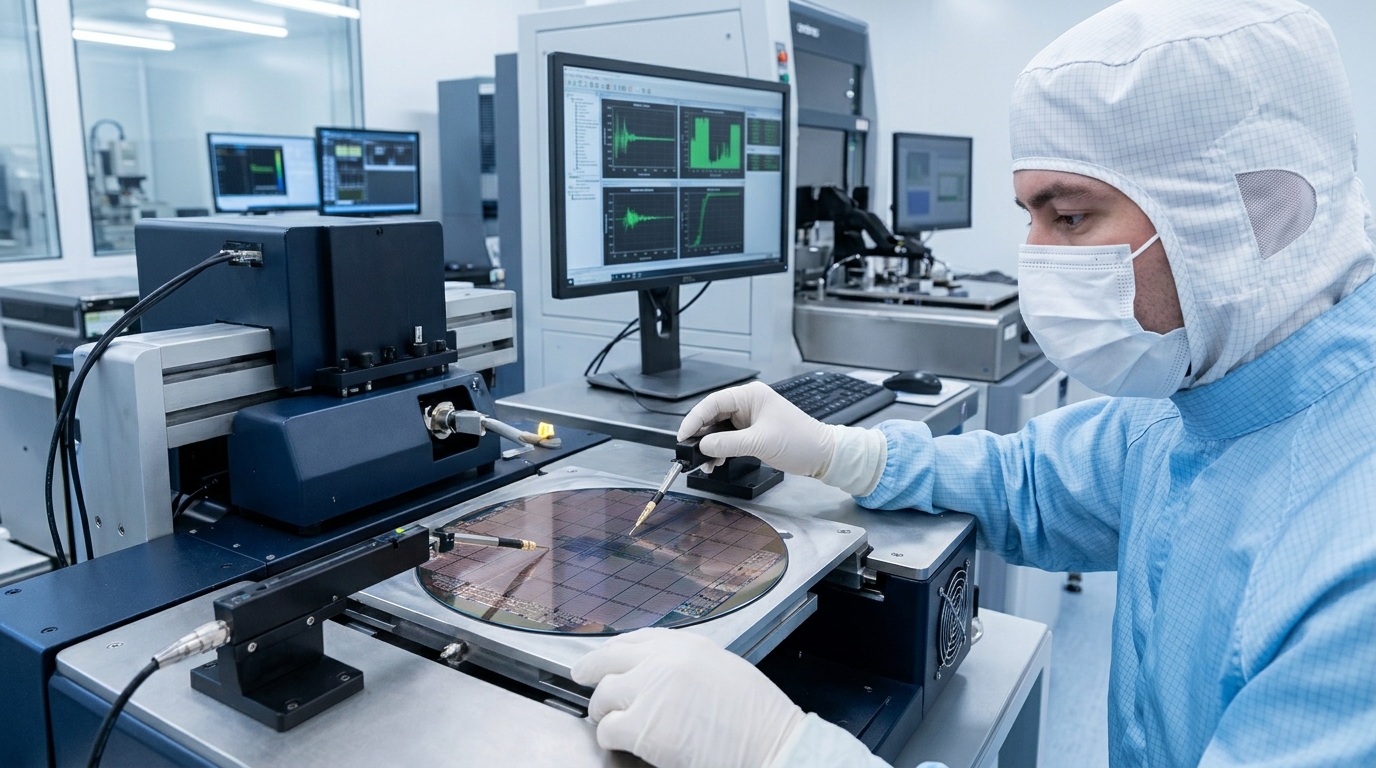
The easiest version of the Cerebras Systems story is a hardware story. One company took silicon physics to its logical extreme, using an entire wafer as a single processor, and produced something Nvidia’s GPU clusters cannot match on latency. That framing is accurate but incomplete. What Thursday’s Q3 report actually tests is a different and harder question: whether a company sitting on a mountain of contracted demand can convert it into sustainable unit economics.
The demand is not in dispute. Cerebras carries $25.4 billion in remaining performance obligations, a backlog management has said does not include AWS or other hyperscalers. Management raised full-year 2026 core revenue guidance to $880 to $890 million and has said publicly it expects to more than triple core revenue in 2027. Those are extraordinary numbers for a company that did roughly $103 million in core revenue just four quarters ago.
What Q3 will reveal is whether the cost structure is catching up to the growth. Core gross margin slipped from 46.5% in Q1 to 40.6% in Q2, and management guided Q3 to be the trough at 38% to 40%. That compression came from leasing third-party capacity rather than owning it. As lower-cost owned systems come online in Q4, the thesis calls for margins to recover. If Thursday’s report shows that recovery beginning on schedule, the 2027 model becomes defensible.
The more consequential number to watch, though, is probably not on the income statement at all. Disaggregated inference with AMD’s Helios racks is expected to be in production in Q4, and the company has said the architecture could increase throughput by up to fivefold relative to current configurations. AWS Bedrock availability is described as coming soon, but the company has not put a firm quarter on the calendar. Neither revenue stream is yet inside the $25.4 billion backlog figure. Both, if they deliver on the promised economics, would mean the current backlog dramatically understates the actual opportunity.
The AWS Bedrock distribution question is not unique to Cerebras. Cloud platforms have become the primary distribution layer for frontier AI, giving hyperscalers leverage over which inference hardware reaches enterprise buyers.
The wafer-scale architecture underlies all of it. A single WSE-3 provides on-chip memory bandwidth that is roughly 7,000 times that of an H100, eliminating the off-chip memory bottleneck that slows GPU clusters on low-batch, latency-sensitive workloads. That is a genuine and durable physical advantage for real-time inference at the single-user level. The CS-4 system, announced this summer, is a server rack powered by three WSE-3 Turbo processors, and the CS-5 is expected in the second half of 2027.
The risk is concentration. OpenAI and AWS are expected to represent a substantial share of 2027 revenue, and neither relationship is yet fully reflected in reported backlog. A timing slip from either partner does not merely shave a quarter’s results; it threatens the entire triple-revenue forecast. The stock trades near 22 times enterprise value to revenue, a multiple that prices in a lot of execution.
Thursday’s Q3 report is therefore a margin check and a credibility checkpoint. If gross margin is at or above the guided floor and management signals Q4 acceleration from disaggregated inference deployment, the 2027 story has its first real validation. If margin disappoints and the AMD launch slips, the valuation absorbs the correction quickly. Speed, as Cerebras itself says, is more valuable than slowness. That principle applies to proof of concept just as much as it applies to token generation.