

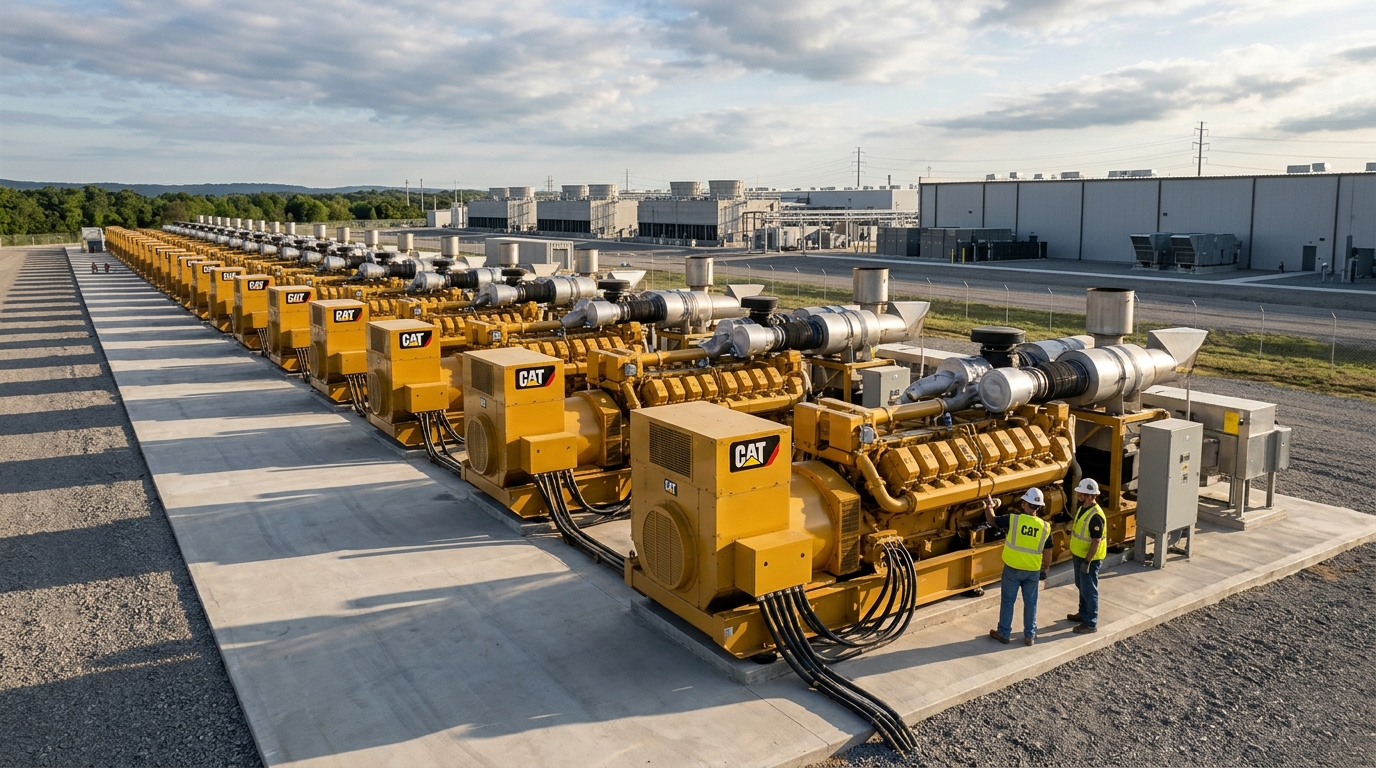
When most investors picture Caterpillar, they picture a yellow bulldozer on a construction site. The company’s latest landmark deal erases that image. Anthropic has agreed to pay approximately $3.4 billion for 1.7 gigawatts of Caterpillar gas-fired generators, in what the Financial Times described as the largest known single purchase of power-generation equipment by an AI lab. Nobody was pricing that possibility into CAT shares two years ago.
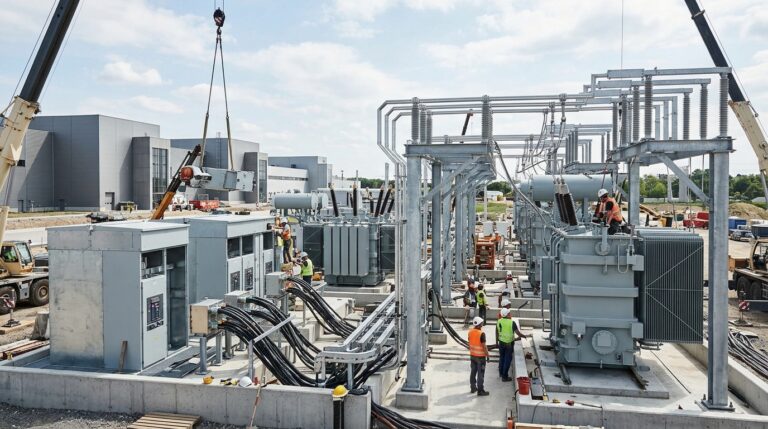
Anthropic took over existing Caterpillar orders originally placed by Texas-based supplier OnePWR Solutions, and by doing so it avoided having to start from scratch and wait for Caterpillar to find room for a new order in its production schedule. The economic logic is uncomfortable for anyone who thought this was still a cyclical machinery business: gas-turbine delivery slots at major suppliers are now being quoted out into the early 2030s, and grid-connection queues can run for years in constrained regions. Anthropic paid $3.4 billion essentially for a position in a line. That is what scarcity looks like when it compounds with urgency.
Caterpillar is not the only equipment maker benefiting from delivery queues that stretch years into the future. Siemens Energy carries a 69 GW gas turbine backlog with lead times running three years or longer, making it a direct competitor for the same AI infrastructure orders.
Dividing $3.4 billion by 1.7 gigawatts gives roughly $2,000 per kilowatt, a number that tells you everything about where pricing power now sits. Caterpillar did not need to negotiate aggressively. It merely had to hold the inventory.
The fundamentals confirm the shift is structural, not episodic. Caterpillar said third-quarter 2026 sales rose 17% to $20.7 billion, with Power Generation sales up 30% to $3.42 billion, driven mainly by turbines and large reciprocating engines in data center applications. Power & Energy is now Caterpillar’s largest segment by sales, ahead of Construction Industries. Surging demand tied to data centers has pushed Caterpillar’s total order backlog to about $72.1 billion, a record level, and management has said it is now taking some large reciprocating orders as far out as 2029 and turbine orders into 2030.
Anthropic’s financing turns an uncertain order into a funded one, de-risking Caterpillar’s backlog rather than adding to it. Still, $3.4 billion equals one full quarter of Power Generation sales. That is not an anecdote. That is a revenue stream.
What could derail the thesis? Regulatory risk is real. Voters in dozens of jurisdictions have restricted data center expansion in recent months, and that political pressure on the construction pipeline could slow the pace at which funded orders translate into delivered equipment. Tariff costs of around $2.2 billion for 2026, plus higher freight and depreciation, could keep margins near the low end of management’s target if pricing softens. And Caterpillar’s valuation now reflects some of this optimism. At roughly the low-to-mid 20s times trailing earnings, Caterpillar is arguably being treated less like a cyclical equipment maker than it was a few years ago.
The honest long-term question is not whether AI labs need power. They clearly do, and they will pay almost any price to avoid a multi-year wait. The most important near-term test is execution on engine and turbine capacity ramps and timely delivery into AI data center and natural gas projects already on order. Businesses that can deliver at scale into constrained markets tend to hold pricing power longer than the market initially expects. Caterpillar is now that business, in a market nobody fully modelled until this weekend.