
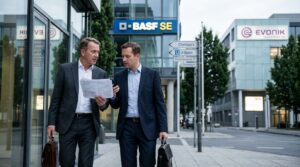


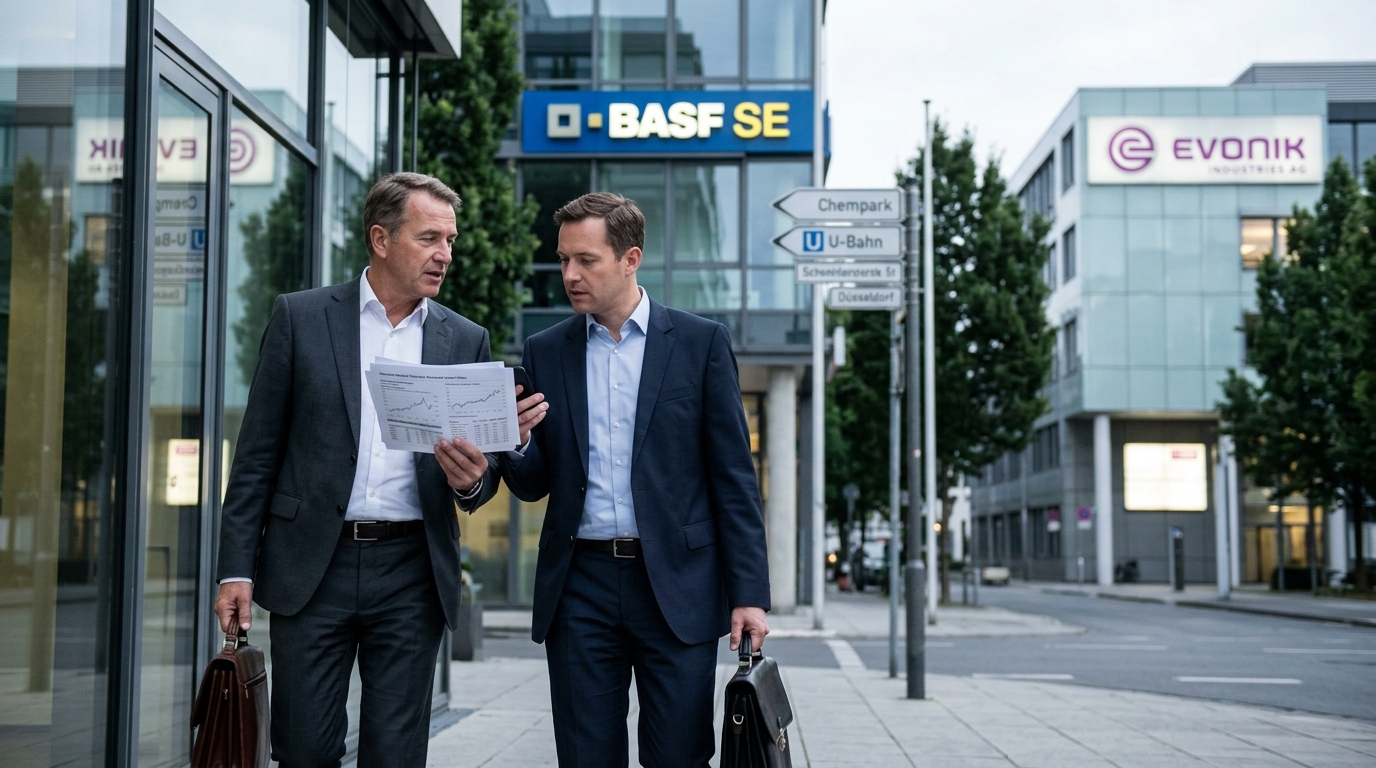
German chemicals manufacturer Evonik rejected a €10.3 billion ($11.7 billion) takeover bid from BASF as too low on Monday, according to people familiar with the matter cited by Reuters. Evonik shares, which had closed at €18.07 before news of BASF’s approach, ended the session up 2.4% at €19.84. The bid price: €22.15 per share. The close: €19.84. That €2.31 gap is the market’s live estimate of deal probability, and right now it says the odds are well below even.
Market Snapshot
BASF shares were little changed after a 3.6% fall on Friday when BASF confirmed it was in exploratory talks with Evonik and RAG-Stiftung. That asymmetry is telling: Evonik holds the spread, BASF has already absorbed the acquirer’s discount. The proposed price represents a nearly 23% premium to Evonik’s stock prior to public speculation regarding takeover interest, assigning the target an enterprise value of approximately €14.2 billion.
Stocks in Focus
- Evonik (EVKn): Evonik’s board cited the offer as insufficient to warrant formal negotiations or due diligence. The company, currently led by interim CEO Claus Rettig, has stated it received a non-binding approach but is not in negotiations. Watch for any shift in language from Essen or from RAG-Stiftung. Until one of them speaks, the spread trades on rumor.
- BASF (BASFn): BASF has said it will not comment further beyond its statement confirming exploratory talks. The company has publicly tied synergy estimates to Evonik’s cooperation, arguing the potential can only be verified with Evonik involved. Strategic logic is real. Willingness to pay more is the open question. Reuters reported Friday that BASF is at risk of losing its years-long rank as the world’s largest company by chemicals revenue to China’s Sinopec; last year BASF’s group revenue of €59.7 billion was almost the same as that of the chemicals segment of China’s Sinopec.
Sector Watch
The outlook for Europe’s €635 billion chemicals industry has rarely been grimmer, setting the stage for waves of consolidation. Sluggish demand, soaring energy costs, tariffs, a debilitating regulatory environment, and brutal global competition all weigh on the sector. Covestro was removed from LyondellBasell’s TSR peer group after its acquisition by ADNOC in December 2025, so one major consolidation move has already closed. The BASF-Evonik situation is the next live test of whether European chemical companies will merge to compete with China or remain separately exposed.
A merger would create one of the world’s largest chemicals companies, with combined annual sales on the order of €75 billion. That is the strategic prize. The price argument is what stands between here and there.
Risk Radar
The ultimate outcome will likely depend on the RAG-Stiftung foundation, the state-backed entity holding about 43.8% of Evonik to fund long-term obligations tied to Germany’s former hard-coal mining legacy. RAG-Stiftung’s board includes prominent political and labor figures. That combination of financial, political, and union interests makes a quick resolution unlikely and any hostile escalation genuinely complex.
BASF’s ambition to consolidate the German specialty chemicals landscape has run into a double wall: Evonik’s rejection of its opening offer and mounting resistance from labor representatives. BASF’s Q3 report drops October 28, and management will face direct investor questions on deal rationale and financing capacity then.
The Cheat Sheet
- Top Market Theme: Europe’s chemicals consolidation wave has its first hostile-shaped test case, with a €2.31 spread between Evonik’s close and BASF’s offer price marking exactly where uncertainty lives.
- Stock to Watch: Evonik. The spread is the trade. Watch RAG-Stiftung for any signal that its valuation threshold is closer to €22 than management’s cold rejection implies.
- Sector to Watch: European specialty chemicals. With Covestro already absorbed by ADNOC and LyondellBasell shedding European assets, Evonik is the last large independent German specialty name.
- Biggest Risk: BASF walks. If Ludwigshafen concludes the synergy math cannot justify a higher bid, Evonik retraces toward its pre-approach close of €18.07 in a single session.
- Biggest Opportunity: The spread. At €19.84 versus a €22.15 offer, any credible sign that BASF raises its bid or that RAG-Stiftung opens dialogue compresses that gap fast.
- One Thing to Remember: BASF publicly tied its synergy estimates to Evonik’s cooperation. That framing is deliberate pressure on RAG-Stiftung to engage, not a concession. The bid is not dead; it is waiting for the foundation to blink.