



September 28, 2026
Chinese AI Is Now Cheaper. Who Still Makes Money?
Developers are routing real work to Chinese models. The margin question is what matters now.
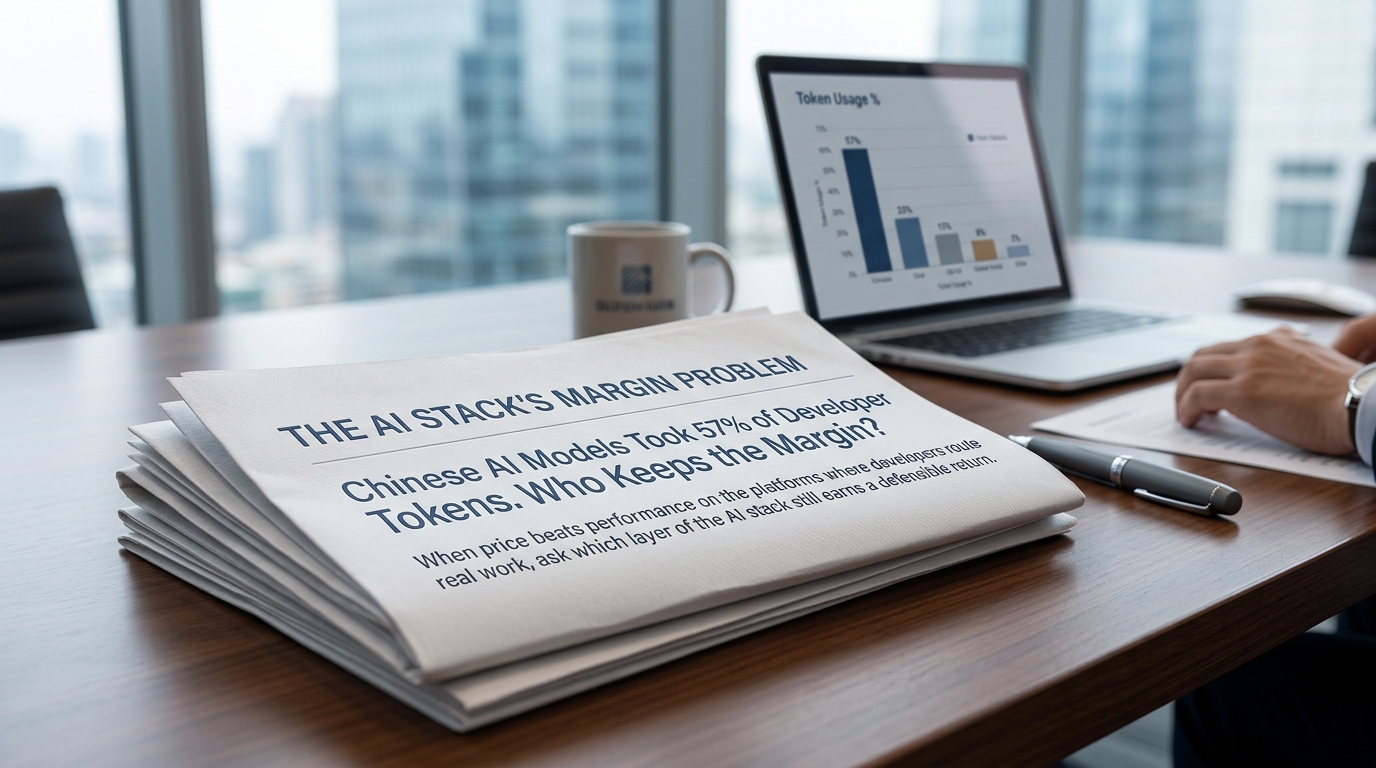
The number that rattled Washington last Friday was not a forecast. It was a usage report. On OpenRouter, Chinese models accounted for 57 to 67 percent of total token usage during the week of September 14, up from 6 to 13 percent in February. On Vercel, Chinese models reached 55 percent of tokens in August, up from 11 percent in January. Two platforms, the same direction, measured in actual workloads rather than surveys or sentiment.
A New Gold Rush at Mount Rushmore?
A small miner just uncovered a potentially massive gold discovery near Mount Rushmore – thanks to a breakthrough new technology.
The stock still trades for around $6… while BlackRock and Vanguard have already been buying shares.
Whitney Tilson traveled to Mount Rushmore to investigate firsthand.
The cause is straightforward. OpenRouter’s head of insights told CNBC that Chinese open-source models released this year “can credibly perform in advanced agentic use cases, especially in regards to coding,” and are “incredibly cost-effective compared to most models from American labs.” Open-source Chinese models can run 60 to 90 percent cheaper than leading offerings from Anthropic and OpenAI, according to figures OpenRouter shared with CNBC. Once a model clears a quality threshold for a given task, that price gap becomes the decision.
What the OpenRouter data suggests is that a real chunk of U.S. token demand is now behaving like a commodity, routed to whichever open model is good enough for the job. That is the investment question worth sitting with. Token volume is winning the headline. Margin is what matters.
Who Actually Keeps the Profit
Consider three layers of the stack.
At the model layer, American frontier labs are in a difficult position. OpenAI is not a public company and does not publish audited gross margin figures, so treat precise margin targets and percentages here as speculation. Still, the cost pressure is real. The Information has reported that OpenAI projections imply losses could reach $14 billion in 2026. OpenAI and Anthropic both introduced lower-priced flagship options on September 22, 2026, amid intensifying price competition. Cutting price to defend volume is not a winning move when the competitor’s cost structure is structurally lower. The model layer, for now, is not where the durable margin lives.
He Doesn’t Buy Gold. He “Skims” It.
A former hedge fund manager ranked in the top 1% by Barron’s has developed a three-step strategy to profit from gold – without buying a single ounce.
His followers have had the chance to collect $2,975… $3,781… and even $6,786 at a time. With a 73% win rate.
He calls it “Gold Skimming.” And he’s just revealed the full strategy for the first time.
At the chip layer, the picture looks different. Nvidia reported $96.2 billion in revenue for the quarter ended July 26, 2026, up 106 percent from a year ago. Gross margins held at 75 percent. Crucially, Chinese model adoption does not reduce GPU demand. It may actually increase it. Every token that moves to a cheaper open-weight model running on rented cloud infrastructure still requires accelerators. The buildout keeps spending. Whether those chips are Nvidia’s, or eventually something else, is the question export controls are designed to shape.
At the cloud layer, Google Cloud grew revenue 82 percent year over year in its most recent reported quarter. Hyperscalers selling compute to whoever runs the winning model are somewhat insulated from which model wins. Their margin comes from infrastructure utilization, not from owning the frontier model.
Alibaba Is Not a Spectator
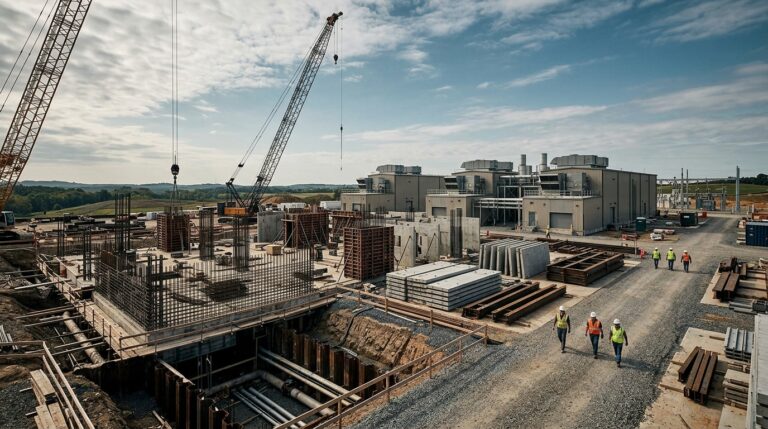
The most consequential development for long-term investors may not be the token chart at all. It is what Alibaba announced six days before the CNBC data dropped. CEO Eddie Wu outlined plans to expand global data center capacity beyond 20 gigawatts by 2032 and said Alibaba is preparing a next-generation Qwen model at the scale of five to 10 trillion parameters. Alibaba has said it will invest 380 billion yuan over three years.
At the Apsara Conference, Alibaba unveiled the Zhenwu V900, described by Wu as China’s most powerful AI chip, with Wu outlining heavy investment in AI infrastructure including the 380 billion yuan plan for cloud and AI infrastructure. The V900, from Alibaba’s T-Head division, can be combined in clusters of up to 500,000 units to power frontier-model training. This is not a company farming out its compute to Nvidia indefinitely. It is vertically integrating: model, chip, and cloud under one roof, with its Qwen family among the Chinese model groups taking major share on OpenRouter.
“$893 Profit in 8 Days, on My First Trade.”*
A former hedge fund manager will show you how to “skim” profits from the oil markets, without owning a single oil stock.
*The investment results described in this testimonial is not typical. Investing in securities carries a high degree of risk; you may lose some or all of the investment.
The ambition resembles what Google and Microsoft built over a decade, compressed into a six-year timeline, with domestic chip supply as the foundation. Alibaba Cloud has been described by Omdia as the leader in China’s AI cloud market, with a reported 38.1 percent share.
The Honest Risk
OpenRouter’s users are self-selected for price sensitivity. People who buy AI through a router are, by definition, the people most willing to move provider the moment a cheaper model appears. The traffic mix on OpenRouter is a picture of that group, not of the entire market. Enterprise contracts with Microsoft and Google locked in at scale do not change week to week. The share shift is real; the speed at which it reaches closed enterprise agreements is not yet known.
There is also the regulatory variable. The House Homeland Security Committee and the House Select Committee on the Chinese Communist Party opened a joint investigation in April 2026 into national security risks tied to adoption of PRC-developed AI models. Export controls have already restricted shipments of some Nvidia data center GPUs to China. Whether Washington can slow software adoption the same way it has slowed hardware exports is a genuinely open question.
What a disciplined long-term investor does with this moment is not panic-sell the frontier labs or declare Alibaba the winner. It is recognize that the cost curve in AI is compressing faster than the incumbents’ pricing power. The businesses best positioned for that world are those that sell the shovels regardless of which model wins, and those rare vertically integrated players that control model, chip, and cloud together. Nvidia still owns the shovels. Alibaba is building a mine.