





October 31, 2026
Bonus Content: Toyota Stayed Patient on Hybrids. Thursday’s Numbers Show Whether That Paid Off.
Most traders have never noticed the weird market anomaly that happens at 9:35 AM every morning.
They’re too busy with lagging indicators trying to predict the next move… when the market makers have already set the tone for the trading day.
It’s this weird anomaly that points us to the market maker’s key levels above and below.
And by playing the move within that range…
Regular folks like you have been able to reach for $100 or more (on a $1K stake) over 600 times in the last 2 years.
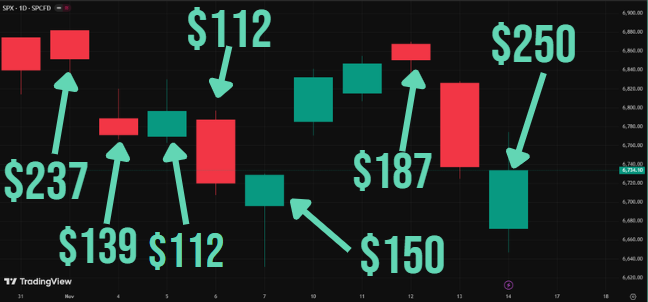
We’ve seen this straightforward approach play out whether the market broke out… broke down… or stayed choppy.
Granted, I can’t make trading guarantees here.
But I’ve opened up the data behind those trades, as well as how you can get in on the very next morning opportunity.
You’ll find the full details right here.
See you in the market.
Chris Pulver
Toyota Stayed Patient on Hybrids. Thursday’s Numbers Show Whether That Paid Off.

The automotive industry’s biggest strategic argument of the past decade is about to land in a set of financial statements. When Toyota reports its fiscal second-quarter results on November 5, the numbers will carry a question that goes well beyond one half-year: was the patient refusal to abandon hybrids one of the better capital allocation decisions in recent industrial history?
The backdrop could hardly be more loaded. The Bank of Japan said on October 30 that underlying inflation is generally consistent with its 2% price stability target, the first time it has said that since the 2013 accord that set the target. Ahead of the decision, economists and market participants broadly expected the BoJ to keep rates steady while keeping the door open to another hike later this year or early next. The USD/JPY exchange rate sat at about 157.57 on October 30, a level that translates foreign revenues into fewer yen and presses margins from one direction while tariffs press from another.
On tariffs, the picture is already clear from the full-year FY2026 results filed in May. U.S. tariffs imposed a ¥1.38 trillion negative impact on Toyota’s consolidated operating income for the year to March 2026. What Thursday’s half-year filing will show is whether Q2 of fiscal 2027 brought any relief, or whether the pressure deepened.
Toyota’s next scheduled reporting date is November 5, 2026, when the company plans to publish fiscal 2027 second-quarter results. The company reported first-quarter (April through June 2026) results on August 4, 2026. The half-year report will consolidate both quarters into the first clean measure of how the business is absorbing tariffs at run-rate.
Why Patience Looked Like a Mistake, Then Didn’t
For years, Toyota’s hybrid-first posture was described as timid. Volkswagen committed to full electrification. Mercedes chased premium EV margins. Stellantis announced sweeping battery investments. Some of the industry’s largest players are now dealing with the consequences of moving fast in the wrong direction.
By early 2026, global automakers had booked roughly $55 billion in EV-related writedowns as they scaled back plans. Stellantis, for example, disclosed charges of about €22.2 billion tied to a strategic reset that included significantly reduced expectations for battery-electric products. Ford has also disclosed large EV-related impairments and strategic shifts, though the size and composition of those charges have varied by filing and period.
Toyota, meanwhile, kept selling what customers were actually buying. Hybrids reached about 16% of U.S. sales at mid-year 2026, and Toyota held roughly the mid-40% range of that segment. Toyota has also continued to report strong growth in electrified vehicle sales globally.
This is not a story about Toyota being lucky. EV demand has been uneven, and policy and tariff changes have altered the economics of some models. The company that kept its product line aligned with actual consumer behavior, not projected consumer behavior, is the one with volume momentum heading into a difficult macro environment.
What the Mogul Framework Sees
A disciplined long-term investor running through this situation encounters a genuine tension. On business quality, the competitive position is strong: hybrid share of U.S. sales was around the mid-teens at mid-2026, with Toyota commanding close to half of the segment. Returns on capital have been pressured, not destroyed. The brand holds.
On the other side of the ledger, Toyota forecast operating income of 3.0 trillion yen for the financial year ending March 2027, and it has cited tariff impacts as a meaningful headwind. Toyota’s price-to-earnings ratio stood at 8.83 as of October 20, 2026, according to widely followed market data services, which is low by many comparable standards. The question is whether that reflects value or a structural earnings downgrade that the market has priced correctly.
The yen adds another layer. Markets have been debating whether the BoJ could move again as soon as December, and what that would mean for the currency and for exporters’ translated earnings. A stronger yen would compress the yen value of overseas earnings further, arriving just as Toyota needs every basis point of margin.
Thursday’s report will not resolve the tariff or yen debates. But it will show, for the first time in a single half-year filing, whether the company that was right about hybrids can also prove it is managing the external variables well enough to stay profitable while its rivals rewrite strategy documents. That is a different kind of patience, and it matters just as much.