


October 18, 2026
Bonus Content: Intuitive Surgical Reports Tuesday. One Quarter Is Not the Story.
All eyes are on copper, and for good reason.
The market is waking up to the fact that copper is much more than just a metal used for industry.
Without enough copper supply, nations can’t realize their ambitions related to green energy.
Without enough copper supply, the build out of data centers related to AI grinds to a halt.
Those two factors alone are a big reason why copper prices are on the way to breaking past all-time highs.
When you throw in the fact that, on top of those things, supply is dwindling, it makes complete sense why more traders are paying attention to this often overlooked metal.
The big winners in this new reality for copper will be under-the-radar names that have access to substantial resources in safe jurisdictions.
One company, with control over a historic copper belt in Canada’s Yukon, is exactly the kind of name that fits that criteria.
It’s already confirmed high-grade copper at its flagship asset.
It’s going to begin exploring past-producing areas.
It has plans for moving other target areas toward drilling, potentially adding more pounds of copper to its books.
Between multiple rigs working in a district-scale area and the company being fully funded through the end of next year, share prices likely won’t stay low for very long.
That’s why you’ll want to take a look at our brand-new online report FREE OF CHARGE.
Inside, you’ll learn all of the details about the company, its assets, its recent results, and why it has a very bright future ahead. You’ll also hear directly from the CEO and learn all about what’s next.
Intuitive Surgical Reports Tuesday. One Quarter Is Not the Story.
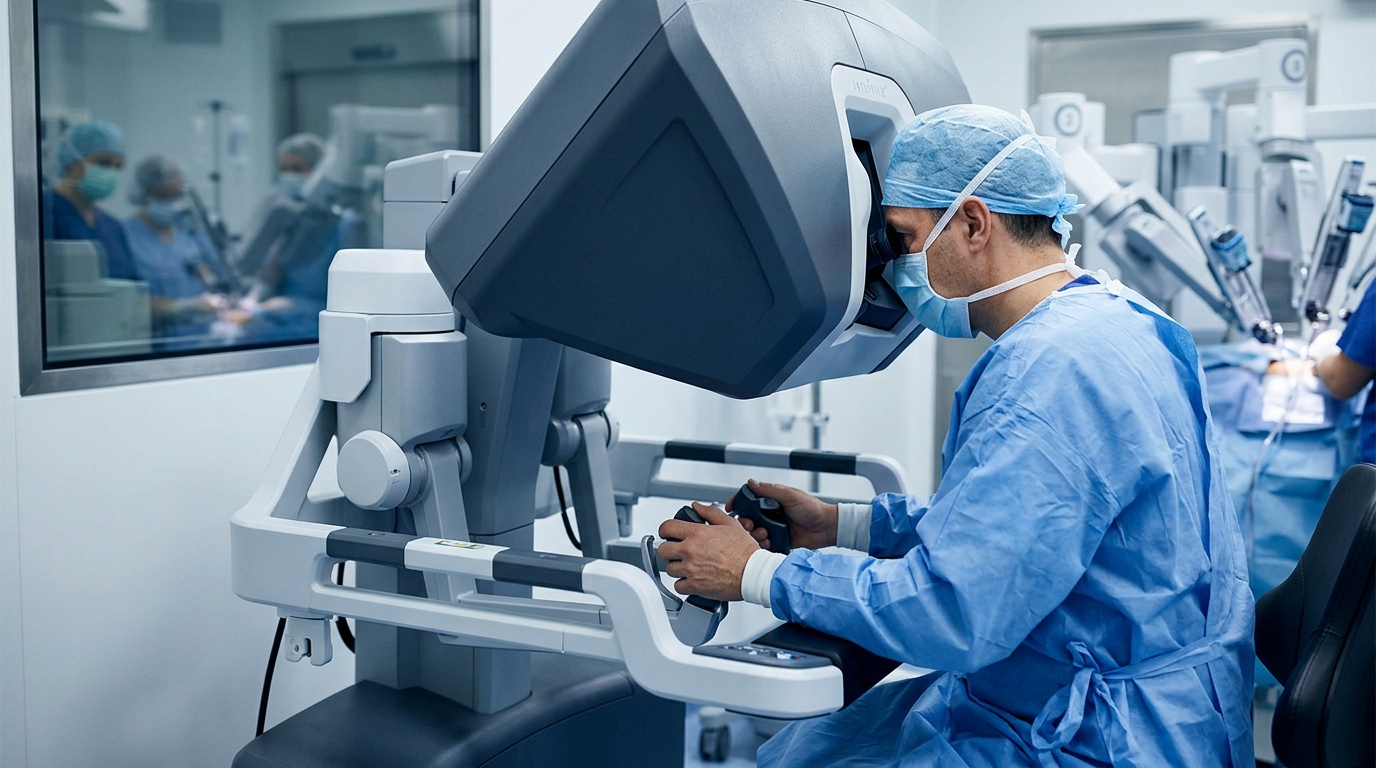
Robotic surgery is not a trend. It is a structural shift in how medicine is practiced, and Intuitive Surgical has been the only company that truly owns the infrastructure of that shift. With Q3 2026 results due after the close on Tuesday, October 20, the stock sits at a crossroads that has less to do with one quarter and everything to do with whether investors can hold the longer lens.
The Lock-In Others Cannot Replicate
The da Vinci competitive advantage is not a brand or a patent. It is an ecosystem that compounds with every installation. In its second-quarter earnings materials and its quarterly filing, Intuitive said that as of June 30, 2026, its da Vinci installed base reached approximately 11,710 systems worldwide, up 12% from a year earlier. Each of those systems anchors a hospital’s operating room layout, service contracts, and capital budget around Intuitive’s platform.
Most robotic surgeons first learn on da Vinci during residency or fellowship, meaning a move to another platform requires new credentialing, retraining OR teams, and workflow disruption. That self-reinforcing loop keeps new surgeons inside the ecosystem and makes displacement slow. Add to this the proprietary instrument requirement: once a hospital commits to a da Vinci system for an operation, it typically consumes Intuitive instruments and accessories tied to that platform. That is not a switching cost. It is a near-permanent revenue annuity.
Intuitive has also reported that total recurring revenue is about 86% of total revenue, with recurring revenue defined to include instruments and accessories, service, and operating lease revenue. This is the financial architecture that long-duration investors prize: a growing installed base that automatically generates higher revenues as procedure volumes rise.
What the Market Got Wrong Last Quarter
After Q2 results in July, shares fell roughly 12% despite the company beating both earnings and revenue estimates. Reuters reported that Intuitive beat expectations but fell after reiterating its full-year outlook and warning that insurance-plan changes could weigh on demand.
The procedural concern is real but worth calibrating. In its Q2 2026 disclosures, Intuitive said U.S. da Vinci procedure growth was approximately 12% for the quarter and that growth was modestly negatively impacted by the expiration of enhanced ACA premium subsidies. Those enhanced subsidies expired at the end of 2025, with impacts flowing into 2026 coverage and affordability for some patients. GLP-1 drugs also weighed on bariatric volume, and Intuitive has noted a decline in U.S. bariatric procedures that is small in the context of total procedures. Neither of these is, by itself, a structural threat to the business model.
Tuesday’s Report and What Actually Matters
Heading into Q3, consensus estimates vary by source. Several widely followed earnings aggregators have pointed to expectations around roughly $2.65 in EPS on about $2.91 billion in revenue. The range reflects modest but real uncertainty around U.S. procedure recovery after Q2’s deceleration.
The number that will move the stock is not EPS. It is whether U.S. da Vinci procedure growth has stabilized or continued slipping. Management’s commentary on regional procedure trends, system placements, and margins should provide important clues about the durability of quarterly growth.
The timing matters too. In recent trading, multiple outlets have described a rotation out of some crowded AI and tech exposures and into defensive sectors, including healthcare. A clean quarter from Intuitive could attract that capital directly, given that the da Vinci franchise represents something few medtech businesses offer: a genuinely durable growth engine with pricing power and margin expansion embedded in the model.
What Could Go Wrong
The bears think the moat is finally being tested. Intuitive faces competition from rivals including Medtronic’s Hugo and Johnson & Johnson’s Ottava. Johnson & Johnson announced in July 2026 that the U.S. FDA granted marketing authorization for its Ottava robotic surgical system, with a selective U.S. commercial launch planned. Both are positioning for hospital procurement conversations where budget pressure is acute.
Hospital budget pressure is not limited to capital equipment procurement. Large health systems are deploying AI scheduling and documentation tools to cut operating costs, reshaping how administrators weigh competing technology investments.
The stock carries a price-to-earnings ratio near 49 times based on mid-October 2026 readings, and a PEG ratio closer to the low-to-mid 2s in some commonly cited market data. At that multiple, there is no room for a second straight quarter in which guidance disappoints. A procedure growth rate that stays below the company’s own 13.5% to 15.5% full-year forecast would force a genuine reassessment of what the installed base is actually worth.
The Long-Term Verdict
The machinery of Intuitive’s compounding is intact. Approximately 11,710 da Vinci systems, a surgeon training ecosystem that takes years to build, and an instrument-and-service revenue stream that grows as procedure volumes rise: none of that disappears after a soft quarter in U.S. elective surgery. The question Tuesday answers is whether the soft patch was a temporary insurance-policy disruption or the beginning of something slower. If procedure growth shows stabilization back toward the mid-teens, the stock likely benefits as investors look for durable healthcare compounders. If growth stays around 12% or below, the near-49-times earnings multiple becomes a genuine problem. Patient investors should watch the procedure number, not the EPS line.