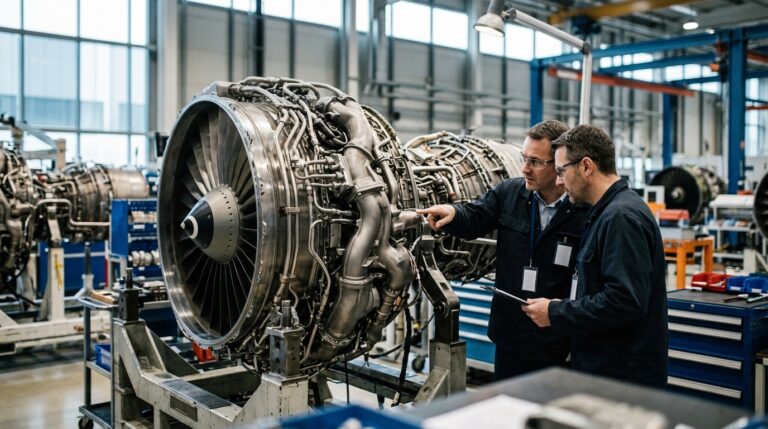
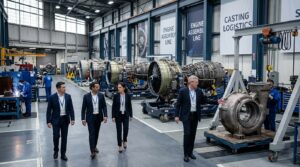


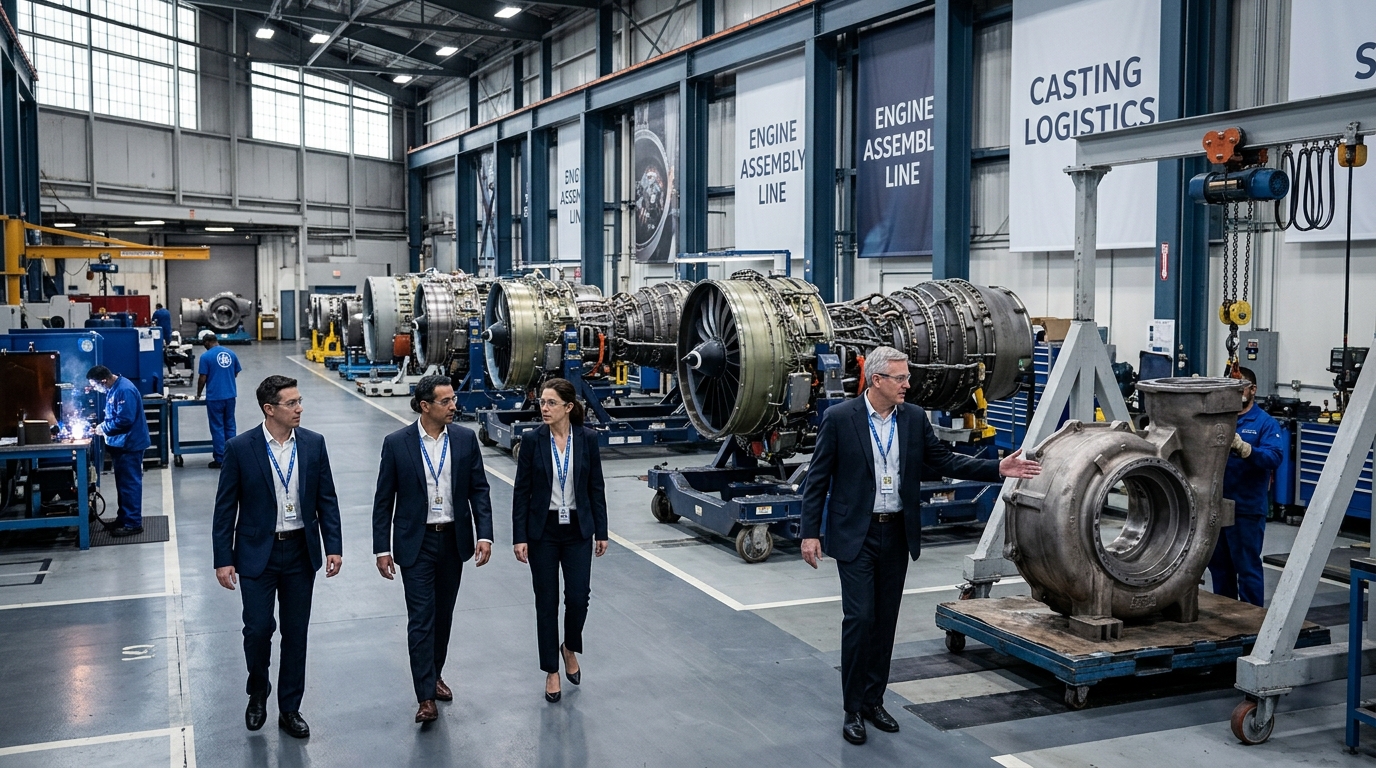
There is a queue that never seems to shrink at GE Aerospace. Engines staged at Boeing’s Charleston facility, waiting on castings. Shop visits backlogged beyond capacity. Services backlog sits near $170 billion, and spare-parts delinquency grew 20% sequentially in the second quarter even as revenue rose. The demand is there. The engines are mostly there. The bottleneck is a poured metal part that takes months to produce and is extraordinarily difficult to make right.
On September 8, CEO Larry Culp settled the debate about what to do. GE Aerospace signed an agreement to acquire Consolidated Precision Products, a leading manufacturer of highly engineered castings, from private investment firms Warburg Pincus and Berkshire Partners for $11.75 billion. It is the largest acquisition GE Aerospace has made since becoming a standalone company in 2024.
This is not a diversification move. It is not a bolt-on. It is GE deciding that the constraint choking its best business model belongs inside the company.
Why Castings Are the Whole Game
GE expects its demand for airfoils to rise more than 30% by 2030 from 2026 levels. Airfoils include turbine blades and vanes that operate in some of the hottest parts of an engine. CPP is one of the world’s largest manufacturers of investment and precision sand castings used in aerospace, defense and power generation applications, producing complex castings made from superalloys, titanium, aluminum, magnesium and steel for commercial and military aircraft, weapon systems, regional and business jets, helicopters and industrial gas turbines.
That demand is coming from two fronts. Culp has said GE and its suppliers face competing demands from aircraft makers seeking more new engines and airlines needing more parts and repairs. The aftermarket side is what makes this so compelling: every engine GE has ever sold represents decades of service revenue, and that revenue depends on getting the right castings to the right shop at the right time. When supply falls short, the economics erode fast.
That visibility is only worth something if the parts arrive. Owning CPP is how GE ensures they do.
The Price and the Logic
GE Aerospace will fund the purchase with $7 billion in cash along with new debt for the remainder of the transaction, which is expected to close in the second half of 2027. The transaction values CPP at approximately 18 times projected 2027 EBITDA including expected net synergies, or approximately 26 times EBITDA excluding those synergies. That is not a distressed purchase. It is a premium for certainty, and Culp is arguing that certainty over your own supply chain is worth paying for when your backlog tops $210 billion.
GE is not alone in betting that backlog size means little without the supply chain to support it. RTX entered its own earnings report carrying a $271 billion backlog while the market waited to see whether execution could match the order book.
By bringing airfoil design and manufacturing closer together, GE expects to shorten development times and make it easier to ramp up production of new parts. That matters for next-generation platforms, not just the LEAP engines powering today’s narrowbodies.
What Could Go Wrong
The deal does not close until the second half of 2027, which means the supply constraint persists through at least six more quarterly reports. CPP currently supplies about a quarter of GE’s airfoil needs, according to Jefferies estimates, meaning the acquisition does not multiply GE’s total casting capacity so much as bring an existing supplier in-house. Pratt & Whitney plans to add an in-house casting foundry in North Carolina, and Rolls-Royce is expanding casting capacity at its Advanced Blade Casting Facility in Rotherham, England, so GE is not the only engine maker racing to solve this problem.
Pratt & Whitney’s foundry push is part of a broader pattern across the engine industry. RTX is navigating the same supply-chain pressure against a $271 billion backlog of its own, making the casting race a sector-wide constraint, not a GE-specific fix.
And the multiple matters. GE trades at a trailing PE of about 36.28 with a market cap of roughly $326 billion. That pricing already assumes strong execution on a backlog that has yet to convert at full speed.
The Long-Term Verdict
When GE reports Tuesday morning, October 20, 2026, analysts expect $2.01 EPS and about $12.66 billion in revenue, with consensus earnings per share representing about 21% growth from the year-ago quarter. The numbers matter. But Tuesday’s call will be as much about what management says on CPP integration planning and casting output targets as it is about Q3 itself.
The underlying logic of this acquisition is hard to argue with. GE has one of the most powerful aftermarket models in global industry: sell an engine once, collect service revenue for 30 years. That stream is only as strong as the supply chain behind it. Spending $11.75 billion to own a critical link is not a sign of weakness. It is the kind of capital allocation decision that long-term investors should recognize: when your biggest constraint is also your biggest opportunity, buying it is often cheaper than not.