



September 29, 2026
Bonus Content: The Arbitrage Is Dead. Who Wins Now?
Three shipments, fifty tonnes, and 4,405 ounces of silver
Fifty tonnes is about two truckloads. In 1907, 1916 and 1917 men carried roughly that much rock out by hand and by horse.
Government records put the grade between about 2,400 and 4,160 grams of silver a tonne, and the recovered silver near 4,405 ounces.
After 1917, silence for ninety years. Then in 2008 a loose rock from the same area assayed insane results. Enough to get the team mobilized.
See what modern mining technology is finding what was missed 100+ years ago..
The Arbitrage Is Dead. Who Wins Now?
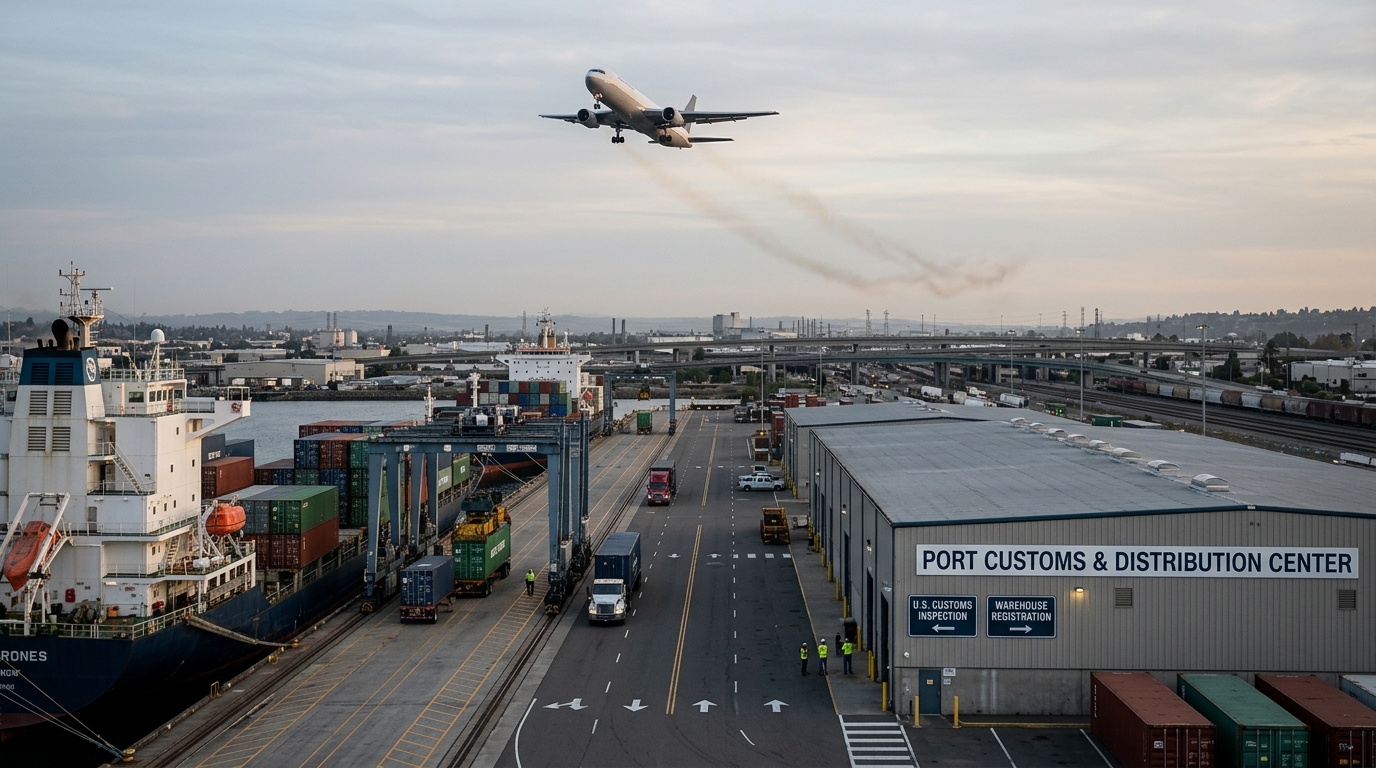
For years, the most consequential line in American customs law was not written for any corporation. Section 321, the so-called de minimis exemption, allowed parcels valued under $800 to enter the United States duty-free, a rule conceived for tourists mailing home trinkets. Shein and Temu turned it into a global logistics strategy, air-freighting a $5 top directly from Guangzhou to an American doorstep while a department store paid full duty on the same garment shipped by the container-load.
That structural advantage is gone. Duty-free de minimis treatment for covered goods from China and Hong Kong ended at 12:01 a.m. EDT on May 2, 2025. Duty-free de minimis treatment was then suspended for virtually all countries effective August 29, 2025, and it was continued and reaffirmed by executive order on February 20, 2026. In practical terms, this is the first full calendar year in which essentially every commercial package faces duties, taxes, fees, and related charges regardless of value. The European Union followed with its own temporary €3 customs duty on low-value consignments up to €150, effective July 1, 2026.
The financial consequences are no longer theoretical. Shein’s draft prospectus, filed ahead of its planned Hong Kong listing, shows the company still leaned heavily on China-based fulfillment going into the rule change, and the margins show it plainly: U.S. revenue fell 14.3% year-over-year in Q1 2026 to $2.04 billion, operating margin compressed from 3.9% to 2.9%, and the company slipped to a $99 million quarterly net loss despite stable order volumes. For the full year 2025, Shein’s net income fell 38.7% to $2.06 billion as revenue growth slowed from 20.7% in 2024 to 8% in 2025. The demand held. The economics did not.
Temu has moved faster. It halted direct China-to-U.S. shipments and pivoted its American storefront toward products fulfilled from local warehouses, while recruiting U.S.-based sellers to fill the catalogue. The adaptation is real, but it carries its own cost: logistics expense per order runs roughly $9 to $10 under the fully managed model, and analysts have estimated per-order losses of around $30 in the U.S. market under that subsidy-heavy approach.
Here is the investment insight worth holding: the air-freight de minimis model was not just a customs trick. It was a subsidy that masked the true unit economics of direct-to-consumer fast fashion at intercontinental distances. Now that the subsidy is gone, the businesses that survive will look structurally different. Local warehousing converts a cross-border import operation into something closer to a domestic retailer, with inventory risk, carrying costs, and markups to match. The price gap that made Temu and Shein culturally irresistible narrows considerably.
The long-term question is not whether these platforms survive. They will. The question is what they become: Amazon-style marketplace operators earning commissions on third-party sellers, rather than arbitrageurs exploiting a regulatory gap. That is a far more competitive business to be in, against incumbents who have been building domestic logistics infrastructure for decades and who, notably, were never subsidized to begin with.
A disciplined investor should note that the closure of a structural loophole rarely destroys an entire industry. It redistributes advantage. Watch which platforms convert their customer relationships into genuine domestic retail operations fastest, and which ones discover their growth was borrowed from a customs rule, not earned from a better product.