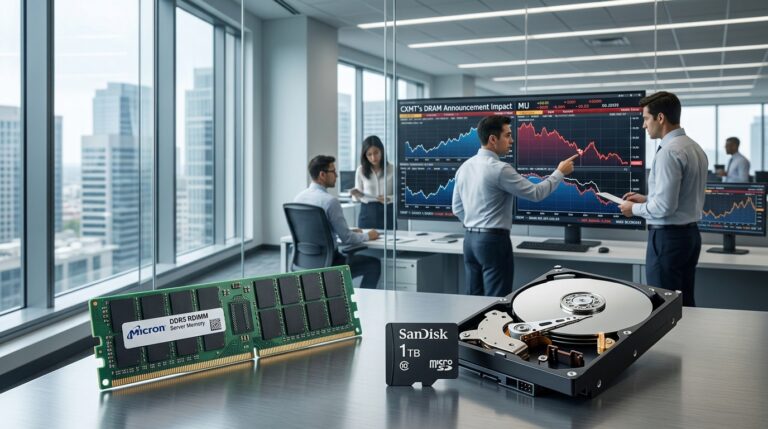





When Amazon raised the Echo Dot from $49.99 to $79.99 last week, it did something unusual for a company that built its consumer hardware business on razor-thin margins: it told the truth. Amazon confirmed the increases in a statement to Fortune, saying the consumer electronics industry is “facing significant increases in memory and storage component costs” and that it had been absorbing those increases before passing them on. That admission is the clearest signal yet that the DRAM shortage has moved past data center budgets and into consumer devices. The company that benefits most from that reality is Micron Technology.
Amazon overnight raised prices across its hardware line, including taking the base Echo Dot from $49.99 to $79.99 and the 16-gigabyte Kindle from $109.99 to $149.99 and the Kindle Paperwhite from $159.99 to $199.99. Apple raised the HomePod mini to $129 from $99. Microsoft raised Xbox console prices by $100 to $150 depending on storage tier, pointing to the same rising costs. This is no longer one company managing a supply blip. It is an industry-wide pricing event, and the beneficiaries are the three firms that control roughly 90% to 95% of global DRAM output: Samsung, SK hynix, and Micron.
Among that trio, Micron is the most compelling investment story today. Micron’s Q3 fiscal 2026 earnings showed non-GAAP EPS of $25.11 against a $20.28 estimate, with the single biggest engine behind the results being exceptional pricing power that pushed gross margin to 84.6% of revenue, up from 37.7% a year earlier. The company guided fiscal Q4 revenue of $50.0 billion and non-GAAP EPS of $31.00, anchored by newly signed multi-year Strategic Customer Agreements designed to improve revenue durability. Management also said it projects it will receive $22 billion in cash deposits and related financial commitments under these agreements, an extraordinary level of forward commitment in an industry that has historically been brutally cyclical.
The supply math behind all of this is structural, not temporary. SK hynix, Samsung, and Micron are the only volume high-bandwidth memory producers, and multiple reports have said 2026 capacity is effectively spoken for under longer-term agreements. Micron has described a roughly 3-to-1 trade ratio between HBM and DDR supply, so every HBM ramp directly compresses the supply available for conventional DRAM. Conventional DRAM contract prices are forecast by TrendForce to rise 13% to 18% quarter over quarter in Q3 2026, with weaker consumer demand moderating but not reversing the increase. New fab capacity is coming, but meaningful new supply is still not immediate, which keeps the market tight.
The downstream damage to device makers is real and accelerating. IDC forecasts a record 16.7% smartphone shipment decline in 2026, with the memory crisis pushing average selling prices up 27.6% to $581. That volume destruction is actually good for Micron: fewer cheap handsets means the memory that does ship commands premium prices.
Bull case: The shortages give Micron significant pricing power in one of the chip market’s highest-growth segments, and long-term strategic customer agreements further lock in revenue and profit visibility, reducing the traditional volatility of the memory business.
Bear case: Micron stock has slumped from a year-to-date high near $1,255 in June to around $933, and a class action filed in June alleges the three major DRAM makers coordinated supply cuts. The allegations are untested, but any regulatory action would cloud the pricing outlook.
Watch for: Micron reports fiscal Q4 results on September 30. Whether management maintains $50 billion guidance or raises it is the single most important near-term data point. Amazon’s price list just confirmed that the memory shortage is real and still spreading. The question for investors is whether Micron’s stock, now well off its highs, has already priced that in.