



August 29, 2026
What Nvidia’s Starmind bet reveals about durable advantages and founders who compress time.
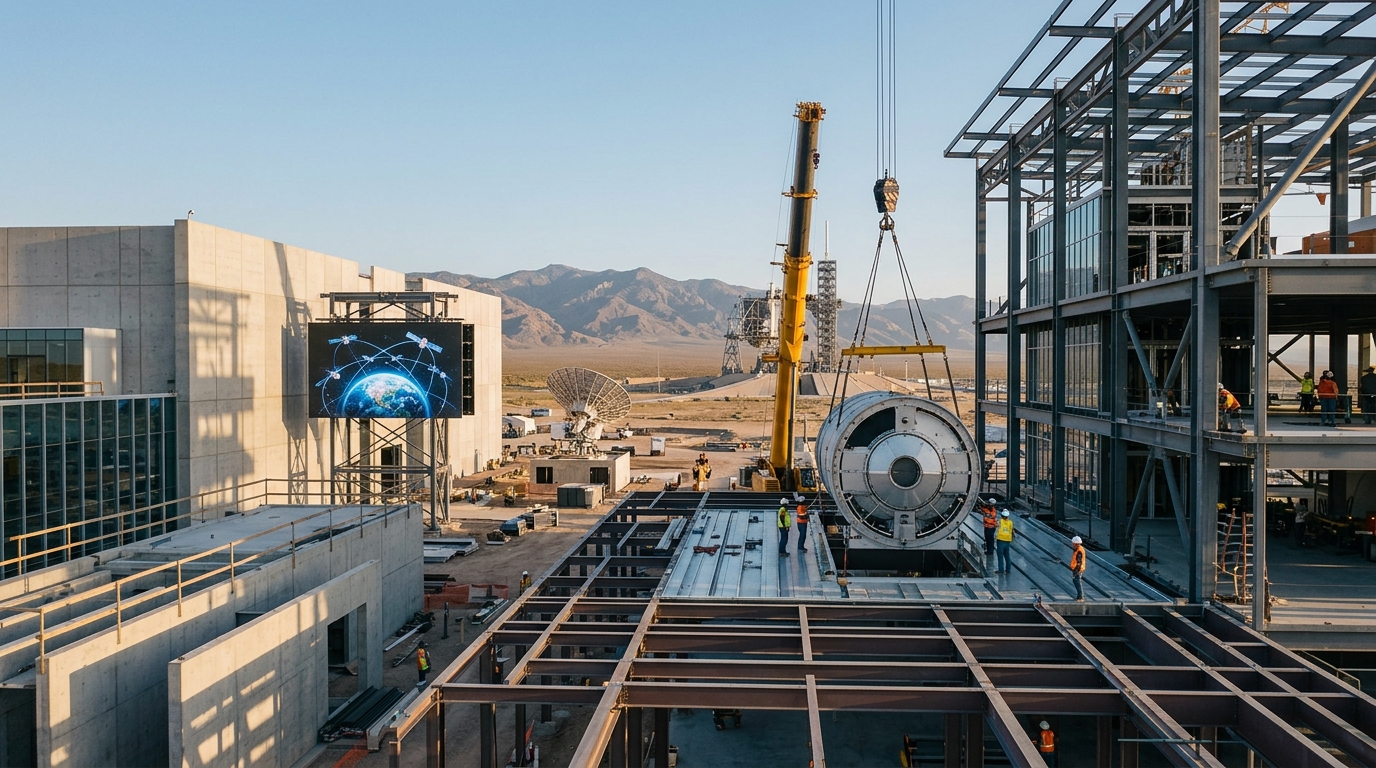
Three months after SpaceX completed the largest IPO in history, Elon Musk did something instructive: he moved a deadline forward. The company’s first orbital data center is now due to launch in the fourth quarter of 2027, roughly a year ahead of what SpaceX told investors in its May prospectus, which said deployment would begin “as early as 2028.” That acceleration deserves more attention than the satellite itself.
The project is called Starmind. SpaceX and Nvidia are jointly developing the compute payload for a satellite called Starmind AI1, the first in a planned constellation of orbital AI data centers, with each satellite carrying Nvidia’s Rubin GPUs and Vera CPUs. Nvidia has said its Space-1 Vera Rubin module can deliver up to 25 times the AI processing performance of an H100 GPU for space-based inference.
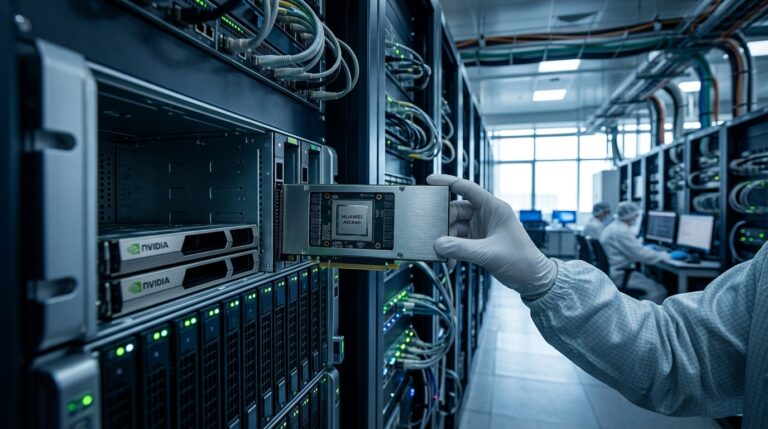
The architecture choice is the tell. Musk did not quietly select a vendor. He said bluntly on SpaceX’s earnings call that SpaceX agreed to use Nvidia exclusively because “the Vera Rubin architecture is the best architecture.” That matters for how a long-term investor should think about Nvidia’s position.
THE STARLINK OF ENERGY
This little-known stock could benefit from a major government catalyst this August
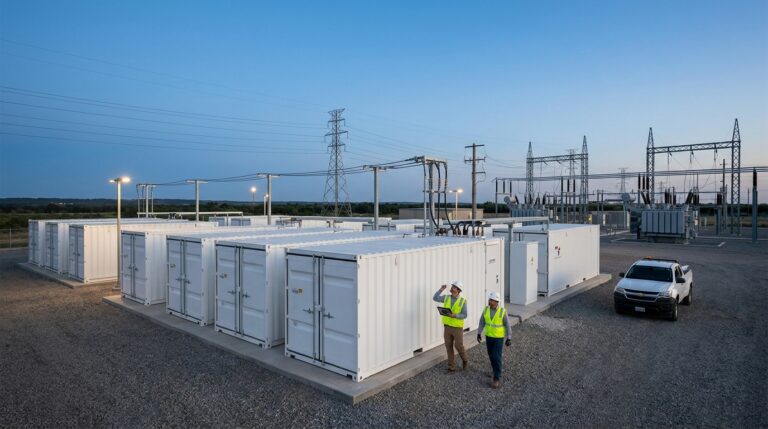
A single “Energy Cube” can be delivered by truck… dropped next to a data center, military base, or industrial site… and provide reliable electricity for decades.
Think of it as the “Starlink of Energy.” A government milestone expected this August could shine a spotlight on one little-known company at the center of the Energy Cube story.
The Moat That Reaches Orbit
Skeptics have argued for two years that Nvidia’s dominance is fragile: hyperscalers are designing custom silicon, AMD’s ROCm is maturing, and inference is commoditizing. All of that is real. Nvidia’s gross margins have stayed above 70% recently, which reflects genuine pricing power. But the standard bear case is not wrong on the facts.
What the Starmind decision complicates is the conclusion. What makes Nvidia different is that it is both a chip company and a computing platform company, one that sells a tightly connected system built around its GPU architecture and software stack, which helps customers run graphics, simulation, and AI workloads efficiently. The flywheel, where software excellence drives hardware sales, which funds further software R&D, widens Nvidia’s performance gap and makes its moat increasingly difficult for competitors to cross. Starmind is evidence that this flywheel is now spinning in domains that did not exist when analysts built their bear cases.
Jensen Huang put it plainly: “Space computing, the final frontier, has arrived. As we deploy satellite constellations and explore deeper into space, intelligence must live wherever data is generated.” That is not a marketing line. It describes a genuine expansion of the addressable market for an architecture that already dominates on Earth.
Guess which tech stock is about to crash next?
No one believed Whitney Tilson when he predicted the collapse of Bear Stearns and Lehman Brothers. Or when he went on 60 Minutes exposing a company of poisoning its own customers. (The stock fell nearly 80%.) Now he has a new warning about what’s REALLY around the corner for America’s most beloved tech companies.
Founders Who Compress Timelines
The more instructive signal for investors may be the timeline itself rather than the technology. On SpaceX’s first earnings call as a public company on August 4, 2026, Musk said launches would start the following year. Then on August 24, 2026 he put a quarter on it, posting that “SpaceX, in partnership with Nvidia, has designed a space-optimized Vera Rubin NVL72 system for launch to orbit in Q4 next year, with significant scale in 2028.” Prospectus language gave way to a specific quarter inside four months.
That pattern recurs across Musk’s ventures. Rubin was expected to begin production shipments in the second half of 2026, and Nvidia has said the platform has been ramping into full production in 2026. Timeline compression, repeated, is a signal about how an organization allocates urgency. It is also the hardest thing for a competitor to imitate.
The honest counterargument is real engineering. An orbital data center has no ambient air or water to carry away heat, so every watt of waste heat must leave as radiation, and radiating hundreds of kilowatts from a spacecraft is a non-trivial thermal design challenge. Regulatory friction is real, too: SpaceX filed an FCC application in January 2026 seeking authority for a new non-geostationary “Orbital Data Center” system of up to one million satellites, and it has drawn substantial pushback.
A Tiny AI Stock With 98 Patents?
Ross Givens says his #1 AI stock isn’t Microsoft, Google, Amazon, Apple or Nvidia. It’s a little-known company trading for just a few dollars, with 98 patents and major partnerships already lined up.
What a Mogul Studies Here
The opportunity is not simply to own a satellite company before it launches. It is to recognize what an architecture win in an entirely new computing environment says about competitive durability. For investors, the key point is not simply that Nvidia is going into space, but that this is another sign of the market for its technology continuing to expand, with Nvidia increasingly moving beyond the traditional model of primarily selling GPUs for data centers.
Nvidia has earned unusually high returns on equity in recent years, well before ChatGPT made AI mainstream. That level of sustained profitability only happens with genuine competitive advantages. The question for a disciplined buyer is whether the price today is reasonable against a business that is now compounding its addressable market upward into orbit. That answer requires patience with the valuation. But the quality of what is being valued just got harder to dispute.