


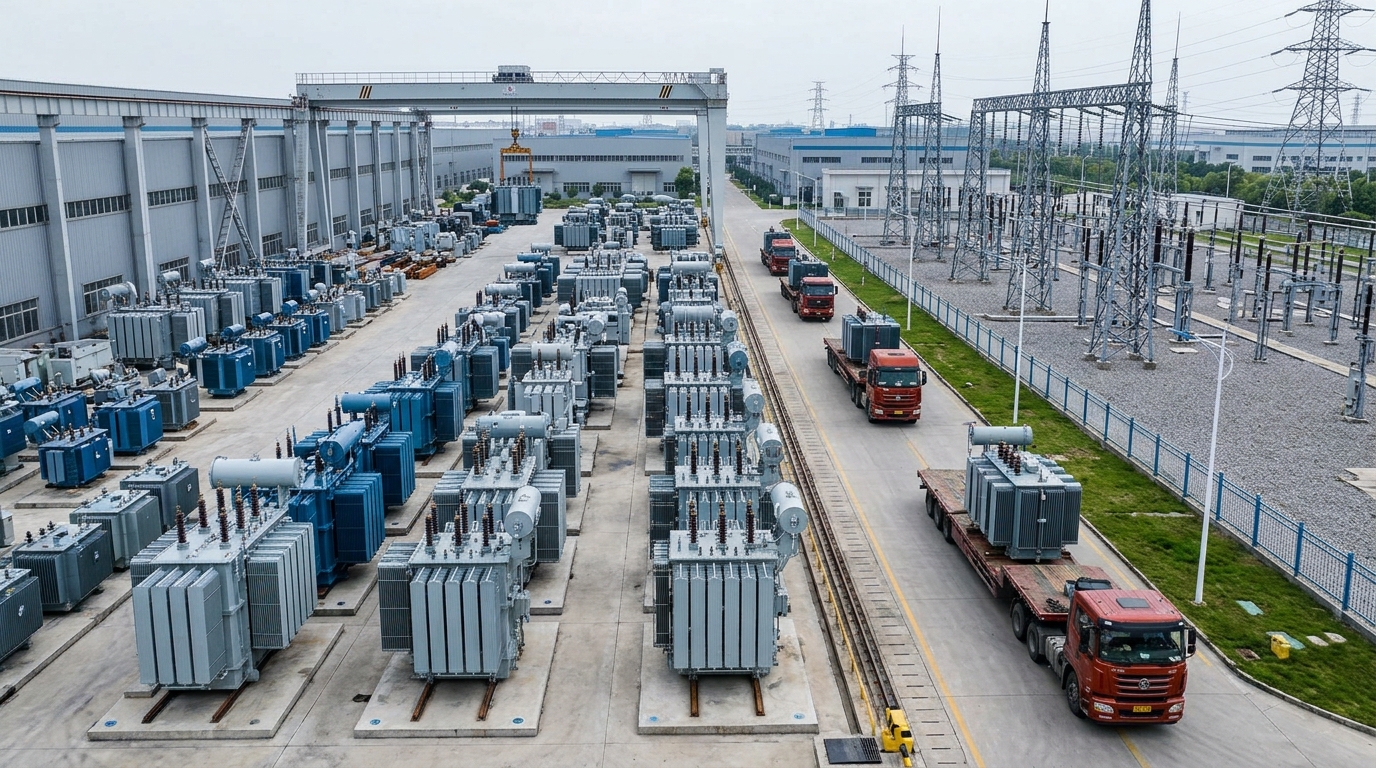
There is a queue you do not want to be in. A U.S. Department of Energy-funded hydropower supply-chain analysis found that procuring a typical 100-MVA large power transformer takes about 2.5 to 3 years, and extra-high-voltage units can take up to five years. Transformer costs have risen sharply since 2021, with that same analysis citing prices up about 80% in 2025. The companies waiting in that queue are hoping supply catches up to demand. GE Vernova just decided to become the supply.
On October 28, 2026, GE Vernova presented third-quarter 2026 results while unveiling a $9.0 billion acquisition of Trench Group, a global leader in high-voltage grid equipment. High-voltage grid components are becoming a critical constraint as utilities, transmission developers, and hyperscalers compete for equipment. Trench makes bushings, instrument transformers, and coils, and it also produces reactors.
Why Trench Is Worth $9 Billion
Trench makes the kind of parts that go inside transformers and other equipment. According to GE Vernova, Trench serves more than 800 global utilities and hyperscalers and brings approximately $5 billion in backlog and framework agreements.
The company said Trench expects revenue to reach about $1.9 billion in 2028. It also said some of Trench’s backlog and framework agreements reach into the next decade.
The strategic logic goes further than securing components for GE Vernova’s own factories. Trench has signed framework agreements with Siemens Energy and Hitachi Energy, in addition to GE Vernova. By acquiring it, GE Vernova locks up its own supply chain while gaining control of a major bottleneck that matters to other large grid suppliers as well. That is not a defensive move. It is a structural advantage, compounding over every year competitors remain dependent on constrained third-party sourcing.
The Business Behind the Deal
In the third quarter alone, GE Vernova said orders rose 96% year over year on an organic basis, and backlog expanded by about $20 billion sequentially to reach $197 billion.
The order surge reflects a demand signal that goes beyond any single company’s backlog. PJM’s capacity auctions clearing at the price cap two years running show why grid equipment demand is structural, not cyclical.
In the Power segment, GE Vernova reported an EBITDA margin of 21.4%, with organic margin expansion of 830 basis points, while shipping 32 gas turbines, a 60% increase year over year.
GE Vernova raised its 2026 guidance and now expects revenue of $46.5 to $47.5 billion, adjusted EBITDA margin of 13.5% to 14.5%, and free cash flow of $16 to $17 billion. The board also increased the share repurchase authorization to $20 billion, from $10 billion. A company generating that kind of cash and still finding room to buy strategic assets is demonstrating exactly the capital allocation discipline long-term investors should want to see.
What Could Go Wrong
The acquisition is valued at 13 times Trench Group’s estimated 2028 adjusted EBITDA excluding synergies, with an expected closing in late 2027. That is not a cheap price, and a year-plus regulatory timeline introduces execution risk. If the global grid build-out slows or AI data center demand disappoints, the multiples paid for Trench become harder to justify.
GE Vernova said it projects more than 55,000 U.S. transmission substations will need to be completely rebuilt or upgraded to higher voltages over the next decade, but projections are not contracts. Rivals are not standing still either. Siemens Energy has described a $421 million expansion across North Carolina that includes further investment to expand its large power transformer manufacturing facility in Charlotte, and Eaton has said it is investing $340 million to convert an existing facility in Jonesville, South Carolina into a manufacturing site for three-phase transformers, with production and hiring expected to begin in 2027. New capacity from all sides could eventually soften the scarcity premium that makes Trench’s position so valuable today.
The Long-Term Verdict
The strongest businesses do not simply benefit from a constrained market. They own a piece of the constraint itself. Trench’s bushings and instrument transformers are not interchangeable commodities, and long lead times remain a defining feature of critical grid equipment. The deal converts a supply-chain vulnerability into a durable competitive position, deepens the Electrification segment’s moat, and adds customer relationships that extend into the next decade.
A $197 billion backlog growing faster than the company can convert it, free cash flow guidance lifted to $17 billion, and now a vertical integration move into one of the scarcest components in the power grid: GE Vernova is building the kind of business that compounds. The Trench acquisition is not a bet on a hot market. It is a decision to own the market’s binding constraint, which is a different thing entirely.