


September 21, 2026
A Treasury carve-out for biopharma could keep $110B in deals flowing and raises a harder question about where innovation value lands.
The story most investors are reading today is about a regulatory reprieve. Chinese biopharma stocks rose Monday after a report that the U.S. may continue to allow most drug licensing deals with Chinese firms. Innovent Biologics jumped 6%, Akeso surged 8%, CSPC Pharmaceutical gained more than 6%, and Sino Biopharmaceutical added about 8%. The Hang Seng Biotech Index climbed more than 5% on the session.
Trump Put $25M Here. Most Investors Missed It.
A little-known AI infrastructure fund has reportedly attracted Trump’s attention.
Now ordinary investors may have a way to learn about it for around $15.
The stock moves are real. But they are the surface. The deeper question is structural, and it matters far more to long-term investors than a single Monday rally.
Where Innovation Has Moved
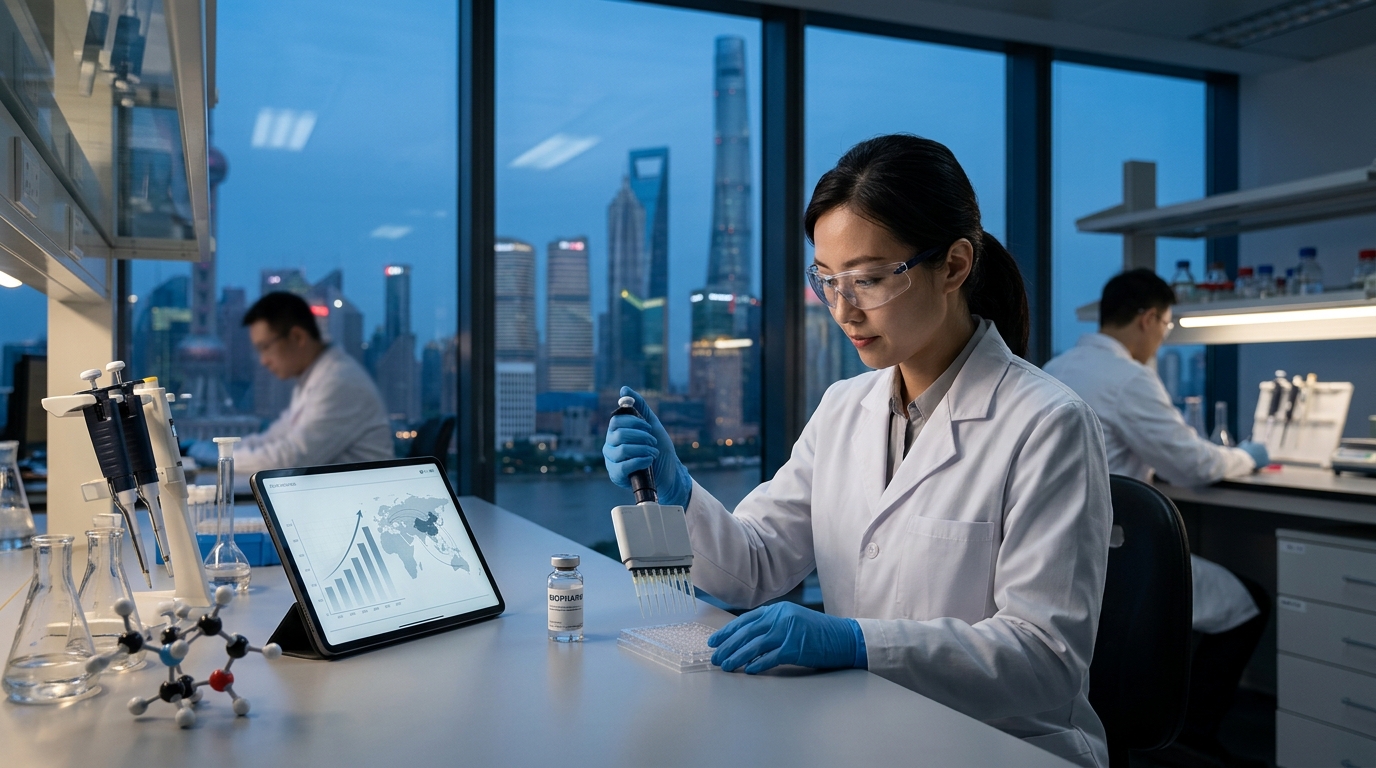
In the first half of 2026 alone, China’s innovative drug out-licensing totaled about $110 billion across 81 deals, a record, according to state broadcaster CCTV citing China’s drug regulator. That is not a statistical quirk. China biopharma out-licensing surged nearly tenfold to a record $137.7 billion in 2025, with 2026 already on pace to break that mark as average deal sizes jump 76% year-over-year.
More drugs were approved for market in China than in the U.S. in 2025, according to China’s National Healthcare Security Administration citing China’s drug regulator. The geography of pharmaceutical invention has shifted in a decade. The question investors need to answer is not whether this trend is real. It is who captures the value it creates.
Strange Elon Crates Spotted Near the Hoover Dam
Tesla is shipping thousands of strange white crates to critical locations across America.
And Adam O’Dell, the analyst who recommended Palantir before it became the top performer in the S&P 500, has the scoop…
He says they are part of a new “super startup” that has nothing to do with electric vehicles, space, social media, crypto, biotech, robots or AI…
But it could go down as Elon’s greatest ever disruption…
Why Big Pharma Cannot Walk Away
The answer starts with patent cliffs. Industry advisory firm Vision Life Sciences projects that patent expirations could expose as much as $200 billion in annual global pharmaceutical revenue to generic or biosimilar competition between 2026 and 2030. Western companies need fresh pipelines, and Chinese biotechs are supplying them at scale and speed that internal R&D cannot match.
Bristol Myers Squibb this year signed a partnership with Jiangsu Hengrui Pharma worth up to $15.2 billion, while Pfizer announced an up-to-$10.5 billion collaboration with Innovent Biologics covering 12 oncology programs. AstraZeneca struck a deal with CSPC for obesity and weight-related drug candidates worth up to $18.5 billion, including $1.2 billion upfront. These are not exploratory bets. They are strategic dependencies.
The Regulatory Carve-Out and Its Limits
The Treasury Department is drafting rules that would likely allow American pharmaceutical companies to invest in promising new drugs being developed by Chinese firms, excluding those related to pathogens or biotechnology that could be weaponized. That would put biopharma on a different track from sectors such as artificial intelligence and semiconductors, where the U.S. has tightened restrictions on China.
The rules are not final. Treasury’s draft could change substantially depending on input from the White House, and President Trump has shown a willingness to use trade and investment policy as leverage in broader negotiations with Beijing. Congressional opposition is also live: lawmakers introduced the Biotech Investment National Security Act on June 2, 2026, a bill that would extend outbound investment screening to pharmaceutical and biologics deals with Chinese companies, directly targeting the licensing and co-development structures that have become standard pipeline strategy for large U.S. pharma.
Nuclear Energy’s Comeback Could Spark Before 2026
Global energy demand is surging and one overlooked power source is quietly returning to the spotlight. New policy support and supply constraints are setting the stage for a surprising shift in the energy markets.
The Mogul’s Real Question
The investors who build lasting wealth do not simply follow regulatory headlines. They ask who owns the durable advantage in a structural shift. Right now, Western pharma holds the distribution, the regulatory expertise, and the commercial infrastructure. Chinese biotechs hold a growing share of early-stage discovery. That structure illustrates the emerging global model: Chinese innovation combined with multinational global development and commercialization.
For companies like Pfizer, Merck, AstraZeneca, and Bristol Myers Squibb, the China licensing pipeline has become a core capital allocation decision, not a peripheral one. The risk is that over time, Chinese firms build their own commercialization capabilities and the value split tilts East. When a company like Pfizer writes a $10.5 billion check to a Chinese partner, that is capital and strategic attention that is not flowing to a startup in Boston or San Diego.
Patient investors should watch not just which deals get signed, but which side of each deal retains the most valuable rights as these drugs reach global markets. That is where the compounding actually happens.