

Start with the demand shock.
Global AI capital expenditure is on track to grow from roughly $360 billion in 2025 to about $480 billion in 2026, and almost every dollar of that translates into incremental demand somewhere along the supply chain. Everyone is talking about chips. The smarter conversation is about what powers the building that runs the chips.
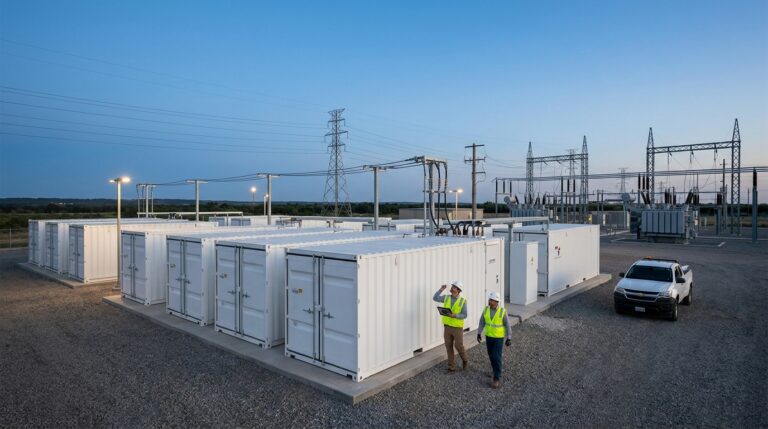
The grid is sold out. AI infrastructure cannot wait for the grid’s multiyear transmission upgrades. So what happens instead? Hyperscalers build their own power plants. Microsoft is partnering on a five-gigawatt natural gas facility in West Texas. Meta recently announced the addition of seven natural gas power plants to a data center site in Louisiana, bringing that location’s total capacity to 7.46 gigawatts.
That is the first-order story. Natural gas turbines are filling the gap. And Wall Street caught it. GE Vernova is up sharply. Siemens Energy is a consensus long. Siemens Energy said this year that more than 60% of its US gas turbine orders are now linked to AI data centers. Everybody already knows this part.
Here is what they are missing.
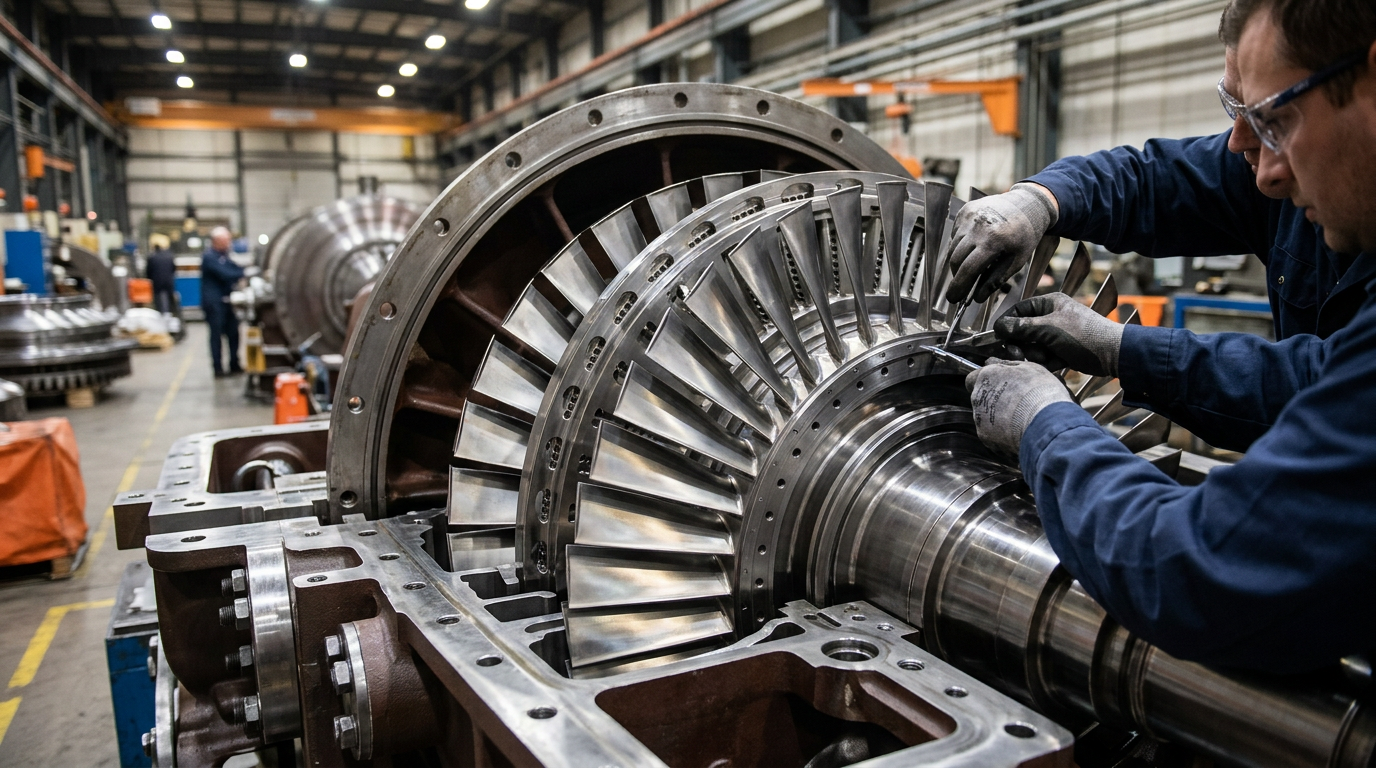
Unlike GPUs, turbines are physical behemoths whose manufacturing processes require high-alloy castings, precision heat treatment, and specialized testing that cannot be trivially scaled. Some components, like turbine blades and combustors, have lead times measured in years. A single LM2500 unit has thousands of hand-assembled parts, and final testing often takes weeks.
The turbine is not the bottleneck. The blade is.
Turbine blades need to work stably for tens of thousands of hours in an extreme environment with a temperature exceeding 1,400°C, bearing tens of thousands of times the centrifugal force of their own weight. Single-crystal superalloys must be used, and expensive rare elements such as rhenium and hafnium must be accurately added to improve high-temperature resistance.
There are only a few enterprises in the world that master the core technology of single-crystal high-temperature components and have effective production capacity.
Slight tangent, but it matters. This isn’t just an engineering curiosity. The process of qualifying a new turbine blade supplier — from materials development to testing to certification — takes years and costs hundreds of millions of dollars. The incumbent is not easily displaced. The moat is not a brand or a patent. It is physics, time, and accumulated metallurgical knowledge that cannot be replicated quickly.
The market has long been dominated by two American companies, PCC (Precision Castparts Corp) and Howmet Aerospace. Together, they account for about 70% to 80% of the global high-end turbine blade market, including single-crystal and directionally solidified blades, and are the absolute main suppliers to gas turbine manufacturers such as GE, Siemens, and Mitsubishi.
PCC is private, buried inside Berkshire Hathaway.
Howmet Aerospace trades on the NYSE under the ticker HWM. And the numbers coming out of Pittsburgh right now are not subtle.
What the Market Is Partially Pricing
Howmet Aerospace delivered a record Q1 2026, with revenue up 19% year over year to $2.31 billion, EBITDA up 32% to $740 million at a 32% margin, and EPS up 42% to $1.22, all exceeding guidance. The company then raised full-year guidance. Howmet is now eyeing $9.575 billion to $9.725 billion in revenue for 2026, bumping its midpoint up by $550 million from the earlier target.
Here is the specific number that matters. Gas turbine growth remained very strong, with revenue up 39%. Gas turbine growth is driven by the increased demand for electricity generation, especially from natural gas for data centers.
That line came directly from management on the earnings call. Management did not describe this as a cyclical tailwind. They described it as a structural one.
The gas turbine business is experiencing significant growth due to data center build-outs and electricity supply needs, with over 50% global market share. Revenues in industrial gas turbines rose 39% in Q1, with expectations to double from roughly $1 billion to $2 billion in three to five years. Demand is driven by both original equipment and spares, with the existing fleet working harder than expected.
The spares piece is the part most analysts gloss over.
When a gas turbine runs harder — because data centers demand 24/7 uptime rather than the peaker-plant cycling turbines were originally designed for — blades degrade faster. That means replacement cycles accelerate. Every existing turbine running at higher utilization becomes a recurring revenue stream for the company that makes its blades. Spares revenue continues to grow and now represents 23% of total revenue in Q1 2026, up from 21% for the full year 2025 and just 11% in full year 2019.
That is not a story about new units sold. That is a story about installed base monetization accelerating as the AI infrastructure boom pushes the existing fleet harder than anyone expected.
The Derivative Map
This is what second-order thinking looks like in practice.
First order: AI needs compute. Nvidia.
Second order: Compute needs power. GE Vernova, Siemens Energy.
Third order: Power plants need gas turbines. Turbine manufacturers.
Fourth order: Gas turbines need blades made from single-crystal superalloys that almost nobody on Earth can produce at scale. Howmet Aerospace.
The fourth derivative is where the moat is widest. The company’s expertise in manufacturing high-performance components for jet engines translates directly to the requirements of industrial gas turbines. This cross-application of technology allows Howmet to leverage existing capabilities and intellectual property, including its extensive patent portfolio, into new high-growth markets.
Wall Street is aware of the aerospace story. The defense story. Those are the headlines. What is less priced is the specific convergence happening in industrial gas turbines — where data center demand is colliding with limited global production capacity and an installed base that is being worked harder than designed.
The Risks Worth Naming
A few things could interrupt this. Disruptions at Qatar’s Ras Laffan hub caused by regional conflict removed 20% of global LNG supply in March 2026, which pushed up fuel costs and may complicate some data center power economics if natural gas prices rise significantly from here. Higher gas prices don’t kill turbine blade demand, but they could shift the mix toward nuclear or other alternatives over a longer horizon.
The stock has already moved. Howmet’s shares have climbed more than 100% over the past year, substantially outpacing broader industrial benchmarks and several aerospace peers. Buying a stock that has doubled in a year requires a clear view on whether the repricing is complete or still in progress. At roughly $9.65 billion in guided 2026 revenue with a 32% EBITDA margin and $1.6 billion in projected free cash flow, the math depends on whether the IGT doubling story is already in the multiple.
The case for it not being fully priced: US natural gas capacity for data centers is expected to grow over 2.5 times between 2025 and 2030, while global power demand by data centers is projected to grow from 127 gigawatts in 2025 to 279 gigawatts by 2030. That is a multi-year structural demand curve for blades that no one is currently modeling as a primary investment thesis.
Most people looking at HWM see an aerospace supplier. The more interesting angle is a hidden tollbooth on the power generation buildout for AI — one that controls over half the global market for the part that makes the whole machine run.
Whether that is fully in the price is the question worth sitting with.