



Wall Street had already written Tyson’s obituary. Cattle supply too tight, beef margins collapsing, protein demand shifting away from red meat. The stock spent much of 2026 grinding between $50 and $60, and the consensus EPS estimate for the fiscal fourth quarter implied a business in retreat. Then Monday happened.
Tyson reported Q4 fiscal 2026 adjusted earnings of $0.61 per share on November 16, beating the $0.53 consensus estimate, on sales of $14.585 billion. The stock rose after the meat producer reported better-than-expected fourth-quarter results and raised its quarterly dividend. Shares rose 8.7% to $63.95, within a 52-week range of $49.96 to $69.48. That is the strongest single session for TSN since 2022, in a market that spent Monday punishing everything else: on November 16, while TSN gained 8.7%, the S&P 500 fell 1.9%.
The Business
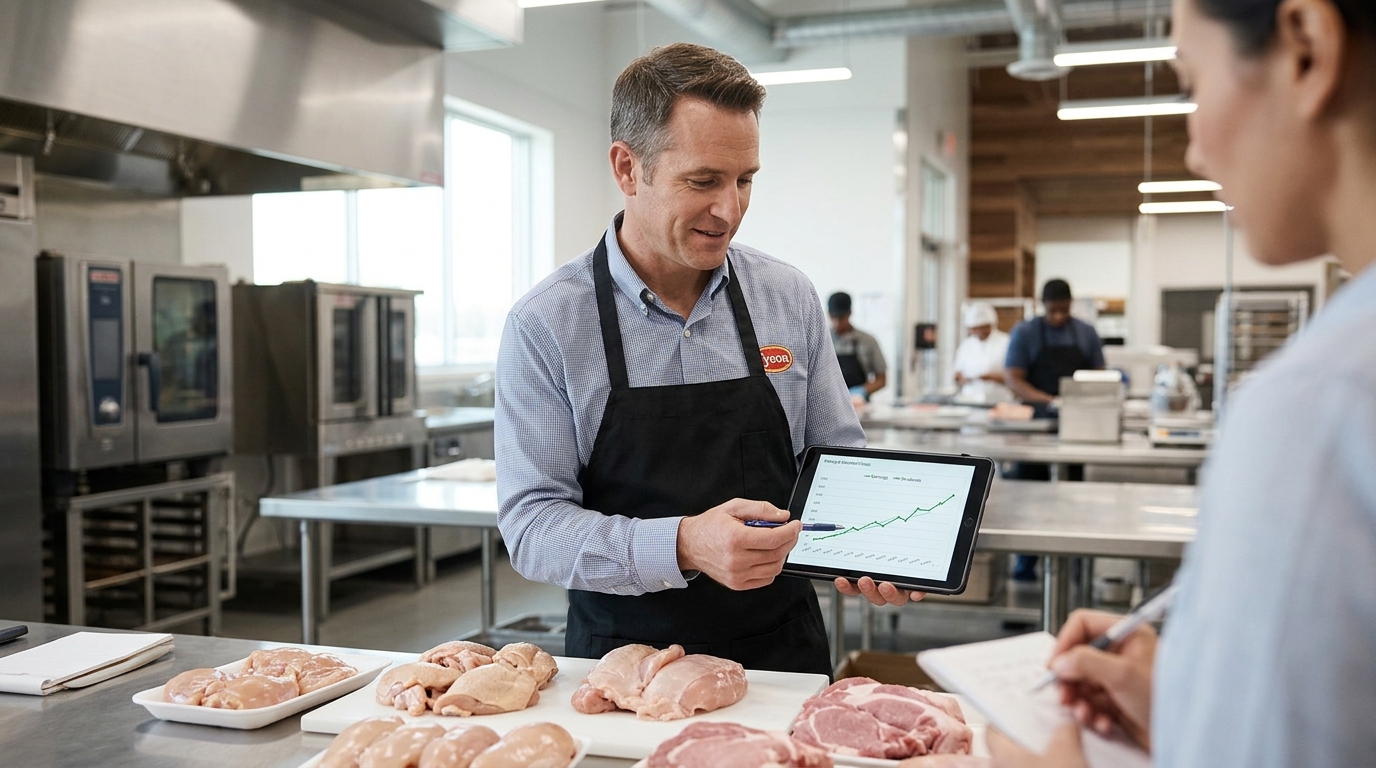
Tyson is not a growth stock. It is the largest U.S. protein processor, moving beef, chicken, pork, and prepared foods through retail and foodservice at a scale few competitors can match. What matters for the investment case right now is not which animal generates the revenue; it is which segments are absorbing the losses and which are quietly building margin.
Beef is bleeding. The beef segment posted a Q4 operating loss of $514 million, against a loss of $277 million a year earlier, as cattle supplies tightened and processing spreads compressed. That is the structural problem the market has been pricing for months. But chicken and prepared foods are doing something different. The chicken segment led performance with $4.811 billion in sales, up 9.9% year over year. Prepared Foods adjusted operating income grew to $321 million from $278 million, supported by strength in branded retail products.
Why Wall Street Is Paying Attention
CEO Jeff Schomburger called protein the “biggest opportunity in food,” citing a $273 billion retail category growing faster than the broader food market. That framing matters less than the cash flow underneath it. Free cash flow came in at $1.663 billion for fiscal 2026, up from $1.177 billion in fiscal 2025. The company reduced total debt by $1.080 billion during fiscal 2026 and repurchased 7.8 million shares for $427 million.
The dividend is the other signal institutions are watching. Tyson returned $2.024 billion to shareholders in fiscal 2026 through dividends and share repurchases, and the board declared a quarterly dividend of $0.52 per Class A share, marking the company’s 15th consecutive annual dividend increase. The dividend yield currently stands at 3.47%, which is not a trivial number when 10-year Treasuries sit well below that level.
What’s Driving the Opportunity
The beat matters less than the pivot in expectations. The beef crisis the market priced as a permanent condition now looks more like a cyclical trough. Management expects fiscal 2027 to reflect continued improvement in Prepared Foods and a meaningful improvement in Beef, offset by market pressure in Chicken and Pork. Combined Chicken and Prepared Foods sales are expected to grow 3% to 4%. That is not explosive growth, but it is directional recovery in the segments that actually generate positive operating income.
What Could Go Wrong
Beef is not fixed. Tyson expects company sales to fall 3.5% to 5.5%, mainly because Beef volume will decline during network restructuring and amid tight cattle supplies. The payout ratio can look stretched when earnings are under pressure, which raises questions about the dividend’s long-term sustainability, especially given guidance for lower sales and operating income in fiscal 2027. CFO Curt Calaway acknowledged that “market-driven headwinds, mainly in Chicken and Pork, could outweigh the controllable improvements we are making across the businesses.” The range on fiscal 2027 adjusted operating income, $1.70 billion to $2.15 billion, is wide enough to suggest limited visibility.
The Bottom Line
Tyson is not a momentum stock. It will not appear on a screen looking for fast growers or artificial intelligence adjacency. What it offers is a beaten-down protein giant that just cleared a low bar convincingly, backed by the strongest free cash flow in years and a dividend with 15 years of consecutive growth behind it. The stock’s 50-day moving average sits at $54.39 and its 200-day at $59.48, meaning Monday’s close near $64 represents a genuine technical breakout from a multi-month base. For investors willing to own a recovery rather than a launch, TSN is the most grounded candidate available today.