


Dear Reader,
Everyone wants to know what Elon Musk is planning next.
I believe this is it – what I’m calling, “Mission X.”
Elon’s bold new plan to ship AI off the Earth entirely – and launch it into the stars.
He confirmed it himself:
“I see a path to SpaceX being worth orders of magnitude more than the current Earth economy.”
– Elon Musk
Because I promise you, he’s not just talking about launching rockets.
It’s why I’ve just released all the details of “Mission X” – including a FREE ticker to get positioned at practically the ground floor – without buying SpaceX or Tesla.
Click Here to Watch – 100% Free. No Credit Card Required.
Best,
Tim Bohen
P.S. Billionaire Peter Thiel once said: “I would never bet against Elon, in anything. That’s hard rule number one.”
The skeptics are lining up again. But you don’t have to miss out.
REVEALED: Free Ticker to Claim Your Stake in “Musk’s Mission X.”
Intel’s Security Pivot Is Bigger Than Most Investors Realize
Most of the investment conversation around Intel focuses on process nodes, market share against AMD, and whether the foundry business ever earns its capital. That framing misses something worth examining closely: Intel is systematically baking post-quantum security into its platform stack, and the enterprise lock-in that follows could prove durable regardless of who wins the core-count race.
The mechanics are straightforward. Intel has publicly positioned itself as the first CPU silicon vendor to turn CNSA 2.0 post-quantum cryptography standards into deployable, hardware-rooted platform security capabilities, but Intel has framed that “first” claim in the context of commercial client platforms rather than server CPUs specifically. That is not a software feature a competitor can ship in a quarterly update. It requires fabrication changes, firmware integration, and years of standards work. Intel has said it has been contributing to the post-quantum standardization ecosystem, including work tied to NIST-standardized algorithms, but the clean, verifiable milestone here is that NIST kicked off its Post-Quantum Cryptography project in 2016, not that Intel’s involvement began that same year.
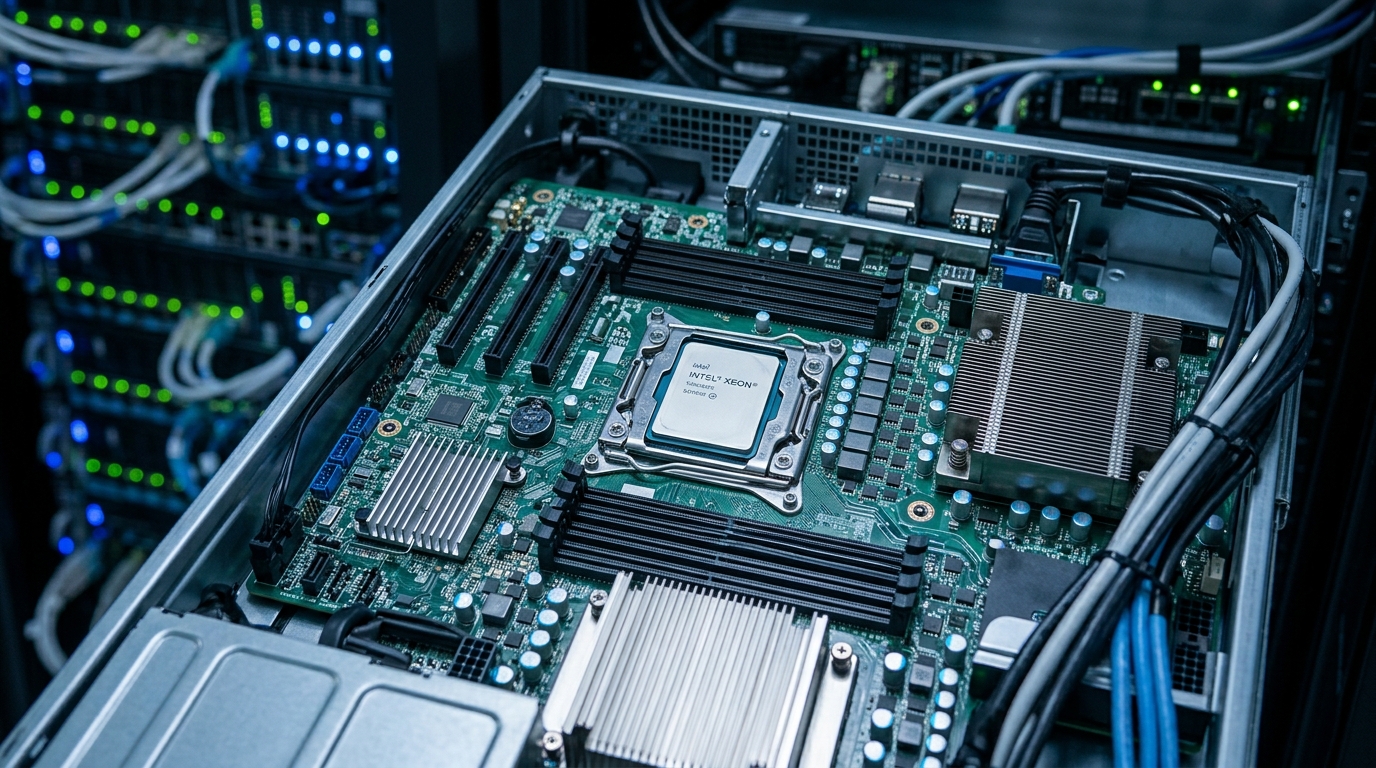
The sharper development came on October 9, 2026. Intel disclosed that the upcoming Xeon generation codenamed Diamond Rapids will be the last platform to support Software Guard Extensions. The replacement is Trust Domain Extensions, or TDX. TDX isolates entire virtual machines from the underlying host environment, including the hypervisor and other VMs, and is designed to protect existing workloads inside confidential VMs without extensive changes to individual applications. That last point matters enormously for cloud operators running thousands of machines.
Post-quantum hardening is woven into TDX’s forward roadmap. Intel has said it plans to expand TDX capabilities with additions including TDX Connect trusted I/O, post-quantum cryptography, and enhanced attestation mechanisms. The urgency is real. TDX attestation today relies on classical elliptic-curve cryptography, which creates a specific long-term vulnerability: adversaries can collect and store attestation artifacts now and potentially exploit them later once cryptographically relevant quantum computers exist.
Anand Pashupathy, Intel’s vice president and general manager for product assurance and security, has warned publicly about “harvest now, decrypt later” risk. He is describing an active threat, not a hypothetical. Regulated enterprises in healthcare, financial services, and defense are already fielding this pressure from compliance teams.
The compliance pressure Pashupathy describes is already reshaping enterprise security software budgets. Identity governance vendors are seeing AI-agent proliferation accelerate the same regulated-enterprise demand that post-quantum mandates are now intensifying.
The investment case is not that post-quantum security will appear on an earnings line by next quarter. It will not. The case is structural: data centers handling critical workloads can plan a gradual transition to quantum-safe architectures by integrating new CPUs into standard hardware refresh cycles, which means Intel’s security position compounds with each server generation sold. Intel has said it has committed to full post-quantum cryptography compliance across all new platforms by 2030.
Skeptics will note that Intel has promised security roadmaps before and that planned capabilities have not always come with disclosed release dates. That is a fair constraint on enthusiasm. But the standards trajectory, the federal compliance timelines, and the fact that Intel is now explicitly tying its confidential computing roadmap to post-quantum upgrades all point in the same direction. A company rebuilding credibility on process execution now has a security differentiation story that the market has barely priced in.
Intel’s security differentiation story does not exist in isolation from the broader platform security market it is entering. Palo Alto Networks shows how aggressively the market has already re-rated pure-play security franchises when their platform consolidation thesis becomes credible.