

Thursday morning, before the market opens, Caterpillar reports third-quarter results on October 29, 2026. Analysts are expecting earnings of $7.04 per share on $20.76 billion in revenue. Those are meaningful numbers. But the figure that deserves the most attention has nothing to do with construction or mining.
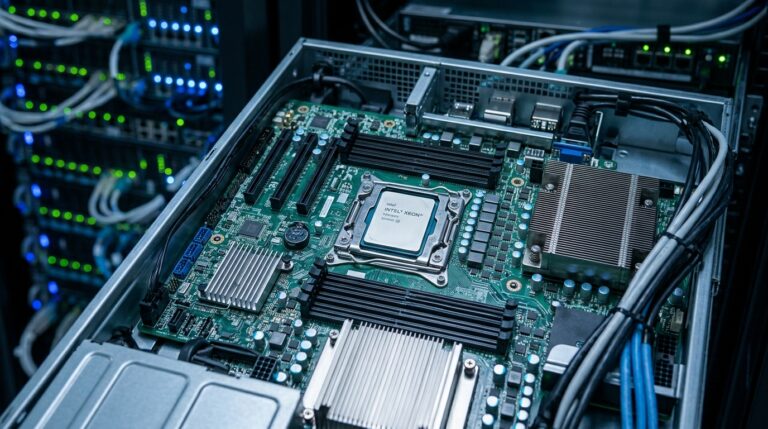
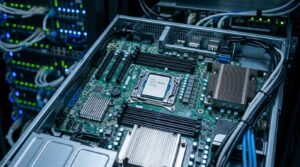
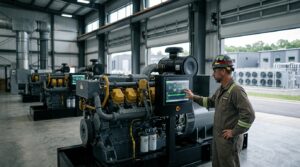
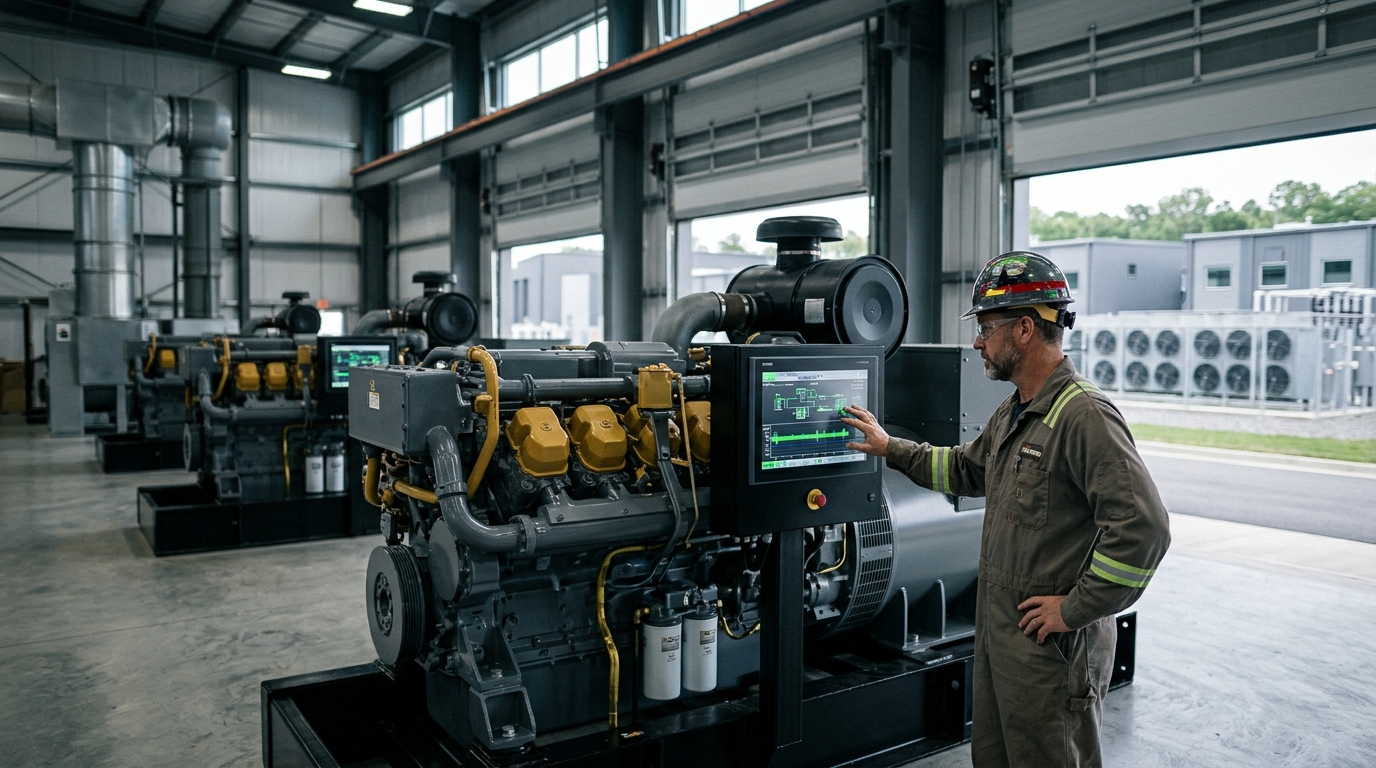
Caterpillar’s Power & Energy business benefited from very strong demand for large generator sets and turbines used by data centers. Power generation grew 72% in Q2 2026, driven by that demand, according to CEO Joe Creed on the company’s earnings call. That is not a cyclical uptick in earthmoving equipment. That is a structural shift in what Caterpillar sells, to whom, and for how long.
The Engine Inside the Earthmover
Each data center effectively lets Caterpillar sell into the same project twice: first through the machines that prepare the site, then through the generators and turbines that keep it powered. Most investors see the yellow equipment and stop there. The smarter read is what comes after ground is broken.
Customers are using Caterpillar generator sets and turbines as primary power sources, not just backup systems, to support hyperscale and enterprise data centers. That distinction matters enormously for the economics. Backup generators sit idle most of their lives. Prime-power generators run continuously, generating recurring parts and service revenue for years. Caterpillar is building a broader data center energy proposition that combines gas and diesel generator sets, gas turbines, switchgear, controls, inverters, battery energy storage, aftertreatment, engineering design, monitoring and lifecycle service. That is a very different business from selling bulldozers.
The Power & Energy segment is now Caterpillar’s biggest segment by sales, and it posted a 25% profit jump in Q4 2025 thanks to higher demand for its power-generating equipment, as Caterpillar reported in its fourth-quarter 2025 release. And the order horizon stretches well beyond a single quarter. Caterpillar ended Q2 2026 with a record firm backlog of about $72.1 billion, up 92% year over year, and management has indicated that some prime-power and turbine orders extend years into the future.
The Demand Is Not Slowing
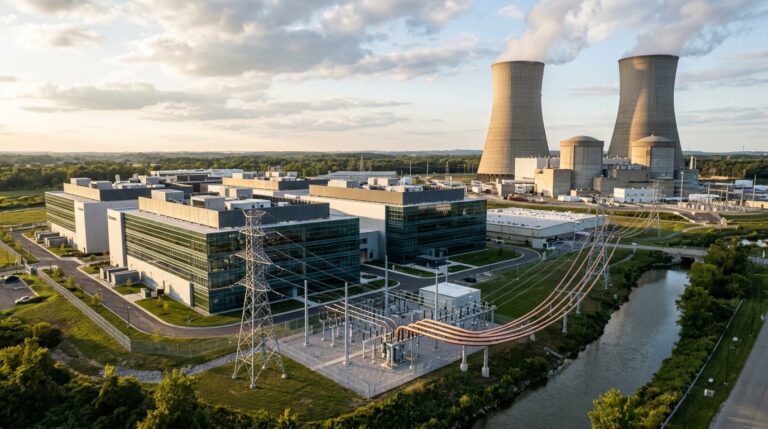
Some estimates now put 2026 AI capex on a path toward roughly $1 trillion globally, with 2027 projected higher. Behind that spending sits a critical constraint: connecting a large new load to the grid can take three to seven years. That gap is what transformed Caterpillar’s Power & Energy division into one of the most sought-after suppliers in the AI buildout. The company’s large reciprocating engines and gas turbine generator sets can serve as prime power, running continuously, while a facility waits for utility connection.
In January 2026, Caterpillar announced a strategic alliance with American Intelligence & Power Corporation to support the Monarch Compute Campus in West Virginia. AIP Corp ordered 2 GW of Caterpillar G3516 fast-response natural gas generator sets, with deliveries scheduled from September 2026 through August 2027. The initial 2 GW deployment represents the first phase of a broader plan, with Monarch targeting up to 8 GW of total generation capacity over time.
What Could Go Wrong
The risks are real and worth stating plainly. Caterpillar has said it now expects full-year 2026 tariff costs of around $2.2 billion, excluding the benefit of expected IEEPA tariff recoveries it recorded in Q2. Tariffs and higher spending on capacity, AI and autonomy could keep profitability near the lower end of targets if pricing or volumes soften. On the Q2 2026 earnings call, CFO Kyle Epley said the company anticipates tariff costs of around $600 million in Q3 2026.
Regulatory risk is also present. State-level data center moratorium proposals have already rattled the market at times. Rapid AI deployment increases dependence on fossil-based generation at a time when many technology companies are under pressure to reduce emissions. Caterpillar is managing that tension by expanding into battery storage and hydrogen demonstrations, but it is early work.
The regulatory tension Caterpillar is navigating sits inside a broader market shift. Capacity auctions clearing at the price ceiling with a widening supply shortfall have turned power scarcity into a durable structural condition.
The most relevant near-term development is whether Caterpillar can convert its record backlog into revenue without margin erosion. That is precisely what Thursday’s report will begin to answer.
The Long-Term Verdict
Charlie Munger often said the best businesses are the ones that are hard to see until they are already dominant. Caterpillar’s power division fits that description. It is buried inside a company most investors file under construction, priced with cyclical caution, yet positioned to supply a decade of AI infrastructure with long-duration contracts, aftermarket parts, and service agreements. Analysts’ published Q3 EPS estimates cluster around the low-$7 range, implying a sharp year-over-year gain. The beat last quarter was $1.95 above consensus. Thursday will tell investors whether that was a one-quarter event or a new earnings baseline. Either way, the Power & Energy segment is the reason to pay close attention.