

October 19, 2026
The waste giant spent five years going nowhere on the ASX. A disciplined long-term buyer saw what the market missed.
The businesses that generate the most reliable long-term wealth rarely look exciting from a distance. They haul rubbish. They pump liquids. They run landfills in flat-looking spreadsheets. The market, which rewards stories over structures, tends to misprice them chronically. On Monday, EQT Infrastructure reminded investors how much that habit can cost.
Rickards: “Trump’s Gold Mine” to Deliver 10X Gains In a Few Months
According to Jim Rickards – the world’s #1 gold expert and a man with close ties to Donald Trump’s “inner circle”…
The president is about to unleash a major new gold initiative…
One that opens up the largest gold deposit in the entire world – right here on U.S. soil…
And that is valued at over $1 TRILLION.
Today, Jim has revealed one of his favorite ways to play this gold boom – 100% FREE.
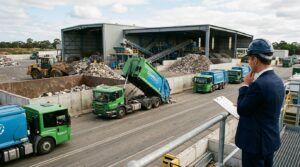
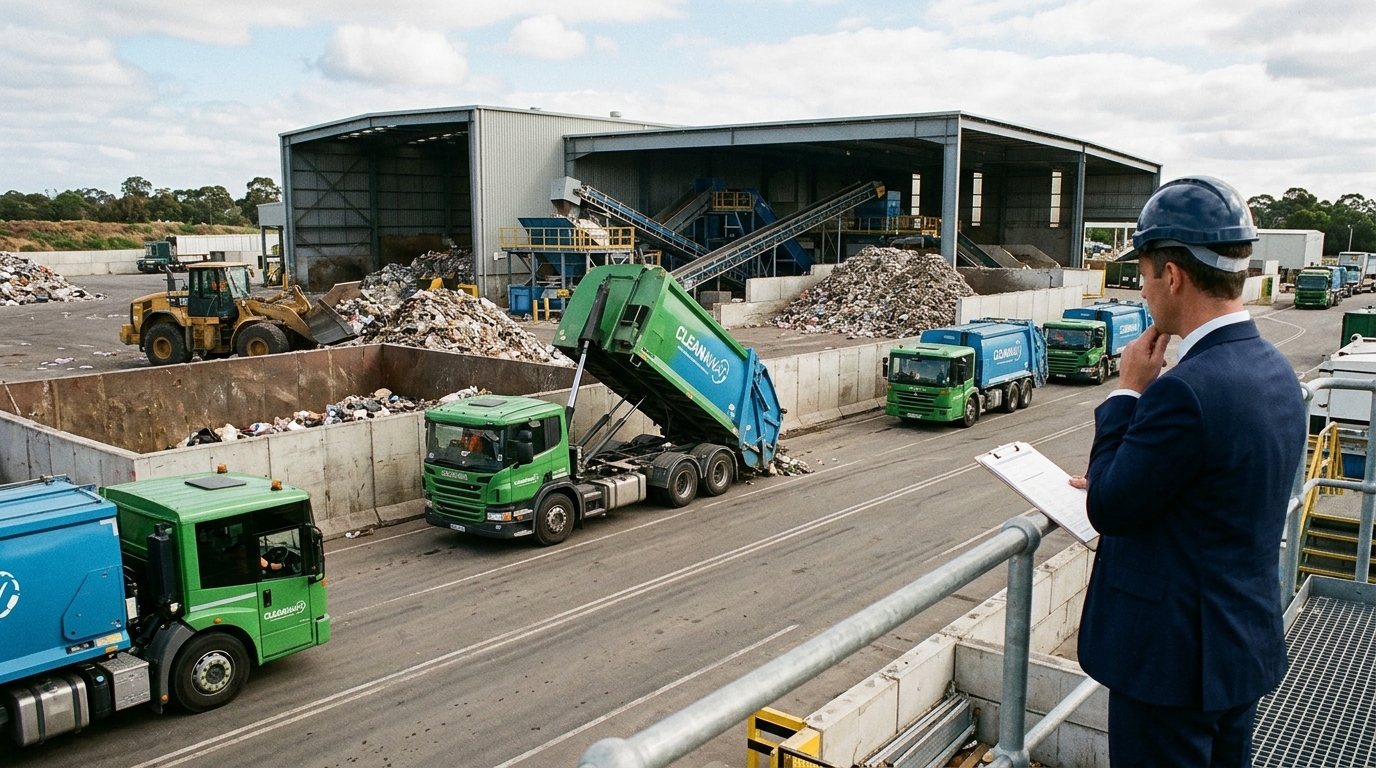
Shares of Cleanaway Waste Management saw their biggest single-day jump in 15 years after EQT agreed to buy the company for about A$9.3 billion including debt, making it the latest listed Australian company to enter private hands after a period of share underperformance. The bid came after five years of broadly sideways share price movement, with Cleanaway trailing the wider market as labour costs, inflation and the expense of waste management weighed on the business.
What EQT Saw That the Market Didn’t
Cleanaway manages one of Australia’s largest waste and industrial services fleets, with more than 6,200 vehicles. Its infrastructure network includes recycling facilities, transfer stations, engineered landfills, liquid treatment plants and refineries. That is not a business a competitor builds from scratch in five years. The routes, the permits, the customer relationships, and the tipping fees embedded in long-duration contracts represent a moat that compound quietly, year after year, mostly outside the headlines.
The financial evidence was there. In FY2026, Cleanaway delivered net revenue of A$3.7367 billion, up 13.1%, with underlying EBIT of A$470.2 million, up 14.2%, and EBIT margin of 12.6%. Free cash flow increased 63.7% to A$213.8 million, reflecting disciplined cash management and improved payment terms. The company guided FY2027 underlying EBIT of between A$500 million and A$530 million. That is a business compounding at a healthy pace, not the laggard the share price implied.
The final deal price represents a 34.5% premium to the three-month volume-weighted average price and an acquisition multiple of about 20x FY2026 underlying EBIT. EQT’s vehicle, Sedum Group, will pay A$3.095 in cash per share, less the cash amount of any dividends or other distributions declared or paid before completion.
You don’t have to be rich to travel like you are
Think you need millions to retire like the wealthy? Think again. Discover little-known travel shortcuts that could help you enjoy luxury living abroad – without draining your nest egg.
The Mogul Mindset
A disciplined long-term investor following Peter Lynch’s principle of looking for businesses priced below their compounding power would have found Cleanaway interesting well before EQT arrived. The service is essential. Municipalities and industrial clients do not cancel waste contracts in a downturn. Density of route and asset creates a cost advantage that is extraordinarily hard to replicate. These are the hallmarks of what Charlie Munger called a business with a durable, locally reinforced moat.
EQT knows this sector deeply. As one of the world’s more active investors in waste management and environmental services, EQT has held and backed assets in the sector globally, including Urbaser, ReWorld, Encyclis and Arcwood. Cleanaway is not a speculative entry into waste. It is a calculated addition to a portfolio of toll-road businesses with green assets attached.
Bloomberg data indicates the transaction would sit among Australia’s largest mergers and acquisitions this year, with Australia remaining one of the most active Asia Pacific markets for takeovers. The trend is not coincidental: infrastructure-style businesses with predictable cash flows are being systematically harvested from public markets by buyers with the patience that public investors increasingly lack.
The Lesson, Not Just the Deal
The risk worth acknowledging is regulatory. Implementation is subject to shareholder, court and regulatory approvals, with implementation expected by the end of March 2027 if conditions are satisfied. Australia’s competition regulator, the ACCC, must assess whether concentrating ownership of this scale of waste infrastructure raises any concern. That is a real, if manageable, hurdle.
The Profit Potential of a Rare Producing Copper Mine
The world is in dire need of copper. It can’t just come from anywhere. It needs to be of a certain grade and from a safe mining jurisdiction. Only then will it be able to meet growing demand and only then will traders begin paying attention to it. There aren’t many copper mines that fit that criteria, but one in the Yukon does and anyone who invests in it will do very well in the emerging copper bull market.
The bigger lesson for long-term investors is not about this particular deal. It is about what happens when a slow compounder gets mislabelled as a laggard. Cleanaway’s share price spent years going nowhere because the market focused on near-term cost pressures and capital intensity rather than the structural durability of the underlying asset base. EQT focused on the asset base. Shares had been trading 8.85% lower year-to-date heading into the announcement, underperforming the broader market amid concerns over capital intensity and execution risk. The buyer paid A$9.3 billion for a business the market was treating as a problem.
The same dynamic is playing out across sectors wherever private equity sees durable cash flows undervalued by public markets. Apollo’s reported willingness to pay well above public-market multiples for a steady-cash-flow healthcare asset raises the same financing and valuation questions.
The businesses worth owning for a decade rarely announce themselves loudly. They collect, treat and recover. They build routes and fill sites and sign long contracts. They show up on no one’s most exciting list. Then a patient, sector-specialist buyer offers a 34.5% premium, and the question becomes obvious: why did you not see it first?