


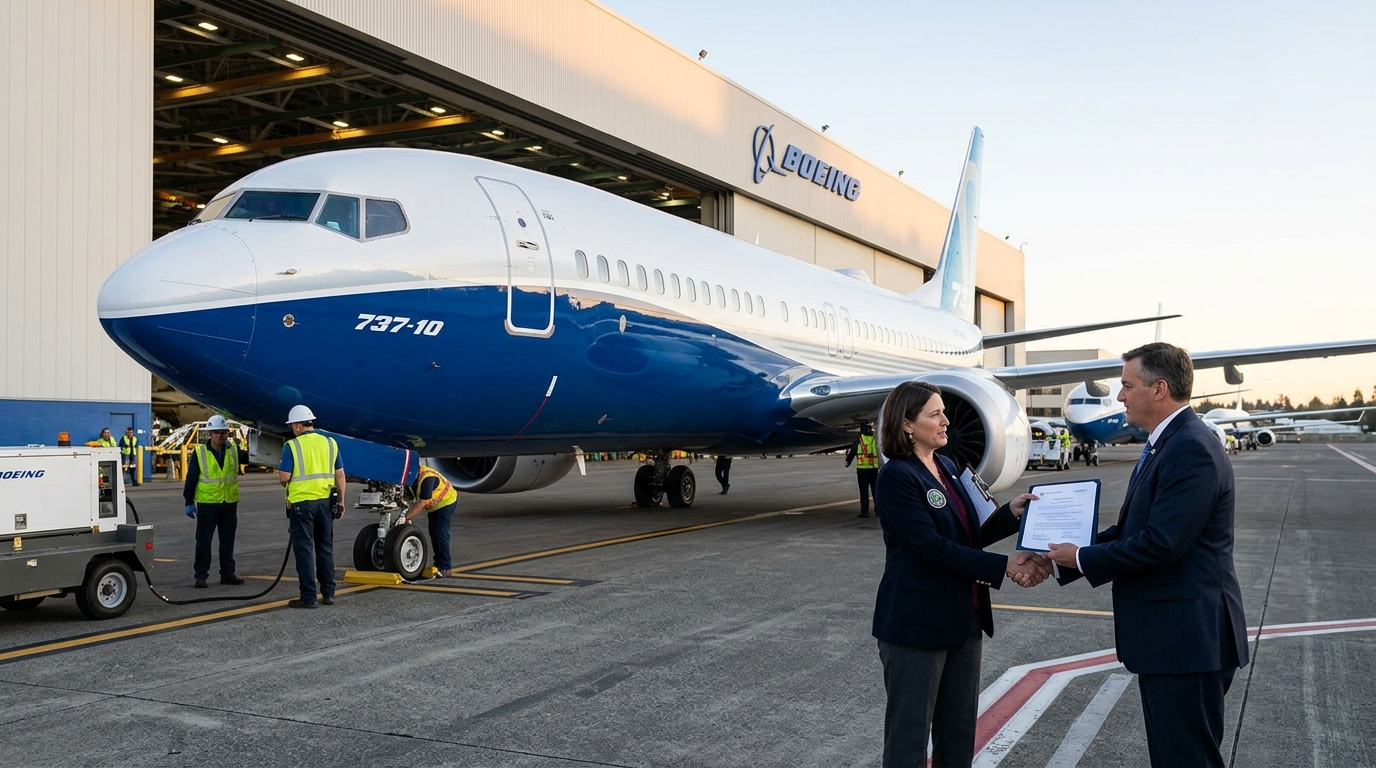
The single most consequential piece of paper in commercial aviation right now is the FAA type certificate for the Boeing 737 MAX 10. It could arrive this week. When it does, it will not merely close a chapter on one of the longest certification ordeals in modern airliner history. It will tell investors whether Boeing’s balance sheet can finally start converting a record backlog into cash.
Why This Stock Now
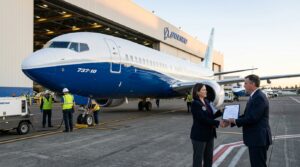
The FAA’s Type Certification Board met on October 16 and, according to The Air Current, citing three people familiar with the matter, the agency could formally approve the 737-10 as soon as this week. Boeing is slated to file a project statement of completion with the FAA, and ceremonial signatures could follow as soon as next week. The MAX 7 followed exactly this path: its board meeting likewise took place on a Friday, with Boeing signing the type certificate the following week. That precedent matters.
The Business
The 737 MAX 10 is the largest member of the family, a stretch of the MAX 9 aimed squarely at the Airbus A321neo. It has the best per-seat economics of any Boeing narrowbody, which explains the demand. The variant accounts for roughly 31% of the undelivered 737 family backlog as of June 30, 2026.
Boeing at one point planned to start delivering the MAX 10 in 2023. The delays that followed involved two fatal MAX 8 crashes, a door plug blowout on an Alaska Airlines MAX 9 in January 2024, and an engine anti-icing redesign. Six years of setbacks are now compressed into a single pending signature.
Why Wall Street Is Paying Attention
CFO Jay Malave has said Boeing’s $10 billion cash flow goal is “very attainable” and tied to more deliveries. Boeing stock now depends on turning a huge backlog into steady deliveries, and the 737-10 is the largest single piece of that backlog sitting idle.
Boeing Commercial Airplanes total backlog increased from $567.3 billion at year-end 2025 to about $596.7 billion at June 30, 2026, reflecting orders that continue to exceed deliveries. Certification unlocks the next phase: converting that number into cash. Airlines have been holding MAX 10 commitments for years, and every month of delay pushed replacement and growth capacity further out. Certification within days makes the spring 2027 delivery dates real schedule inputs rather than hopes.
What’s Driving the Opportunity
United anchors the backlog as the largest customer, holding 167 firm orders. WestJet is the launch customer, with deliveries planned to begin in 2027. The size of these commitments means the revenue ramp, once it begins, is not a slow trickle. Boeing has already been building MAX 10 aircraft, and some are in inventory awaiting certification and delivery.
Ryanair’s position also matters for the Boeing thesis. Lufthansa Group secured its first 20 MAX 10 aircraft from existing purchase options in September 2026, adding to the backlog even as certification was pending, a signal that large carriers still view Boeing as the primary narrowbody alternative to Airbus.
What Could Go Wrong
Certification is not yet signed, and the FAA has reminded reporters that safety dictates its timeline, not investor calendars. A final management meeting still has to occur before the certificate issues.
Production rate execution remains the larger risk. Certifying a jet and delivering it at scale are two different problems, and Boeing’s recent history includes both labor disruptions and quality-control breakdowns that slowed ramp-ups the company had telegraphed.
The Bottom Line
The argument for Boeing today is specific and time-bound: a type certificate for the 737-10 this week converts the most backlogged narrowbody in the world from a liability into a revenue event. Certification closes one of the longest sagas in modern airliner history and hands Boeing the aircraft it needs to fight the Airbus A321neo. For an investor looking for a single stock with a near-term catalyst attached to a multi-year recovery, Boeing is the clearest case on the board right now. The risk is real. So is the size of the prize.