




October 16, 2026
When your biggest customer controls your operating license, your moat can work against you.
The 1985 Dollar Playbook Is Back – IRA Exposed
When the people at the top decide they want a weaker dollar, they don’t ask permission – they just make your money worth less and call it policy. Your bank account, IRA, and retirement could be quietly drained by design. History already showed how this ends.
Claim the free guide with 3 moves to get your wealth out of reach
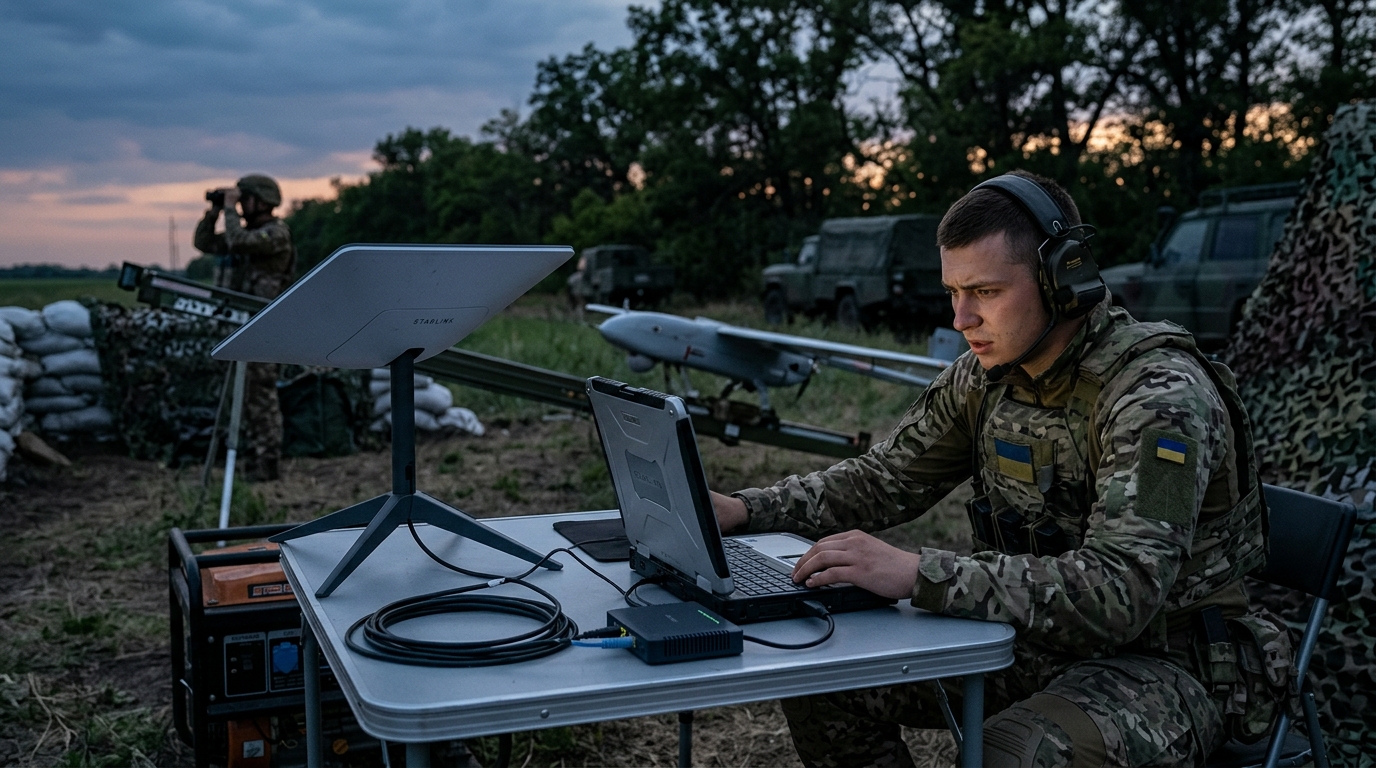
On Wednesday morning in Kyiv, Ukrainian drone operators discovered their Starlink terminals had gone dark above roughly 100 mph. No warning, no explanation. Services had been limited for terminals traveling over 100 mph overnight, effectively limiting Ukraine’s ability to launch certain drones, which use satellite internet to pilot the craft. Within hours, Zelensky called it “a big mistake” that “will bring a lot of human losses.”
“My system said ‘SELL’ right before this stock tanked. Today, I’m shouting ‘BUY NOW’ before it soars.”
In 2023, Marc Chaikin’s system flashed bearish on an automotive company no one had yet heard of. The stock crashed 35%. Today, his system rates this company “Very Bullish” and Marc calls it a screaming buy thanks to a new “groundbreaking partnership” with Nvidia that hands this company the keys to the self-driving kingdom on a silver platter.
Elon Musk’s response clarified something investors should file permanently: SpaceX is not in control of its own product at the margin that matters most. Musk said Starshield systems are owned and controlled by the U.S. government, and that any limits on speed or usage are up to the U.S. military and ultimately the president, adding that Starlink is a commercial service limited to civilian or defensive activities. That is a remarkable thing for a company’s founder to announce publicly. It is also the core investment problem.
The military satellite communications business is structurally different from ordinary infrastructure. Ukraine relies on Starlink for several military applications, including controlling and operating drones. That dependence, built over more than four and a half years of full-scale war, gave SpaceX extraordinary pricing power and strategic relevance. But it also handed the U.S. government effective control over SpaceX’s most consequential contracts, without SpaceX holding the policy lever.
That tension has already shown up in SpaceX’s public-market valuation. The market began repricing SPCX after management decisions exposed how political risk sits inside the business model.
5 Rules. Plain English. Zero Jargon.
You don’t need a psychology degree to stop revenge trading.
You need a few simple rules, set ahead of time, that you follow no matter how the day is going.
That’s what you’ll get in How To Stop Revenge Trading in 5 Steps. Plain English. Rules you can use tomorrow morning.
This is the paradox of becoming indispensable to a sovereign customer. The deeper the entrenchment, the greater the theoretical moat. But the regulator and the customer are the same party, which means the moat’s depth is determined by political conditions, not competitive ones. One overnight restriction, widely discussed through posts on X, exposed that architecture completely.
Markets tried to price the gap immediately. Reuters reported Wednesday that shares in European satellite operator Eutelsat jumped on the news of Ukraine’s difficulties with Starshield, fueled by investor bets that European providers could benefit from growing strains between Washington and Kyiv. The instinct is understandable. The reality is more complicated.
Europe does not have a ready-made alternative that Ukrainian soldiers could attach to their drones, although European governments and companies are working on longer-term options. The OneWeb constellation was estimated at approximately 0.22 percent of Starlink’s capacity as of August 2025 and was falling. A 13% stock pop on a single day of bad Starlink headlines does not change that math.
The gap between Starlink’s scale and any rival’s current capacity is not just a European problem. AST SpaceMobile is pursuing a structurally different approach to satellite connectivity — direct-to-phone coverage without proprietary terminals — that could matter to governments looking for alternatives.
The Profit Potential of a Rare Producing Copper Mine
The world is in dire need of copper. It can’t just come from anywhere. It needs to be of a certain grade and from a safe mining jurisdiction. Only then will it be able to meet growing demand and only then will traders begin paying attention to it. There aren’t many copper mines that fit that criteria, but one in the Yukon does and anyone who invests in it will do very well in the emerging copper bull market.
Reuters quoted independent satellite consultant Christian Freiherr von der Ropp saying Eutelsat’s OneWeb network was not well suited to wartime use, describing its current constellation as rooted in an outdated architecture conceived a decade ago, with capacity and performance constraints that limit its suitability for frontline applications.
The lesson here is not specific to satellites. Any business whose largest revenue relationship is also its primary regulatory authority carries a risk that does not show up cleanly in a discounted cash flow model. Defense contractors have managed this dynamic for decades through diversification, political relationships, and contractual protections. SpaceX, despite its technical dominance, is navigating that same tension in real time, with the added complication that its CEO is a political actor whose decisions have become inseparable from the product itself.
The Trump administration’s willingness to use Starlink access as political leverage has made European governments acutely aware that dependence on an American constellation operated by a company whose CEO has active policy preferences toward European countries is a strategic vulnerability they don’t have a near-term solution for. That awareness is real. The capital and time required to act on it keep Starlink dominant for now, and that is precisely the kind of fragile advantage a disciplined long-term investor should want to understand before calling it a moat.