




October 1, 2026
Bonus Content: AMD Is Paying $8.2 Billion to Make Fei-Fei Li Chief Scientist
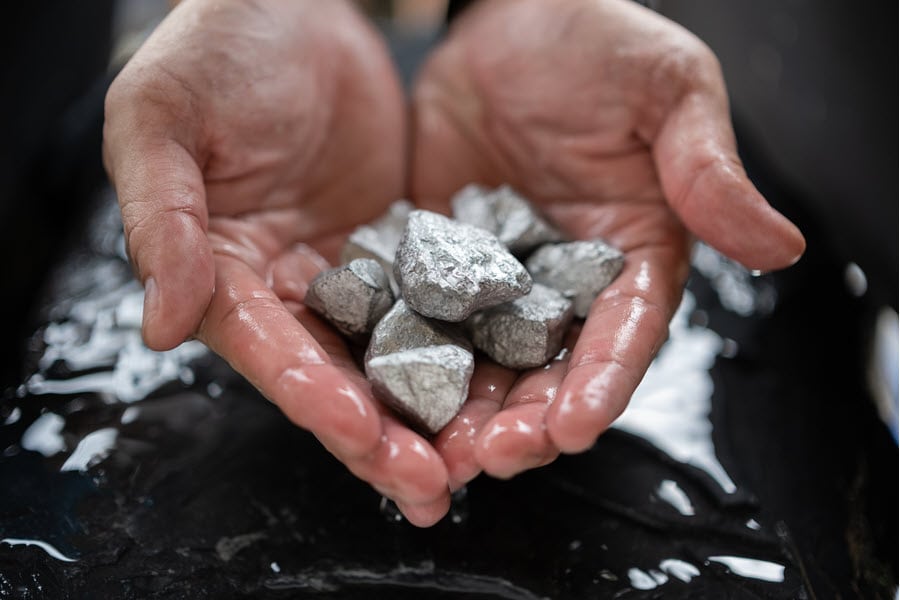
Nobody looked under these rocks for 130 years. Until July.
On 3 July a helicopter set a drill rig down on a mountainside where the last people to dig worked by candlelight.
Eight weeks later: eight holes collared, seven completed, three targets. Core at the lab, first assays expected in the fourth quarter.
Under the rig sits a 37,000-hectare block of an old silver district that has seen almost no modern drilling.
The clues that drew the team are historic surface samples running into thousands of grams of silver a tonne.
AMD Is Paying $8.2 Billion to Make Fei-Fei Li Chief Scientist

Most large acquisitions buy revenue. Lisa Su just spent $8.2 billion in AMD stock to buy a point of view.
AMD confirmed on September 28, 2026, that it will acquire World Labs, the spatial-intelligence AI lab co-founded by Fei-Fei Li, in an all-stock transaction valued at about $8.2 billion. The deal is AMD’s second-largest ever, trailing only the roughly $49 billion Xilinx acquisition closed in 2022, and it marks the chipmaker’s most direct move yet into AI model research rather than just the hardware that runs it. Li will become AMD’s executive vice president and chief scientist after the deal closes, reporting directly to CEO Lisa Su.
What AMD Is Actually Buying
World Labs is not a revenue business in any conventional sense. Founded in 2024, it specialises in spatial intelligence, developing world models that can perceive, generate and reconstruct 3D environments. The technology is considered increasingly important for robotics and physical AI, where models must interact with the real world rather than simply process text.
Li, a Stanford computer science professor, is considered a pioneer in AI, particularly for her work building the ImageNet database. She founded World Labs to develop deep learning models with a more robust understanding of the physical world, arguing that true general intelligence requires grounding in physics and the ability to understand and reason about data beyond text.
World Labs’ products include Atlas and Marble. Atlas is designed to natively operate on text, images, video, and 3D data for spatial intelligence, while Marble lets users create and edit high-fidelity 3D worlds from text, images, and video inputs. Marble launched in November 2025 and includes paid plans up to $95 monthly. That commercial footprint is modest relative to the price tag. Su is not buying a business; she is buying a research direction.
Why the Price Makes Sense
The strategic logic is a feedback loop. World Labs develops models and encounters infrastructure limits. AMD observes those limits, changes its systems, and gives researchers new capabilities to test. Results then influence another design cycle. Put a world-class research team inside the chip company, and the chip company stops guessing what the next generation of AI will demand from silicon.
The strategic thesis is explicit: as AI expands beyond text generation into embodied tasks such as robotics, physical simulation, and 3D content creation, hardware and systems requirements fragment. Nvidia’s dominance in large language model training does not automatically transfer to spatial workloads. AMD’s acquisition secures both Li’s research credibility and early visibility into where these workload requirements will drive silicon design.
AMD paid roughly 64% above the about $5 billion valuation Bloomberg reported World Labs was discussing around its February 2026 funding round, a round in which both AMD and Nvidia participated. Converting from co-investor to sole owner at that premium signals conviction, not opportunism.
The Nvidia Problem This Solves
Nvidia already combines chips, CUDA software, simulation tools, robotics frameworks, and its Cosmos world models. AMD is now trying to connect model research with infrastructure planning before physical AI becomes another market where Nvidia defines the standard development stack.
AMD is acquiring research credibility and a technical roadmap that could justify premium pricing for chips designed from the ground up for spatial reasoning. That is a capital allocation choice: $8.2 billion in stock to avoid being commoditized on raw compute performance alone.
The Risk the Bulls Are Skipping
While the transaction expands AMD’s long-term potential in chips, software, and systems for AI workloads, near-term financial contributions remain uncertain due to World Labs’ early-stage commercialization. A research team, however distinguished, is not a moat until its insights translate into chips customers prefer. Li built ImageNet over years before it reshaped an industry. AMD is betting the second act arrives on a more compressed schedule, and that Su can keep a world-class research culture intact inside a public company. Neither is guaranteed.
The deal’s real test is not regulatory. It is whether owning the scientists who define a problem is worth more than buying the product once the problem is solved. Su has decided the answer is yes, and paid accordingly.