




September 30, 2026
Bonus Content: Oura Is Already a Billion-Dollar Business. It Does Not Need Your Money.
Three shipments, fifty tonnes, and 4,405 ounces of silver
Fifty tonnes is about two truckloads. In 1907, 1916 and 1917 men carried roughly that much rock out by hand and by horse.
Government records put the grade between about 2,400 and 4,160 grams of silver a tonne, and the recovered silver near 4,405 ounces.
After 1917, silence for ninety years. Then in 2008 a loose rock from the same area assayed insane results. Enough to get the team mobilized.
See what modern mining technology is finding what was missed 100+ years ago..
Oura Is Already a Billion-Dollar Business. It Does Not Need Your Money.
When a company generating $1.21 billion in revenue across nine months pulls a $2.2 billion IPO that investors had ordered four times over, the reflexive explanation is market volatility. Oura offered exactly that on Tuesday, citing “uncertainty in the IPO market” as its reason for postponing its planned Nasdaq debut. That explanation is technically accurate and almost entirely beside the point.
The more useful question is why a business at Oura’s scale needed a public listing in the first place.
Revenue reached $1.21 billion for the nine months to June 30, 2026, up 74% from $697.6 million a year earlier. Full fiscal 2025 revenue was $907.9 million, up 123% from $406.8 million in fiscal 2024. The growth is not a projection. It is already in the filing. The prospectus shows net income of $60.8 million on that $1.21 billion in revenue. That combination of triple-digit revenue growth and actual GAAP profitability is unusual for a venture-backed hardware company heading into an IPO.
Oura and some of its backers were looking to raise as much as $2.2 billion in the IPO, which had drawn about four times as many orders as there were shares available. Demand, in other words, was not the constraint. Broader macroeconomic volatility is almost certainly a driving factor, said Renaissance Capital’s Avery Marquez. “The recent spike in yields and resumed rate hikes have put some downward pressure on growth companies, and that’s a majority of the companies in the IPO market.”
The window closed on price, not buyers. Oura’s backers apparently decided that the market as it stands today would not support the valuation they wanted, and chose to wait. That is a rational capital allocation decision. What it reveals is something more structurally interesting: a company that has grown past the point where a public listing is a necessity rather than an option.
Forerunner Ventures, an early investor, was slated to sell its entire 9.3% stake in the IPO, which would have netted approximately $1.20 billion. Oura itself intended to use most of the proceeds to cover tax obligations related to employee share grants that would have vested at listing. These are liquidity needs, not capital needs. The business itself is self-funding.
More than 94% of ring buyers convert to a paid membership and roughly 85% stick around after 12 months. The subscription service, which costs $5.99 per month in the US, said it had more than 5 million members. That recurring base compounds quietly, independent of whether OURA ever trades on a screen.
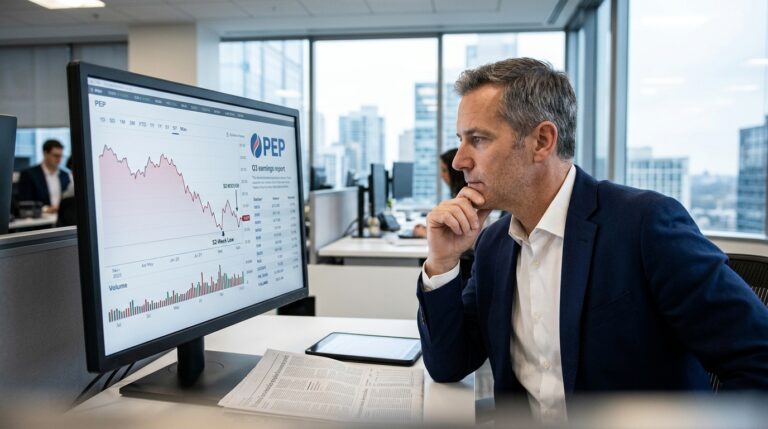
The IPO market itself is not exactly welcoming. There have been 110 IPOs in 2026, compared with 202 in 2025. While the number of IPOs is down about 30% from the comparable period in 2025, proceeds have surged nearly 400%, highlighting an IPO market dominated by unusually large deals. Investors are concentrating capital into a narrower set of names and applying sharper scrutiny to everything else. Activity came in below expectations in the third quarter of 2026, as more concerns about AI spending, a 19-year high in bond yields, and resumed rate hikes weighed on the fall pickup.
Still ahead in the queue: Anthropic has considered delaying its IPO until after the US midterm elections. Anthropic reported a $42 billion net loss in 2025 and expects to spend $518 billion on cloud, computing, and infrastructure commitments in the coming years. Separately, Nscale filed to go public on the New York Stock Exchange in September and is not yet profitable, logging a $1.02 billion net loss in the first half of the year. Both of those companies need the public market. Oura, at this point, is choosing it.
Disciplined investors know the difference. A business that generates $60.8 million in net income on $1.21 billion in nine-month revenue and carries roughly 85% 12-month paid-member retention does not have a capital problem. It has a valuation negotiation. Oura walked away from that negotiation on Tuesday. The more instructive lesson is not what the market did to Oura, but what Oura’s financial profile reveals about who actually holds the leverage when a profitable, compounding business meets a skittish market.