




September 8, 2026
Bonus Content: Tradeweb Processed $61 Trillion in August. Bond Chaos Is Its Business.
Dear Reader,
Mitt Romney turned $450,000 into as much as $100 million in 15 years.
Peter Thiel turned $2,000 into $5 billion between 1999 and 2021.
Both inside their retirement accounts.
They both used the same trick – a type of investment that regular Americans weren’t allowed to touch.
For decades, it was locked away. Reserved for the ultra-wealthy.
But Trump just signed an executive order that opened it up to everyone.
And there’s one fund that gives you direct access.
Trump himself has up to $25 million in it.
My colleague Alexander Green says it could be the best opportunity he’s seen in his entire career.
Click here to see his full presentation – and learn how you can get in for less than $20.
Good investing,
Rachel Gearhart
Publisher,The Oxford Club
Tradeweb Processed $61 Trillion in August. Bond Chaos Is Its Business.
Most investors watching the bond market right now are trying to predict where yields go next. The better question, for a long-term capital allocator, is who gets paid regardless of the answer.
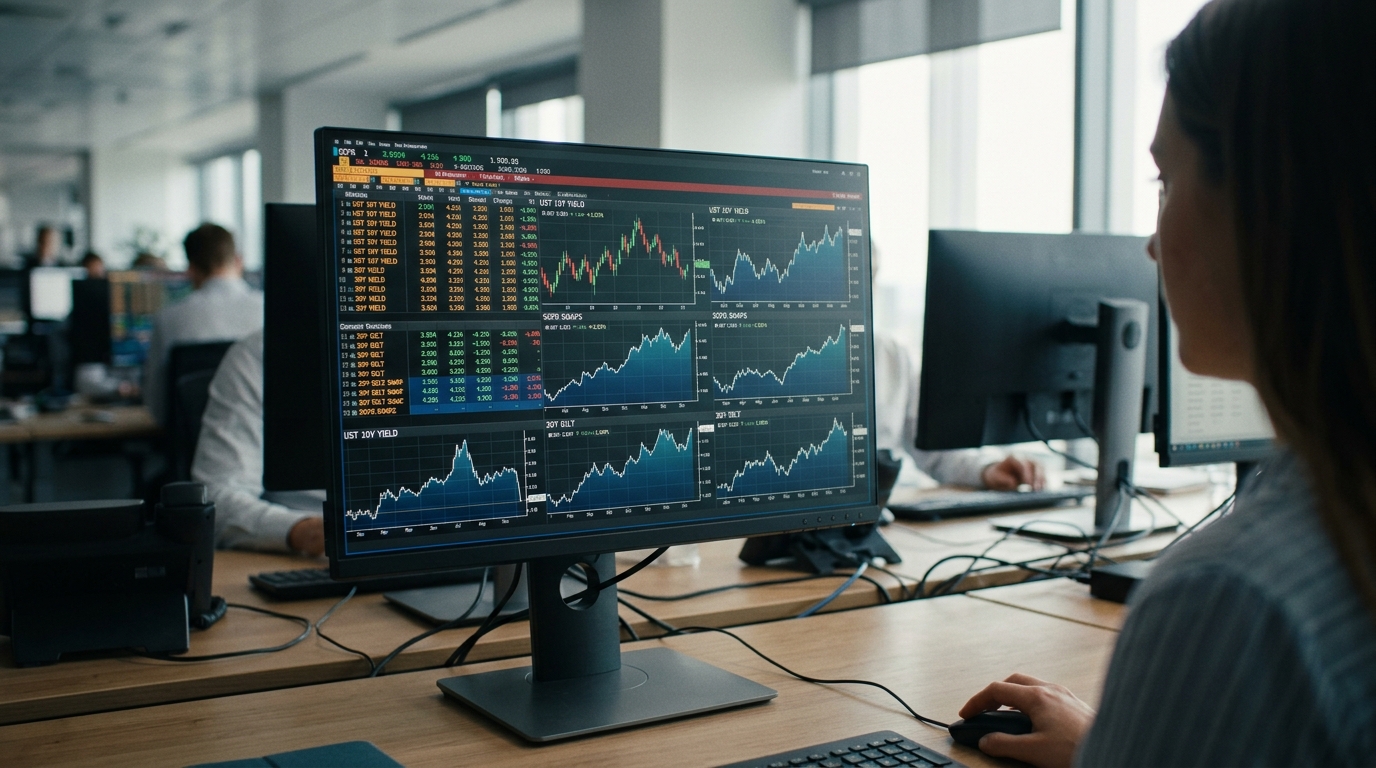
Tradeweb Markets (TW) answered that question in hard numbers on September 4, 2026. The company reported $61.2 trillion in total trading volume for August 2026, with average daily volume rising 13.7% year-on-year to $2.8 trillion. The headline driver was government bonds. U.S. government bond ADV rose 28.9% year-over-year to $282.5 billion, while European government bond ADV climbed 22.2% to $54.1 billion. Swaps and swaptions ADV of one year or longer was up 27.3% to $553.0 billion, driven by shifting global central bank policy expectations and persistent uncertainty around the inflation and economic growth outlook.
This is what a toll-road business looks like when traffic surges. Tradeweb does not take directional risk on rates. It operates the infrastructure that thousands of institutions are forced to use whenever they need to move.
The Architecture of a Widening Moat
Every day, Tradeweb’s network connects more than 3,000 clients across rates, credit, equities, and money markets around the world, creating one of the richest and most diverse pools of activity in electronic trading. That density matters: each new participant makes the platform more valuable for every existing one, a classic network effect that compounds with time rather than fading.
Portfolio trading and sessions remain important differentiators, but management sees considerable runway to expand its presence as a larger share of institutional credit trading migrates to electronic execution, with competitive advantage increasingly defined by workflow, data, and automation rather than connectivity alone. In June 2026, the company launched TARA, an AI-powered research assistant embedded directly within the Tradeweb institutional platform, designed to help institutional U.S. credit market participants turn trading data into actionable real-time insights, and if clients adopt it at scale, it could strengthen the company’s position in workflow automation and analytics.
The financial quality underneath this moat is exceptional. Tradeweb delivered record Q1 2026 revenues of $617.8 million, up 21.2% year-over-year. Adjusted EBITDA margin was 55.0% for the quarter.
What Could Go Wrong
August’s figures were not uniformly strong. The $2.8 trillion ADV came in 4.5% below July’s $2.9 trillion, a month-on-month decline. Mortgage ADV fell 9.2% year-over-year to $210.7 billion, with TBA activity moderating as long-end Treasury yields moved sharply higher. Platform revenue is partly volume-dependent, which means a sustained calm in rates markets would compress results.
Competition is real. MarketAxess (MKTX) contests credit market share directly. CME Group and ICE both operate deep rate-derivatives franchises. Fee pressure and client shifts to rival platforms could quietly erode Tradeweb’s economics over time. And at a premium multiple, the stock already prices in a confident growth trajectory.
The Long-Term Verdict
The bond market’s current disorder is not a temporary event to be endured. Structural resetting across the global long end, central banks navigating divergent inflation regimes, and the continuing shift from voice to electronic execution are decade-long forces. Tradeweb’s network effects, long track record of innovation, and significant growth opportunities tied to the ongoing electronification of capital markets sit squarely in the path of all three.
The August data is not a trading signal. It is a reminder that the most durable businesses are the ones that grow stronger precisely when markets are most uncertain. Tradeweb does not need to forecast yields correctly. It only needs the world to keep trading bonds, and right now the world very much is.