




Tuesday’s customs release handed traders two numbers. Most coverage led with the one that looked strong: exports grew 25% in August year-over-year, but imports rose only 28.2%, missing the 30% consensus estimate, and the trade surplus swelled to $119.09 billion from $112.5 billion in July. The surplus is the headline. The import miss is the trade.
Imports missing expectations signals that domestic demand remains tepid inside an economy that is increasingly running on external engines. That distinction matters for commodities. Unwrought copper imports edged up just 1.2% year-over-year to 425,100 tonnes in August, and cumulative copper imports remain down 2.2% year-over-year to 3.5 million tonnes over the first eight months of 2026. For traders pricing copper as a pure China-demand story, this is a reality check, not a buy signal.
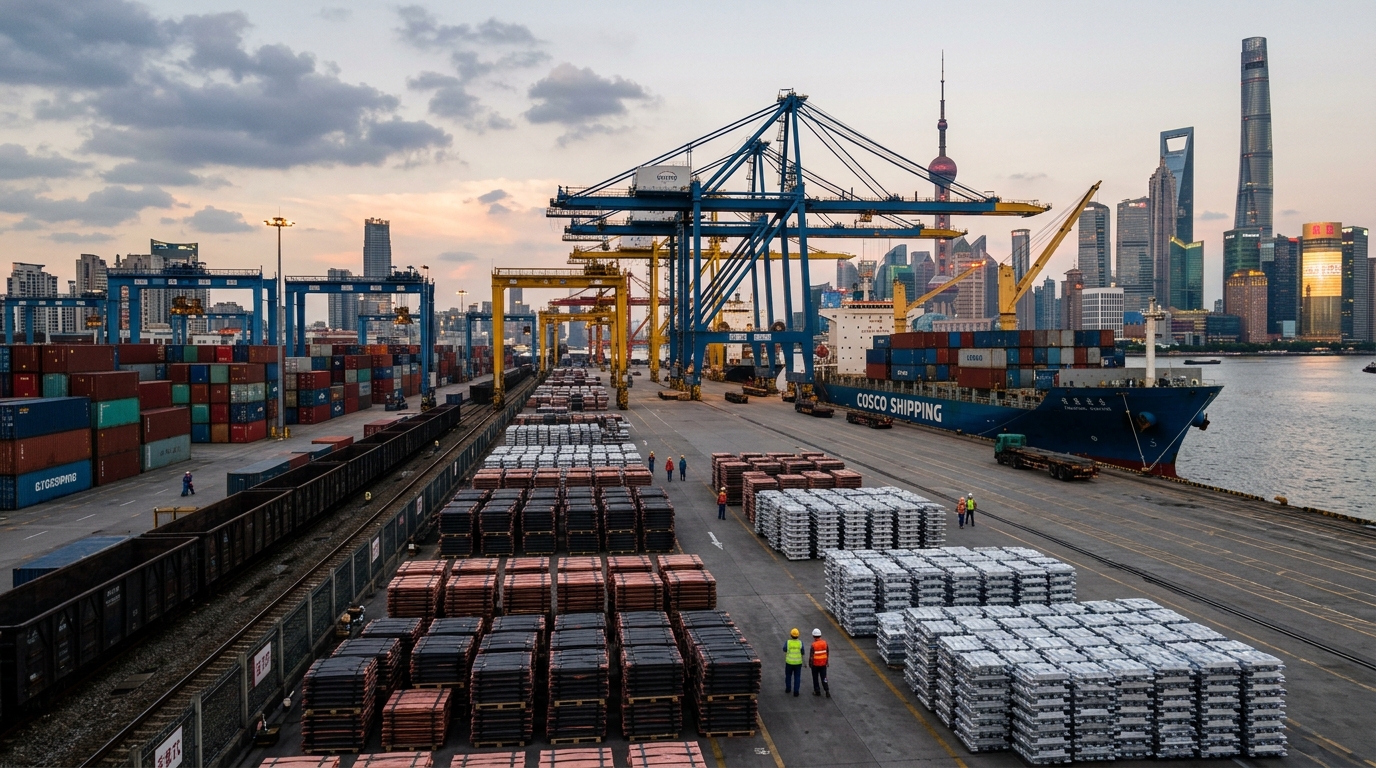
Aluminium tells a similar story on the export side. Exports in the first eight months of the year rose 16.7% from a year earlier to 4.67 million tonnes, which has kept global aluminium supply under persistent pressure from Chinese volumes. August’s export figure of 626,000 tonnes marked a month-over-month decline, but the year-to-date pace remains elevated enough to cap any rally in LME aluminium that rests on supply-scarcity assumptions.
The macro backdrop is equally double-edged. For the first eight months of 2026, China’s cumulative trade surplus has reached $805.51 billion. ING’s chief economist for Greater China, Lynn Song, has said exports are set to lead to a new record-high trade surplus this year. Policymakers in the U.S. and Europe have raised concerns over China’s ballooning trade surplus, which surged to a record $1.2 trillion for the whole of last year. Those concerns arrive at the table in sixteen days.
Xi’s trip to Washington is slated for September 24, though China has not officially confirmed the visit. The summit is expected to cover trade, investment, AI, the war with Iran, and Taiwan. Analysts are keeping expectations modest. Craig Singleton of the Foundation for Defense of Democracies described the relationship as one that “produces transactions without trust and stability without settlement,” calling the upcoming meeting “a low-expectations summit focused largely on managing the stalemate rather than resolving it.”
For traders, that framing is useful. A low-expectations summit means binary risk: either a modest positive surprise lifts China-linked equities, or nothing gets done and the surplus data continues to be a political irritant. Year-to-date, FXI is down roughly 7% while KWEB has lost approximately 24%.
The positioning logic: FXI is the more defensive vehicle into the summit. Its large-cap, export-oriented holdings benefit from the same trade engine that produced 25% export growth in August. KWEB needs the domestic demand story to turn, and this morning’s import miss says it has not. On copper, the modest year-over-year import gain and the negative year-to-date cumulative trend argue against aggressive long positioning ahead of the summit. If a deal produces purchase commitments on U.S. goods, that is the trigger to revisit. Until then, the import miss is the lead, not the surplus.