




August 24, 2026
When the Moat Pays the Workers
Deere’s rejected contract extension is a reminder that enduring competitive advantages eventually get shared with labor, and investors in capital-intensive industrials should price that in.
Dear Reader,
Alexander Green called Nvidia back in 2004 – when it was just $1.10 a share split-adjusted.
He believes it could reshape the tech landscape.
His readers were able to make 100% in 141 days…
Before it went on to become one of the best-performing stocks of all time… up more than 156,000% since its inception.
Alex just identified seven tiny AI stocks he believes could outperform the original Magnificent Seven – and do it even faster (in the next several years).
One of them recently inked a massive deal to get its tech into iPhone and iMac through 2040.
And one more is powering Walmart’s nationwide logistics overhaul.
These are early-stage opportunities – but the upside is enormous.
Alex believes $1,000 in each of these seven could grow into $1 million in under six years.
Want to see more details?
Click here to watch his “Next Magnificent Seven” briefing now.
Good investing,
Rachel Gearhart
Publisher, The Oxford Club
P.S. Most people didn’t even know Nvidia existed in 2004. Alex did. That’s why you should pay close attention now. His picks could be the biggest winners of the decade.
Tesla’s 2.98M-Vehicle Recall Is a Headline, Not a Bill
Forty-five billion dollars is a hard number to argue with at the bargaining table.
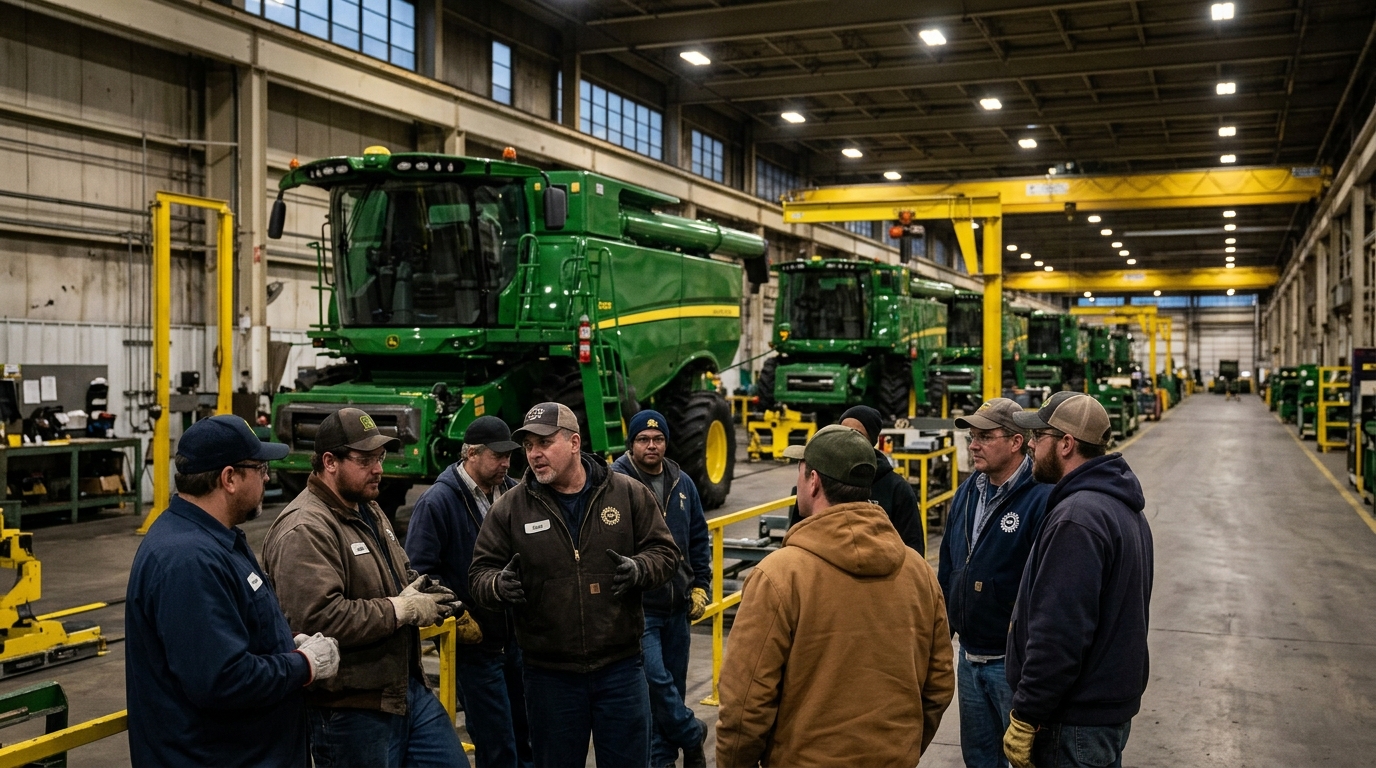
UAW president Shawn Fain made sure no one forgot it Sunday when he announced that roughly 10,000 Deere workers had voted down the company’s proposed two-year contract extension. The rejected proposal would have stretched the current collective bargaining agreement from its October 2027 expiration through 2029. Deere had sweetened the offer with 4 percent wage increases effective Nov. 1, 2026 and Nov. 1, 2027 plus a $3,000 acceptance bonus. The union said no.
Fain’s framing was deliberate. He said Deere earned $45 billion in profits over the last five years and that the company returned 56 percent of those profits to shareholders through dividends and share repurchases. He also cited CEO pay as a contrast, but the specific dollar figure and time window in the draft could not be verified from public filings, so this claim is left at the level of his broader point. Meanwhile, about 1,600 workers remained on layoff and Fain said the company continued to outsource work.
The timing sharpened the contrast. Just days before the vote, Deere reported fiscal Q3 2026 net income of $1.379 billion and raised its full-year profit outlook to $4.75 billion to $5.00 billion. Construction and forestry drove results, with operating margin expanding to 12.1 percent from 7.7 percent a year earlier. Management called 2026 the probable bottom of the agricultural equipment cycle. The company is, by most measures, performing well through a downturn, which is precisely the point the UAW is making.
The investment lesson here is not about one contract negotiation. It is about a structural dynamic that any honest long-term analysis of capital-intensive industrials must account for: durable competitive advantages tend, over time, to be shared. When a business earns extraordinary returns for long enough, labor, regulators, or customers eventually claim a portion. The question for investors is never whether that happens but when and how much.
Deere’s moat is genuine. Precision agriculture technology, dealer networks built over decades, and switching costs that make farmers reluctant to mix equipment brands create real pricing power. Deere says it has about 60 U.S. factory and office locations across more than 16 states and cites a $25 billion economic impact in its U.S. hometown communities , a footprint that creates both competitive scale and political exposure. AGCO and CNH face similar structural dynamics with less pricing leverage, which arguably makes the labor question more acute for them when ag demand recovers.
Deere said it expects to return to negotiations before the current agreement expires in October 2027. That gives both sides more than a year to watch the cycle turn, and for workers to watch profits rebound. By the time formal bargaining opens, Deere may be reporting considerably stronger numbers than today’s trough. That is not a favorable backdrop for management seeking labor cost restraint.
Disciplined investors in industrials should weigh this carefully. The businesses with the strongest moats are often the ones that attract the most sustained labor pressure precisely because the profits are visible and defensible. Owning exceptional industrials over decades means accepting that the workforce will periodically renegotiate its share of the surplus. That is not a reason to avoid these businesses. It is a reason to buy them at prices that already reflect it.