


TITLE: The Insurance Market Already Discounted a 2027 Reopening
SUBTITLE: Trump gave no timeline at Camp David. The war-risk market gave one instead, and it runs through next year.
BODY (HTML):
SUBJECT LINE: Hormuz Has No End Date
META DESCRIPTION: Trump said Friday he has no clear timeline for reopening the Strait of Hormuz. Kpler pushed its reopening forecast to 2027. War-risk insurance now runs 7.5–10% of hull value. Here is what the tanker market is signaling and where active traders should focus over the next five sessions.
Bullet Summary
- On July 31, Trump told reporters at Camp David he did not provide a firm timeline for reopening the Strait of Hormuz, while warning U.S. military action could continue, a clear public signal that a clean diplomatic schedule is not in place.
- Strait traffic remains near-paralyzed relative to pre-war norms: multiple tracking-based baselines put typical pre-conflict transits around 100–140 vessels per day, versus low-double-digit or single-digit days during the 2026 closure.
- Kpler pushed its expectation for a durable reopening into 2027, with Matt Smith, Kpler’s director of commodity research, discussing the shift on CNBC and framing the conflict as lacking a visible endgame after roughly five months.
- War-risk insurance premiums for Hormuz transits have surged to about 7.5–10% of hull value, according to Marsh (up from roughly 1–3% of hull value weeks earlier); insuring a $100 million tanker now implies about $7.5–$10 million per voyage versus roughly $250,000 pre-conflict at ~0.25%.
- Bab el-Mandeb has opened as a second front: the Houthis declared a maritime embargo targeting Saudi-linked shipping on July 20, and maritime security data indicates transits have fallen materially since the declaration as operators turn back or reroute.
- Scorpio Tankers (STNG), with a 90-vessel fleet, reported Q1 2026 diluted adjusted EPS of $3.02 and Q1 revenue of $312.86 million, and the stock trades near $79 versus an average analyst price target of $95.60, about 21% implied upside before any Q2 rate acceleration is reflected.
- Brent crude surged during the late-July escalation and briefly touched $102 last week before easing, underscoring that oil markets remain more sensitive to chokepoint risk than broad equities.
Market Snapshot and Macro Context
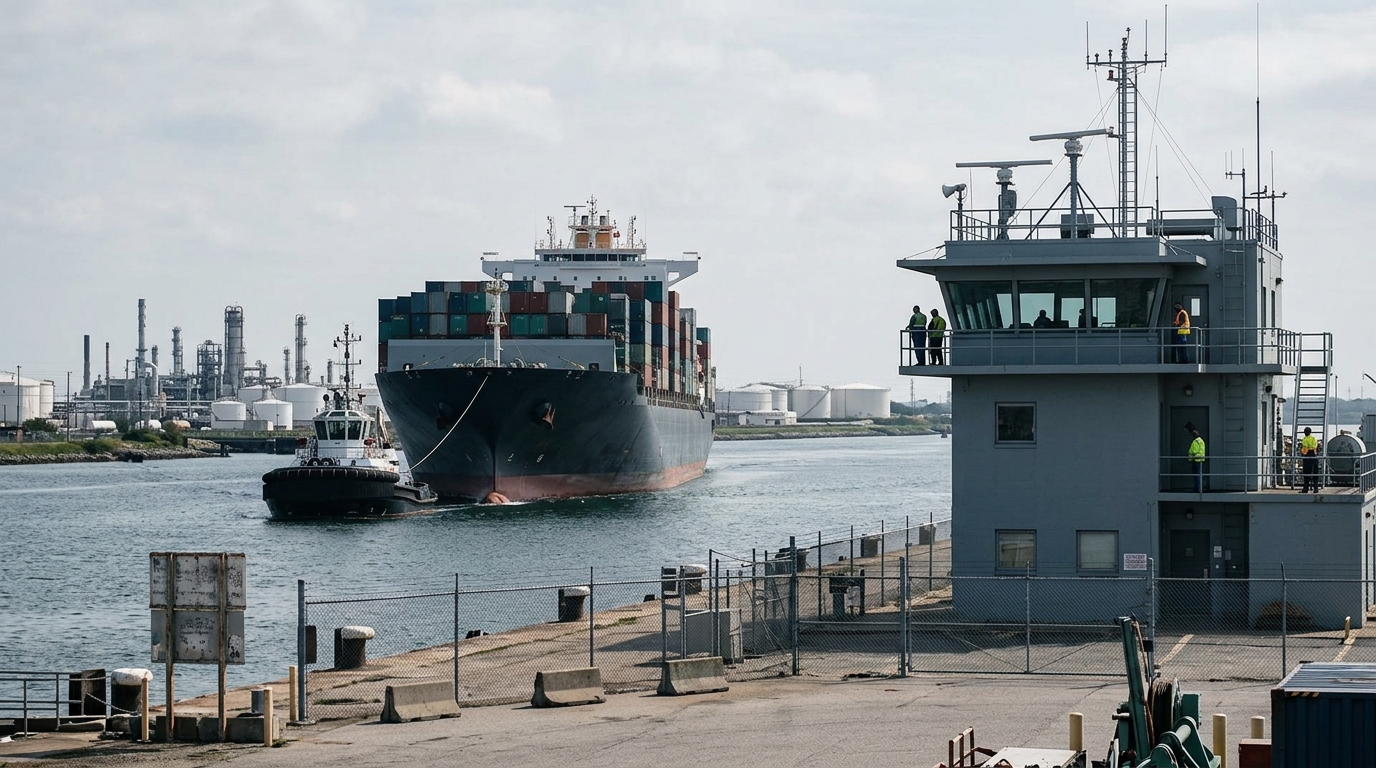
August begins with two of the world’s most consequential energy shipping corridors under severe stress. The Strait of Hormuz, the artery through which around 20% of global oil typically moves, has been effectively constrained since February 28. A mid-June memorandum of understanding between the U.S. and Iran created a temporary reopening framework, but that framework did not hold as attacks resumed and the market reverted to a closure regime.
The Bab el-Mandeb, the Red Sea gateway that Saudi Arabia used as a partial backup export route after Hormuz deteriorated, is now a second independent pressure point. Houthi forces declared a maritime embargo targeting Saudi-linked shipping on July 20, and subsequent reporting and maritime security data show a meaningful drop in transits as ships turn back or reroute. Saudi barrels that cannot move through either chokepoint face longer voyages around the Cape of Good Hope, raising freight costs and tightening tanker capacity through ton-mile expansion.
Brent crude surged during the late-July escalation and briefly hit about $102 before easing, a reminder that the commodity complex is treating these chokepoints as a structural risk rather than a one-day headline. Equity volatility has not moved in lockstep, but oil-specific volatility has remained elevated, reflecting a supply-chain problem that is physical, insurable, and route-constrained.
On July 31, Trump spoke to reporters during a Cabinet meeting at the Camp David presidential retreat. He warned that U.S. military action could continue and did not offer a firm timetable for reopening the strait. That is the functional market message: no defined endpoint, and no reliable near-term diplomatic calendar that traders can anchor to.
Why This Stock Is in Focus
Scorpio Tankers (STNG) is not the most visible name in the Hormuz trade. Integrated oil majors dominate the headlines. But the tanker market is where the Hormuz disruption becomes a direct earnings mechanism rather than a sentiment overlay, and Scorpio sits at a specific inflection that most equity investors have not fully mapped.
The stock is trading near $79 against an analyst consensus price target of $95.60. Q1 2026 delivered strong results, with revenue of $312.86 million and diluted adjusted EPS of $3.02. A $500 million buyback program is active. Yet the stock trades at approximately 12x trailing earnings, well below the broader market multiple, because the market is still assuming some form of normalization timeline that Kpler just shifted out to 2027.
That creates a specific tension. If the market is wrong about reopening timing, STNG is undervalued versus its own forward cash generation. If Kpler is right and disruption extends into next year, Q2 earnings, due in the coming weeks, will reflect elevated tanker rates across Scorpio’s 90-vessel fleet in what has become an unusually supportive rate environment.
Sector Breakdown and Capital Rotation
Capital rotation within the energy complex since February has followed a clear, if uneven, arc. Integrated majors like ExxonMobil and Chevron captured the early oil price rally but face competing forces: operational cost inflation, production constraints in the Gulf region, and investor concerns about capex cycles. Refiners initially benefited from crack spread expansion but face margin pressure as crude input costs remain elevated while demand faces macro headwinds.
Tanker operators have emerged as the most direct financial expression of chokepoint disruption because their earnings are levered not to the price of oil but to the cost of moving it. When shipping routes lengthen, ton-mile demand per barrel rises even if the absolute volume shipped is impaired. That ton-mile expansion consumes fleet capacity, tightens the market, and can drive daily charter rates.
Frontline has pointed to unusually strong profitability in recent quarters, and the broader listed tanker complex has outperformed. STNG stands out because it is a pure-play product tanker operator with a 90-vessel fleet and a Q2 print that has not yet hit the tape, meaning the strongest rate stretch of the late-July escalation is not yet fully visible in reported quarterly results that investors can trade around.
Institutional coverage remains constructive, with Evercore ISI maintaining an Outperform rating and a $96 price target in late July. Meanwhile, the second chokepoint risk at Bab el-Mandeb complicates the system. With Saudi-linked shipping specifically targeted by the Houthi embargo declaration, the reroute logic shifts more flows toward longer routes, reinforcing the ton-mile mechanism that benefits tanker owners, even as it increases headline risk and tail-risk uncertainty.
Stock-Specific Financial Breakdown
Scorpio Tankers operates 90 wholly owned vessels as of March 19, 2026, including 34 LR2 tankers, 42 medium-range (MR) tankers, and 14 Handymax. This fleet composition matters for the current environment: LR2 tankers carry refined petroleum products on Middle East to Asia routes, which are directly impacted when chokepoints force cargo rerouting and lengthen voyage distances.
Q1 2026 revenue came in at $312.86 million against a consensus of $274.47 million, a roughly 14% beat. Q2 consensus estimates in the draft call for revenue growth of 83.2% year on year, a reversal from the 40.4% year-on-year revenue decrease recorded in Q2 2025. Full-year 2025 revenue was $938.22 million, down from $1.24 billion in 2024. The 2026 trajectory has reversed sharply.
The $500 million buyback program active since Q1 provides a direct capital return mechanism as cash generation accelerates. At $79 per share, the stock trades at a meaningful discount to the $95.60 average analyst target, with Evercore ISI specifically at $96. The 12-month earnings profile has been materially reset by the conflict: Q1 diluted adjusted EPS of $3.02 confirmed the rate environment is feeding directly into reported income, and July’s escalation likely lifted spot dynamics further.
Free cash flow margin has averaged 50.5% over five years, and gross margin has averaged 68.8%. These are not typical industrial metrics. They reflect the economics of a capital-intensive asset that generates revenue on a per-day basis. At current daily charter rates, which are running well above the historical average, each additional day of disruption can translate into incremental cash generation with limited marginal cost.
The structural bear case, that a peace deal collapses STNG’s earnings rapidly, is real and requires explicit risk management. But the near-term earnings window through Q2 reporting is denominated in a rate environment that has already occurred. The uncertainty is forward-looking. The next several sessions are about whether Q2 earnings can close the gap to the $95.60 analyst target.
Technical Picture and Trading Framework
STNG’s chart over 2026 reflects the conflict’s volatility arc. The stock surged in late February and March as the initial Hormuz closure drove tanker rate expectations sharply higher, consolidated during the June MoU period when rates briefly eased and oil fell toward $70, and has been recovering since the ceasefire framework deteriorated in early July.
The stock trades near $79, up approximately 12.7% over the past month, against the $95.60 consensus target. The technical setup is a base-building phase after a pullback from the mid-year peak, with the catalyst of Q2 earnings ahead. Key levels to monitor:
- $76–$77: Near-term support, aligns with the base of the July consolidation and represents the level at which buyers showed up consistently following the initial ceasefire rally unwind.
- $79–$80: Current price area; the key short-term test is whether the stock can hold above this level into Q2 earnings.
- $85–$87: First meaningful resistance; a Q2 beat at the magnitude of Q1 (14% above consensus) would likely challenge this level quickly.
- $95–$96: Analyst consensus target cluster; this represents the price at which current fundamental assumptions are fully reflected.
- Volume confirmation: Watch for above-average volume on any move above $80; thin-volume breakouts in shipping stocks during geopolitical events frequently reverse.
Momentum indicators suggest the stock is in a constructive phase relative to the broader transport sector, which is down roughly 3.3% over the past month while STNG is up 12.7%. Relative strength is clearly positive. The risk is a sudden diplomatic breakthrough that collapses the rate outlook before Q2 earnings are reported, though Trump’s July 31 comments, combined with ongoing reported strikes, argue against a clean near-term normalization path.
Catalyst
The primary catalyst for the next five sessions is layered. The immediate driver is Trump’s July 31 appearance at Camp David in which he warned U.S. strikes could continue and did not offer a firm timeline for Hormuz normalization, extending the market’s sense that disruption risk remains open-ended.
The secondary catalyst is Kpler’s revised expectation for a durable reopening pushed into 2027, discussed by Matt Smith, Kpler’s director of commodity research, on CNBC. When a leading ship-tracking analytics firm shifts its base-case timeline materially outward, forward earnings models for tanker operators tend to require upward revision, and that revision is not necessarily fully reflected in STNG’s current price versus the $95.60 target cluster.
The third catalyst is Bab el-Mandeb’s deterioration. Saudi Arabia’s backup export corridor is less reliable after the Houthi embargo declaration. The Cape of Good Hope reroute adds time and ton-miles, consuming fleet capacity. Scorpio’s Q2 earnings should help quantify this dynamic in reported charter rates and utilization.
War-risk insurance is the market’s most immediate transmission mechanism. Marsh has described Hormuz-related additional war risk premiums rising to roughly 7.5–10% of hull value, a level that can change voyage economics quickly and reinforce rerouting decisions. That supports tanker owners via rates, while increasing tail risk via operational constraints.
Scenario Modeling
Bull Case
Scorpio Q2 earnings, expected in the coming weeks, deliver revenue at or above the 83% year-on-year growth the consensus already expects, with charter-rate commentary confirming that late-July escalation flowed into realized income. Brent holds above $85 as both Hormuz and Bab el-Mandeb remain disrupted, keeping ton-mile demand elevated. The $500 million buyback actively reduces the float. STNG moves toward $90–$96, the analyst target cluster, within 10 to 15 sessions of earnings. This scenario requires no diplomatic breakthrough and no sudden oil demand collapse.
Base Case
Q2 earnings confirm the elevated rate environment but the stock’s near-term move is constrained by headline risk around sporadic diplomatic signals. Brent oscillates between $82 and $92 as periodic ceasefire rumors surface and fade, consistent with the pattern since February. STNG trades in a $79–$87 range over the next five sessions, with the Q2 earnings report serving as the breakout catalyst. The Kpler 2027 reopening expectation holds, providing a structural floor for tanker earnings assumptions.
Bear Case
A genuine diplomatic breakthrough materializes in the next five sessions: a new memorandum of understanding is signed, Hormuz traffic resumes materially versus the current trough, and Brent oil falls toward $72–$75 as supply fears unwind rapidly. In this scenario STNG retraces toward $70–$73, replicating the June selloff when the first MoU pushed oil lower. The bear case is lower probability given Trump’s July 31 posture and the persistence of reported strikes, but it cannot be dismissed, as the market has previously misread the durability of ceasefire frameworks during this conflict.
Risk Assessment
The most material risk to the STNG trade idea is the one the market has been wrong about before: the speed of a diplomatic resolution. The June MoU demonstrated that oil prices and tanker rate expectations can shift violently within 48 hours of a signed agreement. When Brent fell toward $70 in late June on the MoU announcement, tanker stocks gave back a significant portion of their conflict-driven gains in days. A second diplomatic reset carries the same risk, amplified by the fact that Q2 earnings have not yet been reported.
A second risk is insurance market seizure. War-risk premiums at 7.5–10% of hull value are approaching levels at which some operators rationally choose not to transit even if they could. If the rate of vessel strikes accelerates and underwriters follow targeted exclusions with broader coverage withdrawal, operators may face a choice between transiting uninsured or not transiting at all. This can cap the upside on ton-mile demand because fewer ships will attempt transit regardless of charter rates.
The Bab el-Mandeb escalation adds a complicating variable. J.P. Morgan analysts estimated that problems with Bab el-Mandeb passage could add $20 per barrel to oil prices, but that estimate assumed Hormuz was functioning. With both corridors stressed simultaneously, the macro feedback loop, higher oil prices suppressing demand, slowing the global economy, reducing oil consumption, becomes a real counterweight to the bullish tanker thesis over a multi-month horizon.
Active Trader Strategy Framework
For traders focused on the next one to five sessions, STNG offers a defined risk framework. The stock’s $76–$77 support level represents a concrete stop reference: a close below $76 on meaningful volume would suggest the trade is not working on the anticipated timeline and should be reassessed. Above $80 on above-average volume would confirm momentum continuation ahead of Q2 earnings.
Position sizing relative to the implied earnings move matters. STNG has demonstrated the ability to move 10–15% on earnings in either direction depending on whether charter rate data confirms or undermines the forward consensus. Given the stock is currently 21% below the analyst target cluster and Q2 rates were running at the highest levels of the conflict, the risk-reward asymmetry favors the long side on a technical break above $80. The $500 million buyback provides a partial floor against sharp selloffs in the absence of a diplomatic event.
Volatility context: shipping stocks have been running hot on geopolitical headlines, meaning intraday swings of 3–5% are normal and do not constitute trend changes. The relevant time horizon for this idea is the period from now through Q2 earnings, not intraday. Traders who cannot hold through headline-driven volatility should size accordingly or wait for the earnings release itself before acting.
Watch chokepoint transit and reroute indicators as a near-real-time signal. Hormuz crossings staying in the single-digit to low-double-digit regime remain consistent with the bull case for tanker rates. Any sustained improvement in crossings would signal a material shift in the operating environment and should trigger a reassessment of the thesis.
Trader’s Checklist
- Monitor daily Hormuz transit counts and the 7-day moving average: a sustained move back above 30 vessels per day would signal a rate-environment shift; persistent readings below 10–15 sustain the bull case for tanker earnings.
- Watch for Scorpio Tankers (STNG) Q2 2026 earnings date confirmation; consensus expects 83.2% year-on-year revenue growth, and any figure materially above this would close the gap to the $95.60 analyst target.
- Track Bab el-Mandeb crossing and reroute data via maritime security feeds; continued turn-backs and rerouting around the Cape confirm the ton-mile expansion mechanism is intact.
- Watch for any diplomatic signals from the Trump administration regarding Iran: a new memorandum of understanding, a ceasefire announcement, or any statement assigning a specific timeline to Hormuz reopening represents the primary bear-case trigger and warrants immediate position reassessment.
- Track war-risk insurance premium updates from Marsh/S&P Global: persistence near 7.5–10% of hull value, or any broad underwriter withdrawal from coverage, would signal both rate support and operational constraint risk.
- Monitor Brent crude for a sustained close above $90: that level, if held for two or more sessions, suggests the market is fully reflecting dual-corridor disruption and would likely provide additional tailwind for STNG and peer tanker operators.
- Watch STNG’s $76–$77 support zone: a close below this level on volume exceeding the 30-day average is the technical signal to exit or reduce exposure ahead of earnings.
Professional Conclusion
Trump’s July 31 comments at Camp David were short and consequential for markets. He offered no firm timeline for Hormuz normalization and signaled that military pressure could continue. Five months into the 2026 Strait of Hormuz crisis, that stance matches what Kpler’s analysts and the war-risk insurance market have been reflecting: this is not a clean, near-term reset.
For active traders, the opportunity is not in reacting to the latest remark. It is in understanding what it means for the earnings trajectory of companies whose revenues are directly metered by the disruption. Scorpio Tankers is a clean instrument for expressing that view: a 90-vessel fleet, a Q1 beat of roughly 14% over consensus, a $500 million buyback, a stock about 21% below its analyst target cluster, and a Q2 earnings report that should capture a highly supportive rate regime. The bull case does not require predicting diplomacy. It requires only that the market’s existing estimates are too low.
Preparation over prediction. Define the stop at $76. Size for the volatility. Watch transit and insurance signals daily. Let the earnings confirm the thesis.
For informational and educational purposes only. Not investment advice. Trading involves risk, including loss of principal.