




The options market was already flashing something unusual before Seagate reported. Weekly implied volatility on STX had spiked to 216 — against a 52-week range of 34 to 115. That’s not a normal pre-earnings bid. That’s the market saying: this one could move in a way that doesn’t fit inside a tidy model.
It did.
Seagate delivered fiscal Q4 2026 results last night that weren’t just a beat — they were the strongest quarter in the company’s history across nearly every profitability metric. Revenue came in at $3.63 billion, up 48% year-over-year and ahead of both management’s own guidance midpoint and the Street’s consensus. Non-GAAP EPS of $5.71 cleared the $5.09 estimate by more than 12%. Non-GAAP gross margin expanded to 52.7%, up 570 basis points in a single quarter. Free cash flow hit $1.1 billion for the quarter, contributing to a record $3.1 billion for the full fiscal year.
Those are the numbers. Here’s what matters more.
Seagate’s Q1 fiscal 2027 guidance came in at $4.1 billion in revenue — roughly 9% above what analysts had been modeling. EPS guidance of $7.30 also cleared consensus by a wide margin. CEO Dave Mosley attributed the trajectory to what he called “robust cloud data center demand” and said AI is generating durable, long-term demand for mass-capacity storage. That’s not new language from Seagate — but the guidance now has the numbers to back it up.
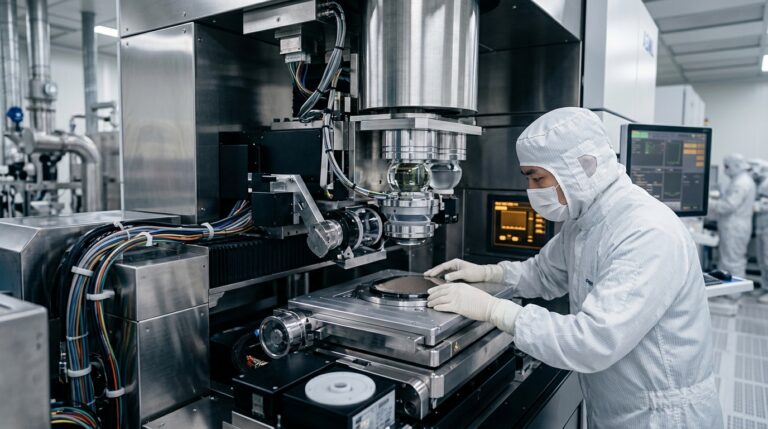
The engine behind this run is HAMR technology. Seagate’s Mozaic platform drives, built on Heat-Assisted Magnetic Recording, now account for 40% of nearline exabyte shipments and are in full production at multiple hyperscaler customers. This matters because HAMR drives carry meaningfully higher capacity per platter — and the pricing dynamic that comes with that is showing up directly in margins.
Slight tangent, but it’s worth saying: most people who cover storage as a “legacy” or “cyclical” business have been wrong about Seagate for the better part of 18 months. Annual revenue grew 34% in fiscal 2026. The company reduced debt by $1.4 billion during the year. And the guidance cadence keeps moving higher. At some point the word “legacy” stops fitting.
The stock fell 8.5% during Tuesday’s regular session, then rebounded more than 5% after hours once the numbers hit. That divergence is exactly the kind of signal worth watching. Shares are up roughly 176% year-to-date, so some of the intraday weakness was positioning ahead of a high bar. The question now is whether the Q1 guidance reset changes how the options market prices the next leg.
What to watch: HAMR adoption rates, whether hyperscaler customers accelerate qualification of Mozaic 4+ drives, and any update on the company’s pricing power as the supply-demand balance remains tight. The fiscal 2027 revenue trajectory implied by current guidance hasn’t been fully absorbed yet. That gap is where the opportunity lives.