



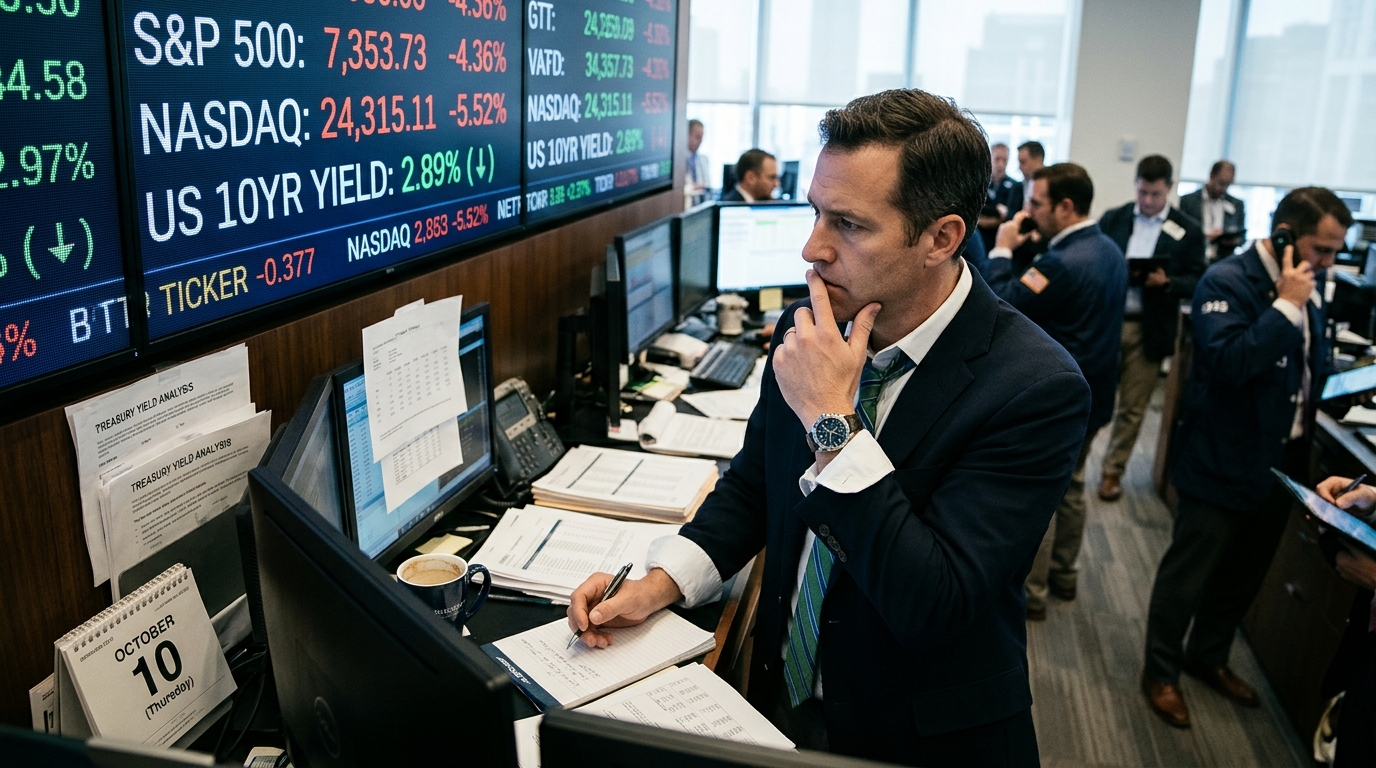
When the S&P 500 shed 4.36% on Thursday and the Nasdaq slid into correction territory, most portfolios felt it. The Dow dropped 1,833 points, the S&P 500 fell 4.36% to 7,353.73, and the Nasdaq lost 5.52% to 24,315. Two assets are supposed to absorb that kind of damage: gold and long-duration Treasuries. Only one of them delivered.
Treasuries rallied as investors moved toward safety, pushing yields toward their lowest levels since early September. The 2-year yield fell about 12 basis points to roughly 4.46%, and the 10-year yield declined about 5 to 6 basis points to about 4.84%.
That is real cushion. A portfolio holding intermediate Treasuries did not make back the equity loss, but it offset a meaningful slice of it.
Gold’s response was murkier. Spot gold was trading near $4,087 an ounce late Thursday, up about 0.6% on the day, a fraction of what the bond move delivered in price terms. The session’s most telling signal was the gold-silver ratio. In a typical relief rally, silver outruns gold because its smaller market amplifies every move. That happened Wednesday. Thursday the pattern reversed: gold was up about 1.48% while silver gained less than 1%, and the ratio climbed back above 78. Bullion held its ground, but it did not act like a crisis hedge. It acted like a dollar trade.
The difference matters because it frames what investors should do with duration heading into this morning’s data. The Bureau of Labor Statistics is scheduled to release the October jobs report at 8:30 a.m. Eastern on Friday, November 6, 2026. Economists have clustered closer to roughly 65,000 jobs added with unemployment holding at 4.2%, though some forecasts have been lower.
Wage growth is seen rebounding to 0.3% from 0.1% in September. That wage number deserves attention. It is the detail most likely to move Fed pricing regardless of the headline payroll count.
The probability that the Federal Reserve raises its policy rate in December fell to about two-thirds on Thursday, based on Fed funds futures pricing tracked by CME FedWatch. That is still a majority bet on another hike. Monthly jobs growth has averaged 45,000 over the last year, and a pause may still require a much weaker report than what consensus expects.
That is the central tension for anyone sizing duration right now. The bond market rallied Thursday on equity fear, not on evidence that the Fed is done. The Federal Reserve held rates steady at 3.75% to 4.00% at its October 2026 meeting, and two officials dissented in favor of hiking immediately. A payrolls beat near 95,000, which RSM has on its forecast, or a wage print above 0.3%, hands the hawks a fresh argument and reverses Thursday’s yield move in an afternoon.
The hawkish dissents at the October meeting did not emerge from nowhere. The Fed’s shift toward unanimous inflation-fighting language earlier in 2026 reset the baseline that bond markets are still trading against.
A miss near or below the Dow Jones consensus would do the opposite. Softer payroll growth or moderating wages could further reduce December rate hike expectations and support bonds through lower Treasury yields and a weaker dollar. In that scenario, Thursday’s rally extends, and investors who added duration into the equity selloff collect a second day of gains.
The payroll number is not the only force pressing on yields. Global sovereign bond supply and synchronized fiscal expansion across developed markets are pushing long-end yields higher independent of Fed decisions.
The lesson from the last 48 hours is not that bonds always work. It is that bonds worked when nothing else did, and the reason was flight-to-safety demand rather than any shift in the Fed’s stated intentions. While the jobs report might have implications for monetary policy, inflation remains the bigger trigger for rate decisions. Duration is a hedge against fear right now, not a bet on rate cuts. Those are different positions with different holding periods, and Friday morning’s number will clarify which one is in charge.