

October 9, 2026
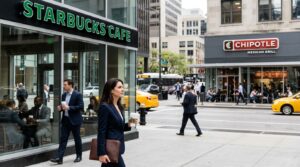
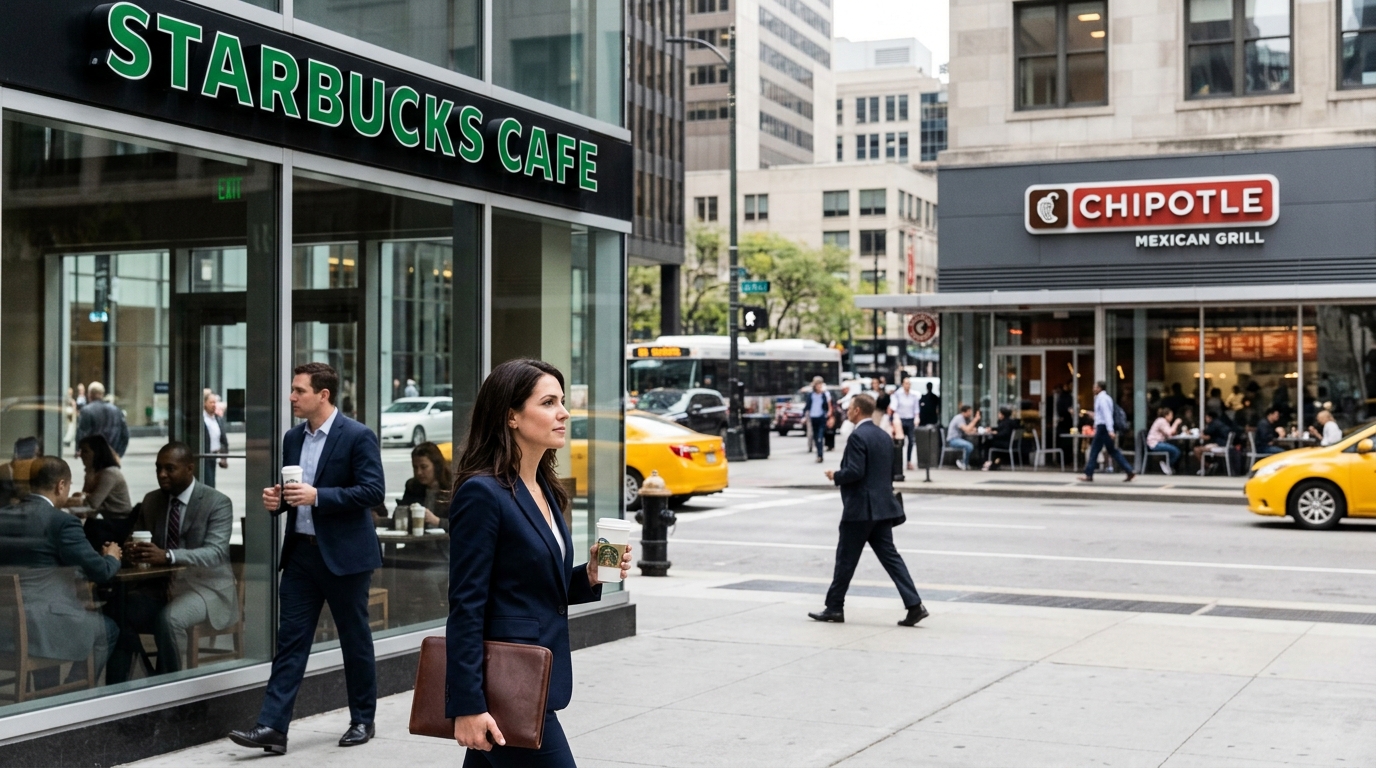
Bonus Content: Starbucks Is Eyeing Chipotle. Its Own Shareholders Should Ask Why.
Dear Reader,
Every single day a new drug sits waiting for FDA approval can cost the company behind it approximately $500,000.
Miss by a month and the meter can run to $15 million. Miss by a quarter and it can reach $45 million.
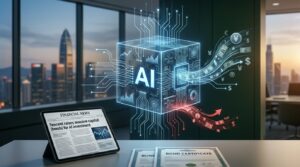
Now you understand why this hidden AI company may have big pharma trapped in the best possible way for investors.
See why this $500,000-a-day problem has my full attention.
I am Alexander Green, Chief Investment Strategist of The Oxford Club for more than two decades. I bought Apple in 1996, and Amazon and Netflix below $3 split-adjusted.
Those wins taught me to look beyond the loudest hardware story and ask a more important question: Which company becomes so embedded in an industry that removing it feels reckless?
I believe I have found one.
Nineteen of the top 20 biopharma companies run regulatory operations through its platform. Their clinical data, submissions, and compliance records live inside the system.
Now comes the pressure point: customers are being moved from a legacy product to the company’s newer AI-powered platform. More than 125 customers are already live, and Clinical Data AI applications are scheduled to go live in December 2026.
When one lost day can carry a six-figure cost, switching to an unproven rival could be an executive-level gamble.
Discover why big pharma may be unable to walk away from this platform.
This is Phase 2 of the AI boom: not building chips, but using AI to take control of an essential, expensive workflow. The deeper the platform goes, the harder it may become to replace.
That December rollout gives investors a concrete reason to pay attention now, while the company is still hiding in plain sight.
The December rollout is on the calendar. The stock is still hiding in plain sight.
See the complete biopharma AI case before the December rollout.
Good investing,
Alexander Green
Chief Investment Strategist, The Oxford Club
P.S. One day of FDA delay can cost roughly $500,000. This platform already sits inside 19 of the top 20 biopharma giants, and its Clinical Data AI rollout is scheduled for December. See the stock behind the rollout here.
Starbucks Is Eyeing Chipotle. Its Own Shareholders Should Ask Why.
There is a compelling story buried inside the report that Starbucks has been working with advisers on a possible takeover of Chipotle Mexican Grill. It goes like this: Brian Niccol ran Chipotle for more than six years, engineered one of the great restaurant turnarounds of the past decade, and now, with Chipotle’s stock down sharply since his departure, he sees a chance to buy it back at a discount and lever his institutional knowledge into a two-brand empire.
The problem is that Starbucks shareholders are being asked to fund that ambition while their own company’s restoration is still incomplete.
The Financial Times reported that Starbucks has worked with advisers on a possible acquisition of Chipotle, whose market value is near $39 billion, which would make it the largest restaurant deal on record. The report sent Chipotle stock up about 6%, while shares of Starbucks fell. That divergence is the market’s verdict in shorthand: one company’s shareholders see a windfall, the other’s see a risk.
Just a month ago, Niccol marked two years of his “Back to Starbucks” plan by declaring the turnaround complete and outlining a renovation push for thousands of locations. In the company’s fiscal third quarter ended June 28, 2026, its global same-store sales rose 7.9%, lifted by strong performance in the U.S. Real progress. But margins tell a different story. Operating margin came in at 9.4% in the most recent quarter, still far from management’s fiscal 2028 target of between 13.5% and 15%. The coffee chain has not yet demonstrated it can sustain the profitability levels that made it exceptional before its long decline.
Now layer on a $40-plus billion acquisition. Starbucks had about $13.3 billion of total debt at the end of June 2026. William Blair analyst Sharon Zackfia estimated that its leverage would balloon to about six times if the company paid a 20% premium and financed the deal primarily through debt. An all-stock structure would still dilute Starbucks’ per-share earnings by about 10%. Neither path is clean for long-term holders.
The strategic logic most cited is Chipotle’s international underdevelopment. A potential acquisition could accelerate Chipotle’s international expansion, as the chain had 112 international restaurants as of June 30, 2026. That is a real opportunity. But realizing it requires operational bandwidth that Starbucks is still building at home.
BTIG analyst Pete Saleh wrote that Starbucks is still executing its turnaround strategy and that acquiring Chipotle “could consume significant senior management time on financing, integration, organizational design, systems, and personnel,” asking: “Why introduce another major strategic initiative before demonstrating that Starbucks can deliver sustainable margin recovery?” RBC analyst Logan Reich added that “the strategic rationale for acquiring Chipotle isn’t apparent given limited overlap between the businesses.”
Chipotle itself is not a clean asset. Chipotle shares have lost roughly 40% of their value since Niccol’s departure, driven lower by weakening consumer traffic, cost pressures, and food-safety concerns. Restaurant-level margins fell to 23.7% in the first quarter of 2026, and CEO Scott Boatwright cited a “dynamic consumer backdrop” as the company discussed its outlook. Niccol knows the business intimately, but knowing a business and fixing it while simultaneously running a second turnaround are different propositions entirely.
It remains unclear if Starbucks will even pursue the takeover. D.A. Davidson analyst Matt Curtis views the odds of a completed deal as “relatively low,” around 20%. The market’s initial reaction suggests shareholders agree with the skeptics.
Great operators earn their reputations by focusing ruthlessly on the businesses in front of them. The question worth asking is whether Niccol’s interest in Chipotle reflects a bold capital allocation insight or an operator’s emotional pull toward the company he built. For Starbucks shareholders, those are very different things.