



September 6, 2026
Bonus Content: GM’s Defense Bet Is Already Profitable. Ford’s Grid Play Is Still a Promise.
Most traders have never noticed the weird market anomaly that happens at 9:35 AM every morning.
They’re too busy with lagging indicators trying to predict the next move… when the market makers have already set the tone for the trading day.
It’s this weird anomaly that points us to the market maker’s key levels above and below.
And by playing the move within that range…
Regular folks like you have been able to reach for $100 or more (on a $1K stake) over 600 times in the last 2 years.
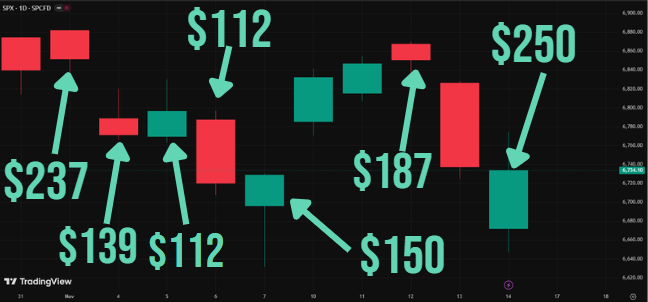
We’ve seen this straightforward approach play out whether the market broke out… broke down… or stayed choppy.
Granted, I can’t make trading guarantees here.
But I’ve opened up the data behind those trades, as well as how you can get in on the very next morning opportunity.
You’ll find the full details right here.
See you in the market.
Chris Pulver
GM’s Defense Bet Is Already Profitable. Ford’s Grid Play Is Still a Promise.
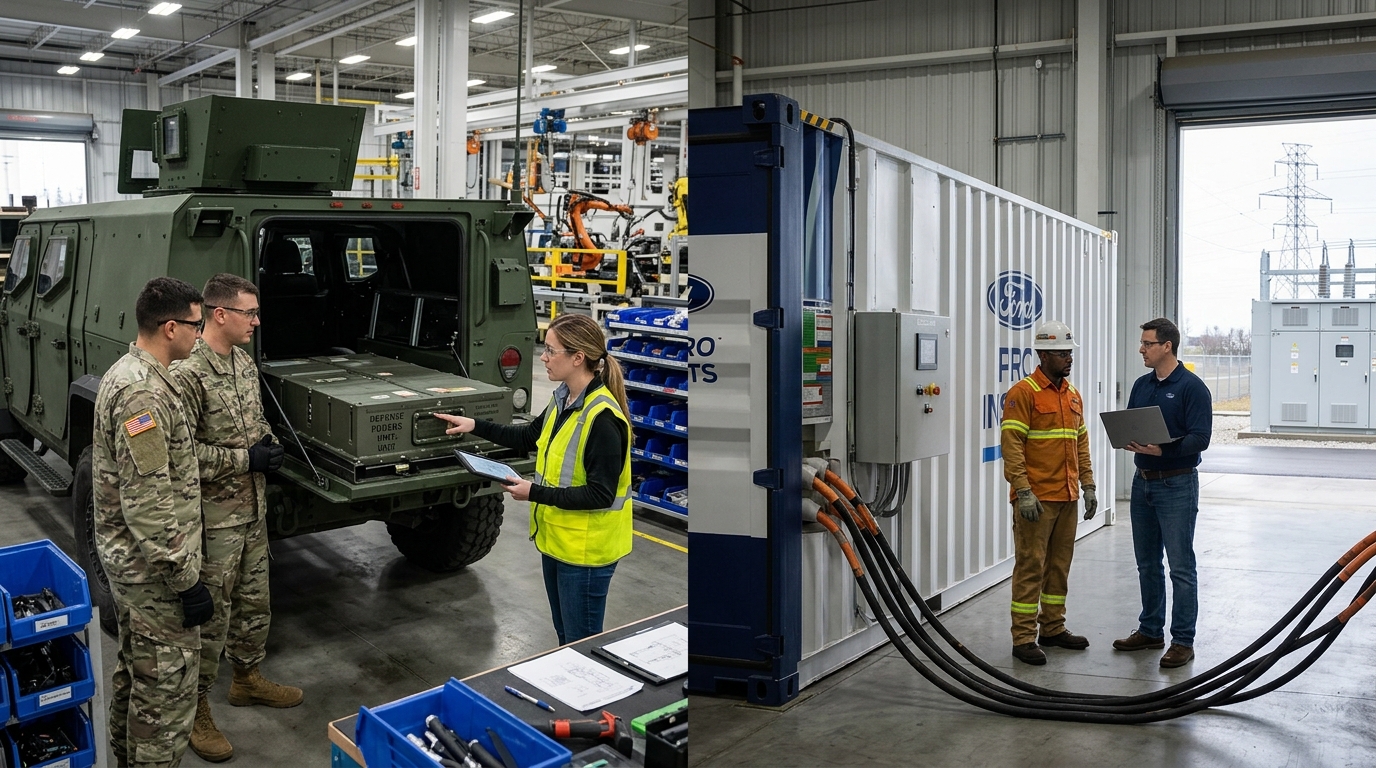
When vehicle demand cools and a factory goes quiet, the question every capital allocator faces is the same: sell the asset, write it down, or find it a new job. GM and Ford chose the third option, and the divergence in how far along each company is tells you almost everything about which bet deserves more credit today.
August new-vehicle retail sales are on track for a 6.9% decrease year over year, and EV share has softened to about 7% after the end of the federal consumer EV tax credit. That is the backdrop against which both companies are building second acts. The businesses they are building, however, are at very different stages.
GM Defense: Revenue Today, Margins Tomorrow
GM said it expects its 2026 defense revenue to grow to almost $700 million and is targeting positive results on an earnings before interest and tax basis this year, while also building a backlog of future business. That is not a pilot program. That is a business that is already on a path to profitability within the year it is being scaled.
GM Defense expects 2026 revenue to grow to almost $700 million and is targeting positive results on an EBIT basis this year, with management projecting a top-line revenue CAGR of more than 30% over the next several years with double-digit margins. This includes Infantry Squad Vehicle awards expected to exceed $1 billion based on the U.S. Army’s procurement objectives.
The strategic logic runs deeper than a single vehicle contract. GM has highlighted that it is working with Lockheed Martin and other leading companies to expand speed, scale and resilience in the defense industrial base. Lockheed arrived at its second-quarter 2026 earnings with a record backlog of $230 billion after reporting $65 billion of new orders. A partnership with a company that carries $230 billion in contracted future work is not a press release. It is a supply chain opportunity.
The goal is to use GM’s expertise in supply chain, early-stage digital design and commercial-scale production to quickly ramp up Lockheed manufacturing. That is precisely the capability a traditional defense prime lacks: the ability to manufacture at automotive volume and speed. As Alfred Grein of the U.S. Army Combat Capabilities Development Command told CNBC: “Leveraging the capabilities, the scalability and the manufacturing abilities that come with all of the automotive companies and their tiered supplier is a huge benefit.”
Ford Energy: Credible Ambition, Two Years Out
Ford’s capital reallocation story is structurally sound but still early. Ford ended its BlueOval SK joint venture with South Korean battery maker SK On and, in the transaction, a wholly owned Ford subsidiary acquired the two Kentucky battery plants. At one of those, in Glendale, Ford Energy has said it intends to invest about $2 billion to establish production lines for lithium iron phosphate battery cells and DC battery energy storage enclosures.
Ford Energy has said it plans to deploy at least 20 GWh of storage capacity annually, with first availability targeted for late 2027. The market it is targeting is real: the U.S. Energy Information Administration has said developers plan to add 24 GW of utility-scale battery storage in 2026, compared with a record 15 GW added in 2025. Ford has already signed a framework agreement: Ford Energy and EDF power solutions North America announced a five-year deal under which EDF can purchase up to 4 GWh of battery storage systems annually, with total potential volume of 20 GWh over the full term.
The challenge is that Ford Energy sits inside the Model e segment, which has guided for about $4.0 billion in losses in 2026 before reaching breakeven by 2029, with the energy storage business coming online in 2027 as a key turning point. Investors are being asked to fund losses for three more years against a promise of eventual scale. The market Ford is entering is also already occupied: Tesla said it deployed 46.7 GWh of energy storage in 2025.
The Verdict on Capital Allocation
Both companies are doing what great managers do with stranded industrial capacity: they are pointing it at a new customer rather than leaving it idle. The discipline is admirable. But the execution timelines are not equivalent.
GM Defense is generating near $700 million in revenue now, is targeting profitability this year, and is attaching itself to a defense contractor with a $230 billion backlog at a moment when governments are urgently restocking weapons inventories. The compounding logic is visible: automotive supply chain speed, applied to a defense industrial base that chronically struggles with production pace, backed by a partner with guaranteed multi-year demand.
Ford Energy is the better long-term story if execution holds. U.S. demand for dispatchable, bankable energy storage is accelerating, driven by data center growth, renewable energy integration, and grid resilience requirements. A company with 120 years of manufacturing credibility entering that market is not a trivial entry. But credibility and product are different things, and Ford will not ship product until late 2027.
For investors assessing which second act deserves more weight today, the answer is GM. Its defense division is on track to be profitable on an EBIT basis in 2026, growing at a 30%-plus revenue trajectory, and structurally tied to one of the most powerful demand cycles in modern defense history. Ford’s energy business may ultimately be larger. It is not, right now, a business at all.