



The AI trade that investors keep having is about chips. Who makes the best ones, who controls the supply chain, whose valuation reflects years of perfect execution. It is a crowded argument. What is not crowded is the question of whether the electricity that feeds those chips ever arrives on time.
Siemens Energy publishes its fourth-quarter and full fiscal 2026 results at 07:00 CET on Wednesday 11 November, with a press conference at 08:00 and an analyst conference at 11:00. The numbers matter, but the fiscal 2027 guidance is the real event. For long-term investors, a more fundamental question sits inside it: does Siemens Energy own something structurally scarcer than a leading chip design?
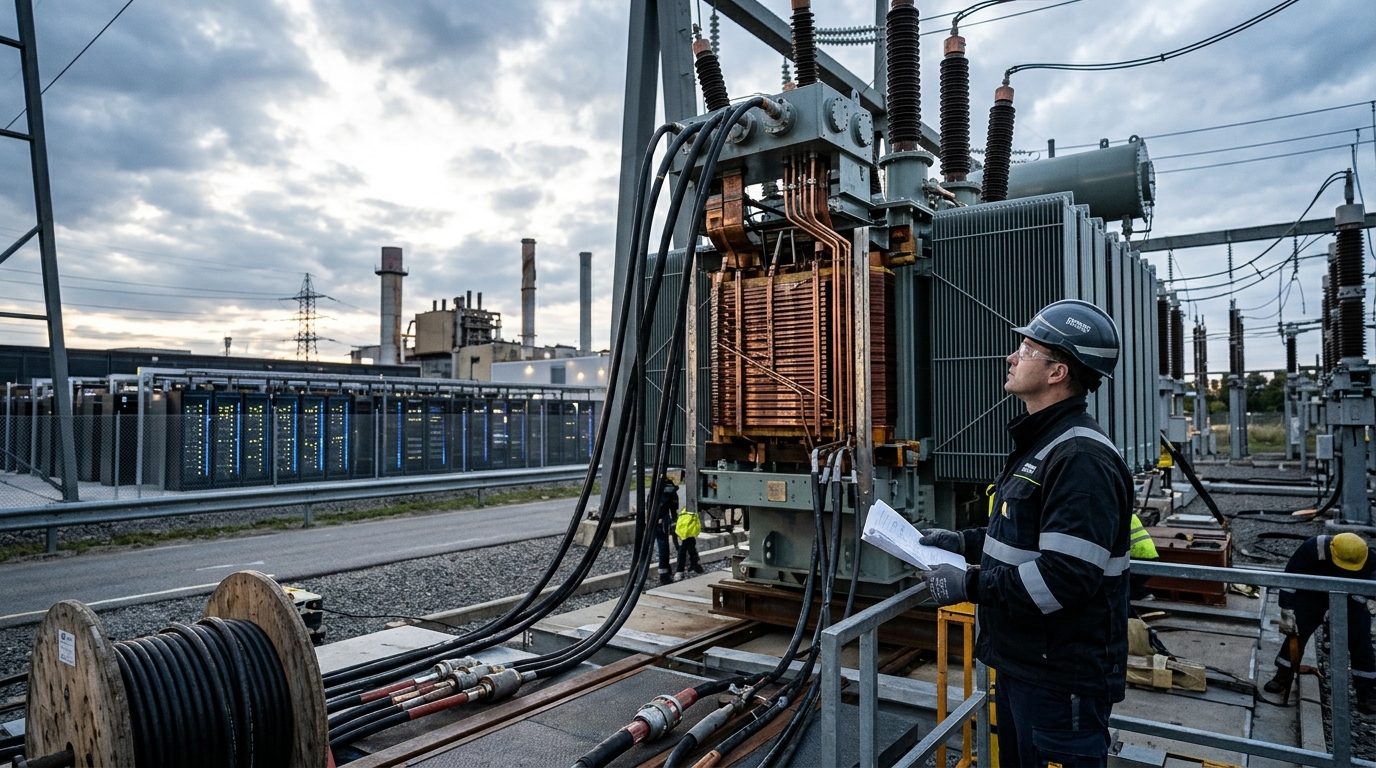
The evidence keeps pointing that way. At the close of its fiscal third quarter on 30 June, Siemens Energy carried a 69 GW gas turbine backlog after booking 15 GW of new orders and shipping 6 GW in a single quarter. Lead times run three years or longer. The Grid Technologies unit hit a record €51 billion order backlog with book-to-bill of 1.48, driven by transformers where delivery can stretch to four or five years for the largest equipment. Total group backlog reached €162 billion. September’s pre-close call confirmed full-year profitability at the upper end of guidance, with comparable revenue growth of 14 to 16 percent and profit margin before special items of 10 to 12 percent.
CEO Christian Bruch told analysts that the addressable gas turbine market could reach 120 GW a year, roughly half of it American. Siemens is adding around 50 percent more transformer and switchgear capacity, though that build-out does not fully contribute until 2030. GE Vernova has said it is sold out on new heavy-duty gas turbine equipment through 2028, with around 10 GW left to sell for 2029 deliveries. Two of the world’s largest equipment makers are both telling customers: get in line now or wait years.
The supply constraint is not limited to turbines and transformers. Eaton’s medium-voltage switchgear carries lead times of 52 to 80 weeks, locking in revenue for a company that sits between the grid and the server rack.
That is a different kind of moat from what a semiconductor designer holds. Nvidia faces disruption from capital, talent, and rival architectures. A transformer plant cannot be conjured quickly. Physical scarcity, forged in specialized steel and wound copper, is a bottleneck measured in years per factory rather than months per chip generation. JPMorgan reaffirmed Overweight with a €245 target in September; UBS restated Buy at €210 this month. Both banks have pointed to investor expectations running unusually low heading into Wednesday. That gap between subdued sentiment and record order books is where patient capital tends to do well.
What Could Go Wrong
The share has pulled back sharply, trading around €118 against a 52-week high of €191.66 set in April. Barclays has argued that orders and cash flow may peak in fiscal 2026, which is a legitimate concern when a backlog this large carries execution risk across political jurisdictions. Gas Services was flagged by some analysts as potentially softer into Q4. Offshore wind through Siemens Gamesa adds complexity the pure-play grid names avoid entirely.
The structural position remains intact. The world has committed to building more data centers than the grid can currently support, in a timeframe shorter than transformer lead times allow. Wednesday will tell investors how fiscal 2026 closed. The more important signal is whether management’s 2027 guidance reflects a business still booking faster than it ships. If the backlog holds anywhere near its recent pace, Siemens Energy looks less like a capital-goods company catching a wave, and more like a toll road with a decade-long queue.