


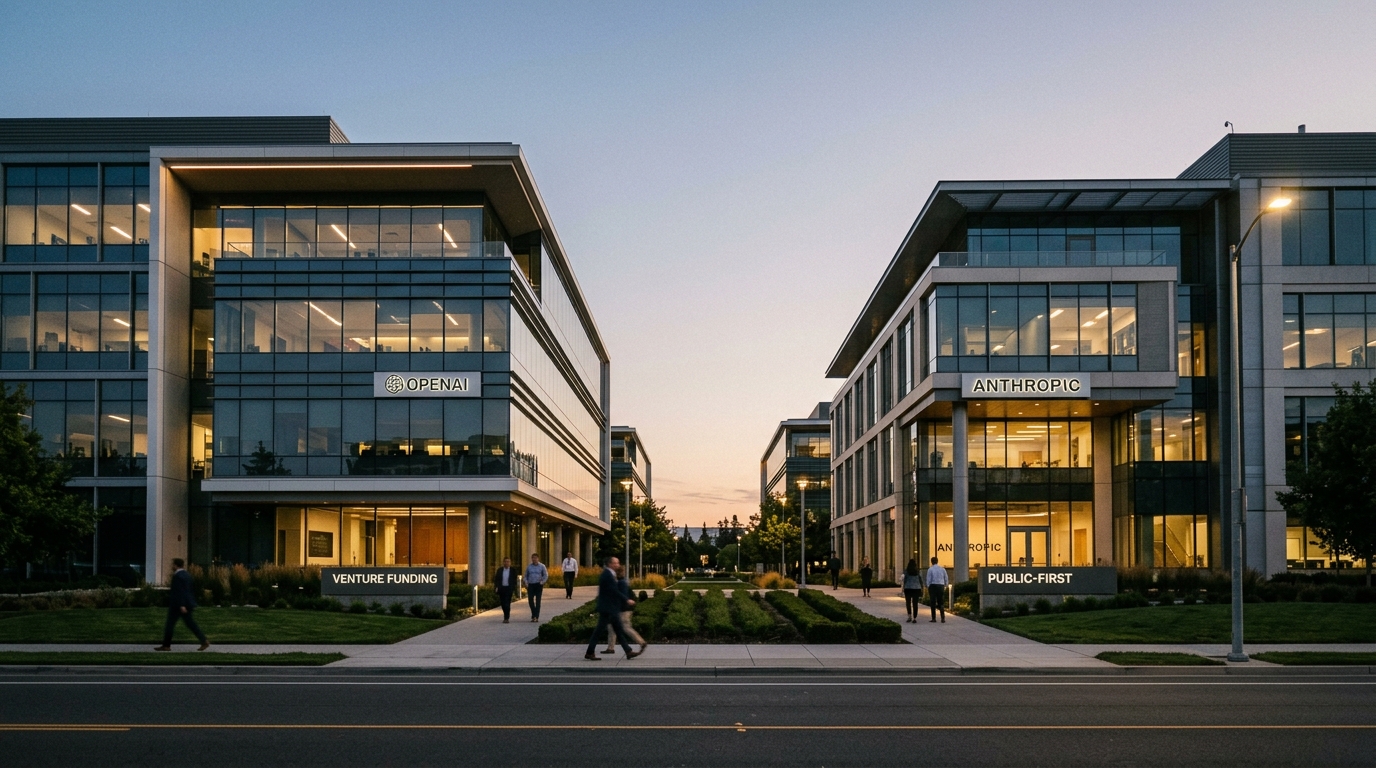
Sam Altman had a clear path to a 2026 IPO and walked away from it. That decision, revealed days after Anthropic filed to go public, is more than a scheduling difference. It is a statement about what each company believes it needs to become durable.
OpenAI is in talks with investors to raise at least $30 billion in a pre-IPO funding round at a valuation of roughly $1.4 trillion, Bloomberg reported on Tuesday. The valuation figure would be post-money, meaning it includes the new capital being raised. The company previously raised $122 billion on March 31, 2026 at an $852 billion post-money valuation, and that round was widely treated as its last private raise before an IPO that had been expected to take place in 2026. CEO Sam Altman has now ruled out a public debut in 2026, saying it would be “ill-advised” given AI safety concerns.
OpenAI’s annualized revenue run rate is approaching $70 billion, Axios reported on September 29, 2026, saying the pace is up more than 70% since the start of the third quarter. With numbers like that, the question is not whether investors will show up. They clearly will. The question is whether the money is enough: OpenAI needs capital to expand its data centers, and the Financial Times reported last week that an internal presentation projects cumulative negative free cash flow of $278 billion from 2026 through the end of 2030.
Anthropic chose a different path entirely. On June 1, 2026, Anthropic said it had confidentially submitted a draft S-1 registration statement to the SEC for a proposed IPO. The Claude maker has signaled that it expects to list on Nasdaq, and Reuters reported on September 28, 2026 that it is seeking an IPO valuation of around $2 trillion. The prospectus described by Reuters lays out the full picture: 2025 revenue of about $4.6 billion and an operating loss of about $8.06 billion, with a net loss of roughly $42 billion. Most of that headline loss is a non-cash item. Reuters reported that the net loss includes an accounting charge of about $34 billion tied to financing that could eventually convert into Anthropic shares; as the company’s valuation rises, the estimated value of those instruments rises too, and the difference hits the income statement without cash leaving the company.
The operating picture is improving fast. Claims that Q2 2026 revenue topped $11.5 billion and that the quarter showed positive adjusted operating income have circulated in market commentary, but those figures have not been confirmed in a publicly filed prospectus as of October 1, 2026. But the risk profile that comes with a public listing is formidable. Reuters reported that Anthropic disclosed about $518 billion in multiyear infrastructure commitments, including $111.1 billion with Google, $110 billion with Amazon, and $31.4 billion with Microsoft over roughly seven to ten years. Reuters also reported that nearly a quarter of Anthropic’s revenue is split between just two large customers. Those customers were not publicly identified in the reporting, and their contracts are not guaranteed to renew.
This is precisely the kind of financial disclosure that Altman is avoiding, at least for now. Staying private means OpenAI answers to a concentrated group of large investors rather than to quarterly earnings calls. In OpenAI’s March 31, 2026 funding announcement, the company described a broad syndicate of partners that included Microsoft, Oracle, AWS, CoreWeave, and Google Cloud. SoftBank is among OpenAI’s largest investors. SoftBank said on October 1, 2026 that it executed the third and final tranche of a follow-on investment in OpenAI, with that tranche totaling $10 billion.
The Mogul question is not which company has better models today. Both are growing at a pace that would have seemed fictional three years ago. The question is which capital structure builds a more resilient long-term business. Public markets impose discipline through transparency, forcing management to defend spending decisions quarter by quarter. Private capital offers patience but concentrates power with a small group of investors whose interests may shift. Anthropic’s push for a public listing looks increasingly out of step with broader market mood: Oura delayed its IPO on September 29, 2026, citing market conditions. References to a delayed IPO by SB Energy and an expected postponement of NScale’s investor roadshow are not supported as written here and have been removed.
A company willing to go public with about $518 billion in infrastructure commitments and a roughly $42 billion net loss on its books is either extraordinarily confident or under pressure it cannot name. A company that delays its IPO while revenue approaches $70 billion annualized is either disciplined or buying time. Both things can be true simultaneously. What disciplined investors should recognize is that neither path guarantees durability. Capital buys runway, not moats. The moat, in AI, has not been established by either company yet.