


September 17, 2026
Bonus Content: SpaceX’s First Starship Cargo Flight Could Make $2 Trillion Look Cheap
What a Gold Story Looks Like Before Most Notice
The biggest gains in mining rarely come after a discovery is obvious.
They come earlier.
Before the market has clean answers. Before the analysts have polished models. Before the headlines make it feel safe.
That is the stage this company may be entering now.
The early clues are already on the table:
- Neighboring a producer with a roughly $4.5B market cap
- Surface grades reported up to 73 g/t gold and 21% copper
- A second drill now turning on the project
None of this proves what sits underground.
But it does explain why this moment and this company are worth watching.
Because in mining, the wave usually starts before the crowd can see it.
SpaceX’s First Starship Cargo Flight Could Make $2 Trillion Look Cheap
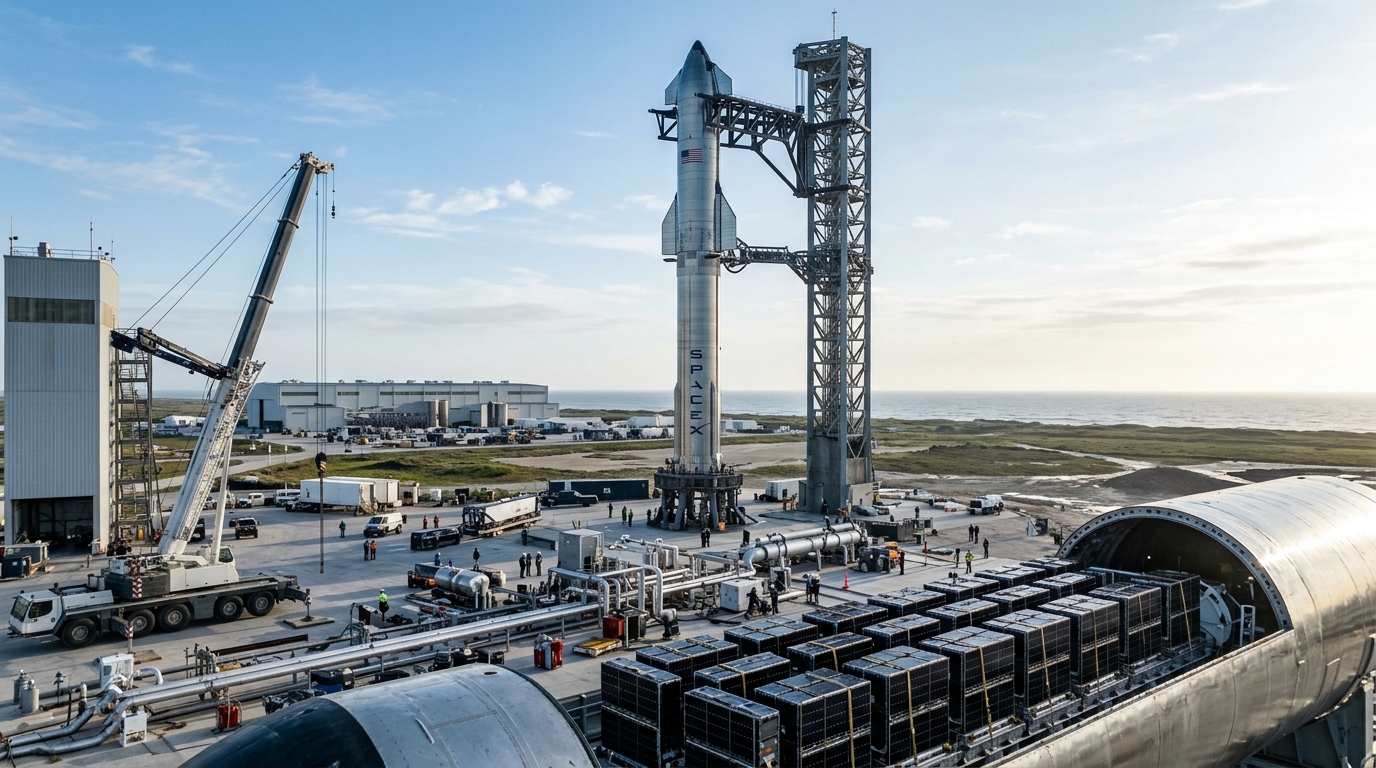
For three years and thirteen flights, Starship has been the most expensive promise in the history of private enterprise. On September 22, SpaceX intends to begin collecting on it.
The company is targeting Starship’s 14th test flight for as soon as Tuesday, pending regulatory sign-off, and the ship will not be flying empty. It is set to deploy 26 of Starlink’s next-generation V3 satellites, the first Starship cargo with revenue attached. The mission is expected to last about 10 hours, with Starship flying at about 275 km above Earth and completing six orbits before splashing down in the Pacific Ocean west of Chile.
The market noticed. Shares of Space Exploration Technologies Corp. (Nasdaq: SPCX) rose about 5.9% to roughly $152 in Wednesday morning trading, putting the company’s market value around $2 trillion. That is a striking reaction to a flight that has not yet happened, from a rocket that has never reached a stable orbit. It reflects something disciplined investors should take seriously: the payload transforms the story entirely.
Reaching stable Earth orbit is the step that separates a test programme from a vehicle capable of carrying paying payloads. Every Starship flight before this one has been cost without revenue. Flight 14, if it succeeds, is cost with revenue, and the economics underneath that shift are considerable. ARK researcher Sam Korus estimates Starlink earns about $19 million a year for every terabit per second of capacity, and that a full Starship load carries 61 terabits per second, suggesting each launch could generate about $1 billion in annual revenue.
Each V3 satellite is expected to add about 1 terabit per second of capacity, meaning this mission alone could add roughly 26 terabits per second. Starlink’s subscriber base is growing fast enough to need exactly that kind of capacity jump. Subscribers ended June at 12.0 million, twice the year-ago count.
The financial case for patience, however, demands honesty about where the business sits today. Space segment revenue rose 29% year-over-year to $962 million in the second quarter of 2026, but the segment still posted a $542 million operating loss, wider than the $369 million loss a year earlier. Companywide capital expenditure rose about 550% year-over-year to roughly $18.4 billion in Q2 2026. At a market value around $2 trillion, the gap between current losses and implied future earnings is enormous.
Starship’s full reusability, covering both upper and lower stages, is central to SpaceX’s cost argument. The Falcon 9 expends its upper stage on every flight, while Starship is designed to fly both stages again. That is the mechanism through which the unit economics eventually turn. A rocket that lands, reloads, and flies again at a fraction of a disposable vehicle’s cost changes what orbital access is worth to everyone who needs it.
What has to go right for $2 trillion to look cheap? Starship must reach orbit reliably, not once. V3 satellites must join the working network and drive average revenue per user higher. Capital spending must eventually curve toward free cash flow. Wall Street’s consensus view remains broadly positive, but price targets vary widely. That is the correct way to think about a company whose most important product has never completed a working orbital mission.
Five days is a short wait for an answer that has been years in the making. The more important question is what comes after Flight 14 succeeds or fails, and whether the pace of progress justifies holding a position at a valuation that leaves no room for error.