




September 15, 2026
Bonus Content: United Found Eight Routes Nobody Else Flies
Savvy investors are onto something in the commodity space that not many are aware of.
It’s the kind of secret that has the potential to create substantial gains in a segment of the market that’s growing at a pace that’s getting harder to ignore.
That segment is copper and gold, and the bull market is coming into existence right in front of us.
It’s happening because of structural issues that have been building for some time and won’t just go away overnight. That means the profit potential at hand is going to become more apparent over time.
One little-known small-cap Canadian explorer offers exposure to that opportunity.
We’re talking:
- Exploration in two premier Australian mineral belts
- Major-company-funded drilling
- A tight share structure and robust treasury
- Drills turning with more assays on the way
- Trading below a buck a share
It’s one of the best-kept secrets in the small-cap exploration space.
You can see why in our brand-new FREE report, where you’ll learn the name and ticker symbol of this small-cap Canadian explorer and so much more.
Click here to access the report before the wider market catches on.
United Found Eight Routes Nobody Else Flies
Most airline expansions chase the same crowded airports. United Airlines is doing the opposite.
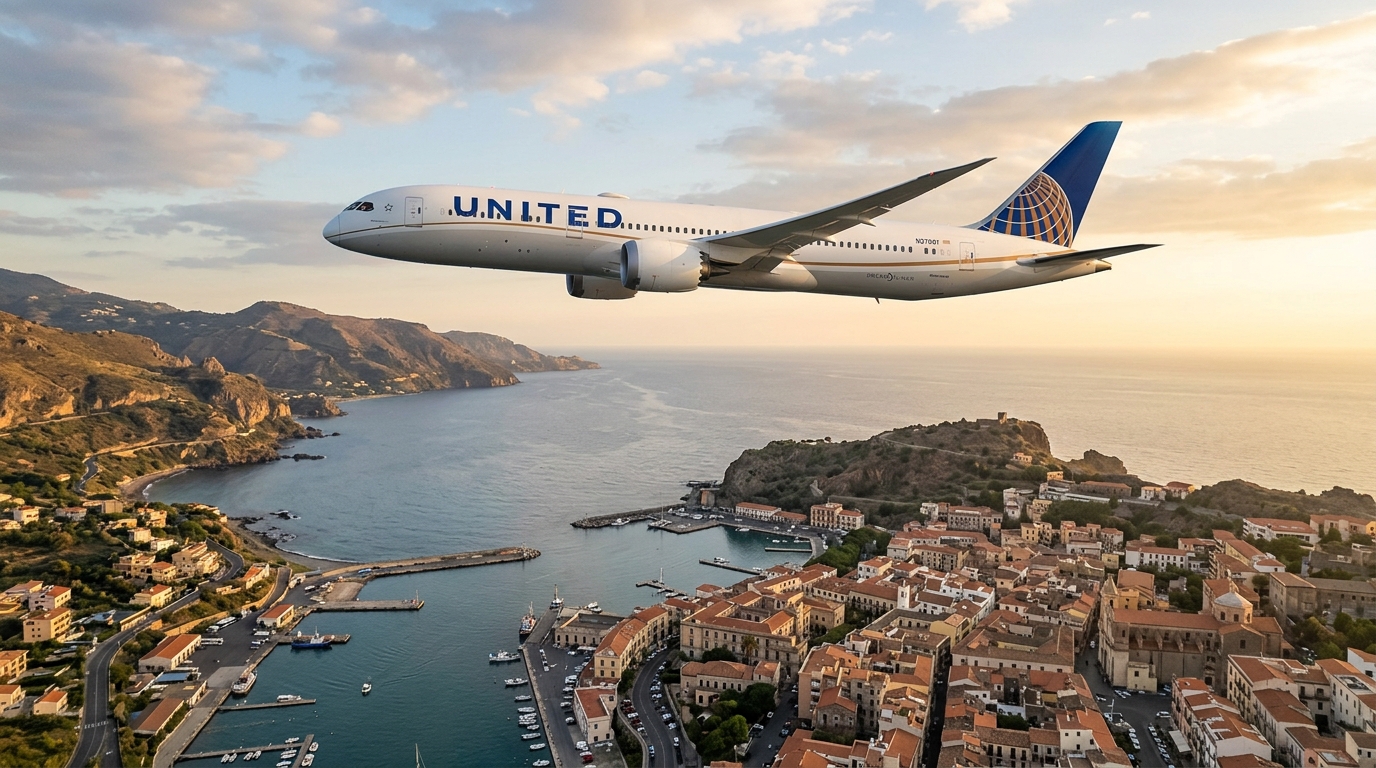
United has announced the largest international network expansion in its history, adding 10 new international destinations for 2027, and the airline says it expects to be the only U.S. carrier serving eight of those cities once the routes begin. Think Okinawa, Ljubljana, Catania, and Terceira, not Frankfurt and Paris.
That framing matters to investors. Competition-free routes price differently. When no rival is matching fares or flooding the lane with capacity, yield management becomes considerably easier. The moat here is not technology or a patent. It is simply geography: United showed up first and made itself the default.
The aircraft enabling part of this is the Airbus A321XLR. The jet allows United to serve smaller international markets that may not generate enough demand to justify larger widebody aircraft. That is precisely the point. Smaller markets with no nonstop competition often produce superior revenue per seat than high-frequency routes between major hubs where every carrier piles on. United plans to begin international A321XLR service on December 1, 2026, from Washington Dulles to Amsterdam and Dublin, with the broader European buildout following through summer 2027.
The demand environment behind this expansion is not speculative. In its second-quarter 2026 earnings release, United said contracted business revenue was up 27 percent year over year, with bookings up 30 percent. In that same Q2 2026 release, the airline also said total operating revenue came in at about $17.7 billion, a 16 percent increase year over year, and that it was facing nearly $6 billion in added fuel expense for full-year 2026 versus what it expected at the start of the year. Separately, in its first-quarter 2026 earnings release, United said premium revenue grew 14 percent year over year.
That last point deserves attention. The premium travel segment often delivers stronger margins than standard economy seating, providing airlines with an important buffer against fuel price volatility and inflationary pressures. United is not simply adding seats. It is deliberately reweighting its revenue mix toward the cabin class least sensitive to fuel-driven fare increases.
In 2026, United’s Polaris business class received a major upgrade with the rollout of the “United Elevated” Boeing 787-9 interior, centered on the new United Polaris Studio, which United scheduled to begin on international flights starting April 22, 2026. Premium product investment and premium route expansion are being pursued together, which is the correct sequence. Building the cabin first, then announcing the routes, means yield targets are credible from day one rather than aspirational.
The risk worth owning is manufacturer dependency. Airbus constraints have delayed United’s A321neo Coastliner aircraft intended for premium transcontinental service, demonstrating that United’s growth strategy remains partly dependent on manufacturers delivering on schedule. A slip of even one quarter in A321XLR deliveries could push summer 2027 route launches into the winter, which is the worst possible time to debut a leisure-focused European destination.
Still, the structural argument holds. A carrier that controls the only nonstop route between Newark and Ljubljana, is leaning into premium cabins, and is reporting strong corporate demand gains is not merely recovering from the pandemic. It is building a durable pricing advantage in the corners of the map its competitors have ignored.