


Vertiv has been one of the most interesting stories in the entire market in 2026. Not because of what it does — power and cooling infrastructure for data centers isn’t exactly riveting dinner conversation — but because of how clearly it maps to the AI capex cycle. When the hyperscalers build, Vertiv wins. It really is that direct.
The stock is up roughly 86% year-to-date, sitting near $300. The 52-week range runs from $110.06 to $379.94. That range alone tells you something: this thing moves. And it’s moving because the business is actually delivering.
What Vertiv Sells and Why It Matters
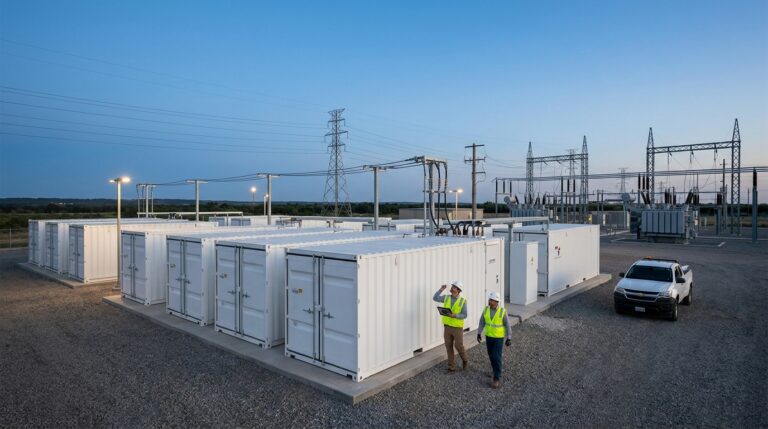
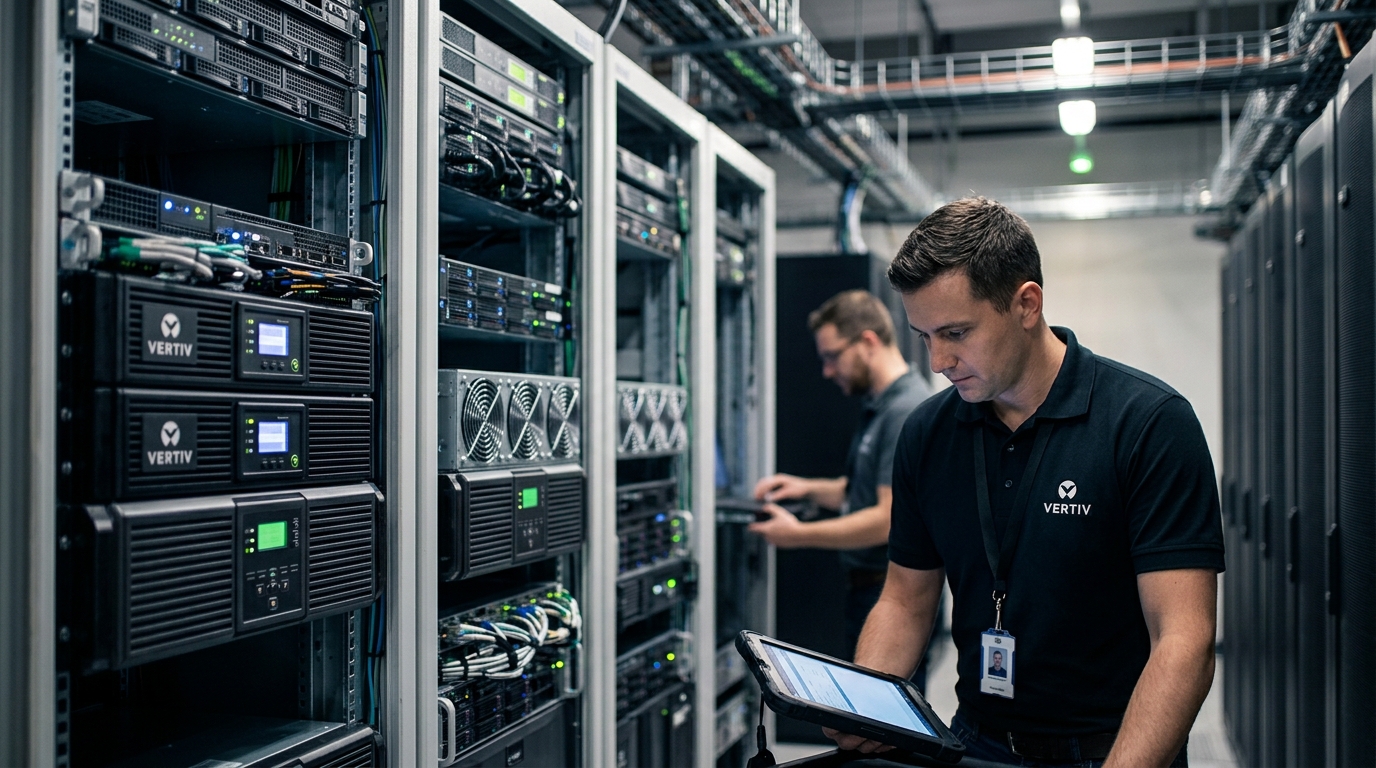
Vertiv sits between the utility grid and the server racks. Every new AI data center needs power management, thermal management, and cooling before a single GPU can run. The company makes all of it — uninterruptible power supplies, switchgear, chillers, liquid cooling distribution units, and integrated rack systems.
Here’s the physical reality that’s driving demand: traditional air cooling worked fine when server racks drew 10 to 15 kilowatts. AI training clusters now push far higher rack densities, and liquid cooling — pulling heat directly from the chip using cold plates or full immersion — is becoming a default design choice for many next-generation, high-density builds.
Vertiv is one of a handful of suppliers with the scale and certifications to bid for hyperscaler liquid cooling projects today. Nvidia’s next-generation AI-factory reference designs increasingly assume higher-density infrastructure where advanced cooling and power architectures matter. Once a hyperscaler locks in a design, switching costs are real. That’s the moat.
The Numbers Are Hard to Argue With
- Q1 2026 revenue: $2.65B, up ~30% year-over-year
- Q1 adjusted EPS: $1.17
- Adjusted EPS growth in Q1: up ~83% year-over-year
- Adjusted operating margin: 20.8% in Q1
- Adjusted free cash flow in Q1: up ~147% year-over-year
- Order backlog: ~$15 billion (as of Dec. 31, 2025), up 109% year-over-year
- FY2026 revenue guidance: $13.5B–$14.0B
- FY2026 adjusted EPS guidance: $6.30–$6.40
- Q2 adjusted EPS guidance: $1.37–$1.43
A ~$15 billion backlog representing roughly 12 to 18 months of forward revenue at current run rates is extraordinary. That’s not speculation about future demand — that’s contracted work sitting on the books. It’s also why Bernstein SocGen Group initiated coverage with an Outperform rating and a $416 price target, calling Vertiv “arguably the only pure-play with scale” in the space.
The Nvidia Partnership Is More Than a Press Release
Vertiv and Nvidia have collaborated on 800-volt DC (800 VDC) power-architecture platform designs for next-generation AI factories. Vertiv has said its 800 VDC power portfolio is planned to release in the second half of 2026 to support the expected 2027 rollout of NVIDIA Rubin Ultra platforms.
The company also opened a new manufacturing facility in Johor, Malaysia on July 1, expanding production capacity to support growing AI infrastructure demand across Asia. Add to that a roughly $50 million investment to expand manufacturing in Ironton, Ohio, expected to expand U.S. liquid cooling and chilled water capacity by about 45%. These aren’t defensive moves. This is a company building ahead of demand it’s confident is coming.
Analyst Targets and the Valuation Question
The valuation isn’t cheap. The bull case is that sustained EPS growth guidance justifies the multiple on a growth-adjusted basis. The bear case is that any slowdown in hyperscaler capex — or a margin hiccup — hits a premium-priced stock harder than most.
Forward Scenarios
Bull: Q2 revenue lands at or above the $3.3B–$3.5B guided range. Order intake accelerates. Management raises full-year guidance. The 800 VDC work drives a new wave of large project wins in the back half. Bernstein’s $416 target gets challenged.
Base: Q2 delivers in line. Backlog remains elevated. Full-year guidance maintained. Stock consolidates near current levels, building a base before the next leg.
Bear: A hyperscaler announces a capex pause or order delays. Q2 revenue misses. The high multiple amplifies the reaction to any guidance disappointment. A 25–30% correction is possible at this valuation if the growth story gets any cracks in it.
What Investors Should Watch on July 29
Q2 earnings on July 29 are the next catalyst. But the more important number is the order backlog update. If the backlog stays elevated, the bull case stays intact. Any contraction in the order book would be the first real signal that the AI capex cycle is cooling.
Also worth tracking: how management characterizes demand for liquid cooling specifically versus traditional air cooling. The faster that shift happens, the better Vertiv’s content per data center grows. That’s the long-term margin story in one metric.
The company is not cheap. But nothing with this backlog, these margins, and this positioning in the AI infrastructure stack usually is.
For informational purposes only.